
Loading, please wait...
LOT 0681
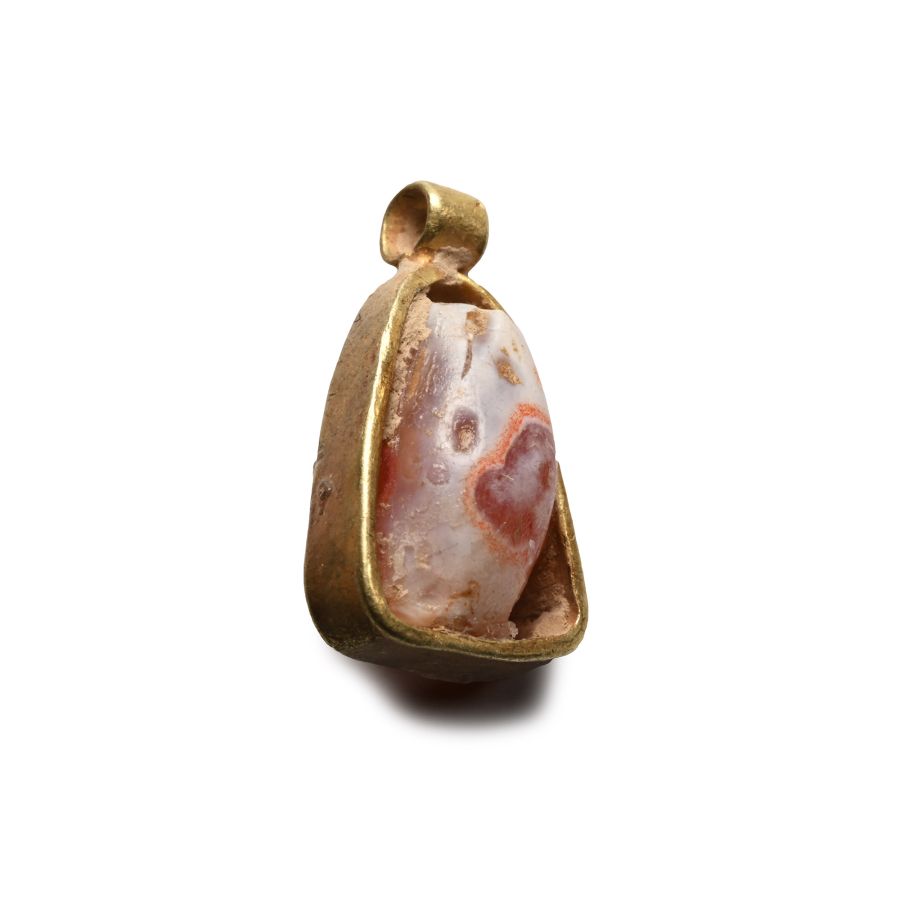
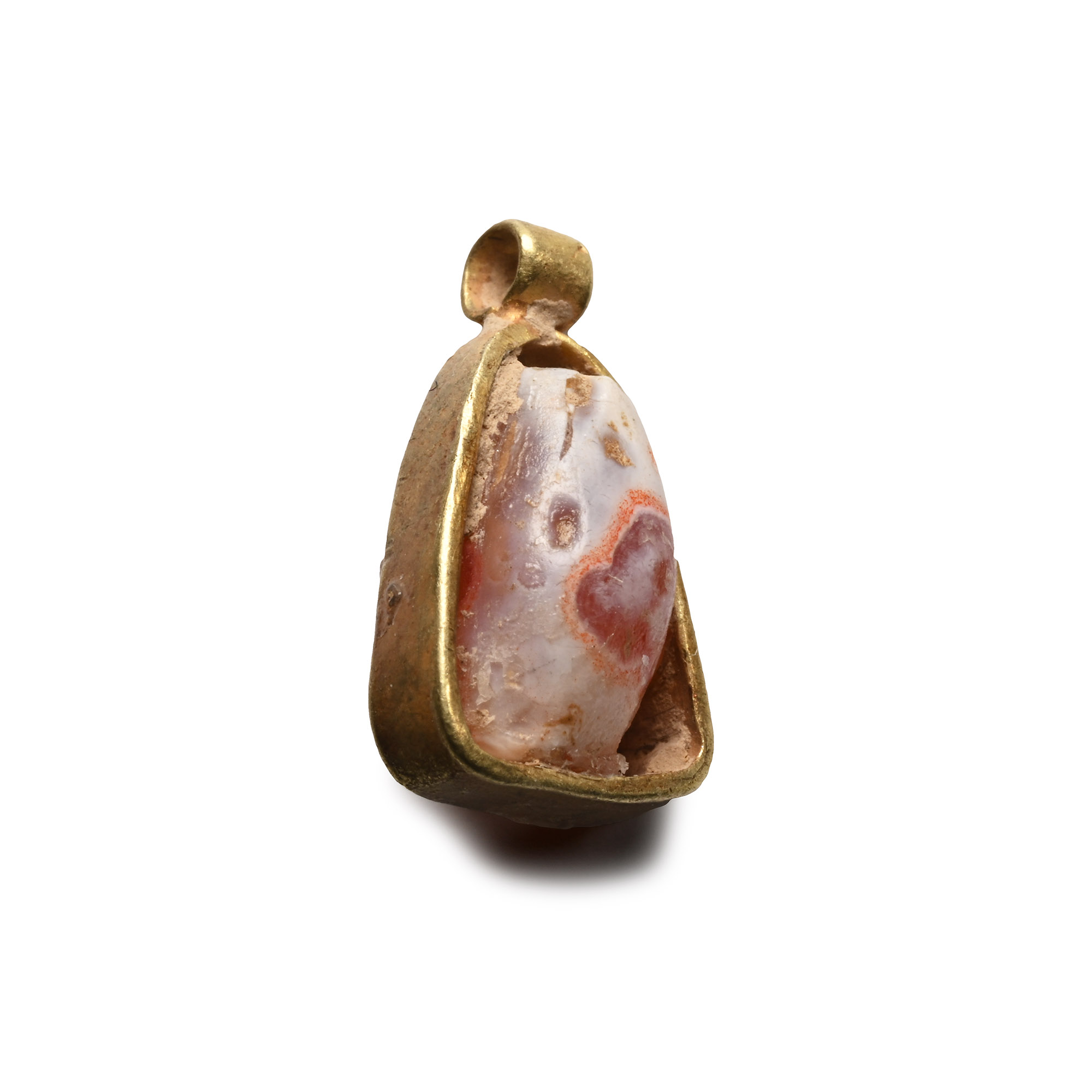
Roman Gold Pendant with Carnelian
1ST-4TH CENTURY A.D.
1/2 in. (0.94 grams, 12 mm).
Comprising a triangular gold bar frame and loop, enclosing an agate fusiform bead. [No Reserve]
ProvenanceEx property of a late Japanese collector, 1970-2000s.
This lot is accompanied by an illustrated lot declaration signed by the Head of the Antiquities Department, Dr Raffaele D’Amato.
TimeLine Auctions follows a vetting process to ensure the authenticity and legality of all items, reinforcing our commitment to integrity and responsible trading. Each antiquity, antique, and coin lot undergoes thorough examination by a vetting committee of at least ten external specialists, professional trade association members, scientists, and archaeologists: Our Vetting Process
AUCTIONS:
TimeLine is a leading auction house specialising in antiquities, ancient art, collectables, natural history, coins, medals, and books. Our auctions offer museums, collectors, historians, and enthusiasts the opportunity to acquire unique and historically significant pieces.
-
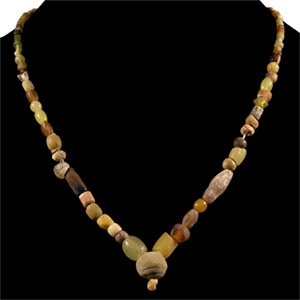
Roman Yellow Glass Bead Necklace String
1st-4th century A.D. and laterSold for (Inc. bp): £65
A designer necklace composed of mainly oblate and barrel-shaped beads, central feature composed of a large spherical bead with a small annular bead below. 35.5 grams, 41.5 cm
Acquired 1980-2015. Ex Abelita family collection. This lot is accompanied by an illustrated lot declaration signed by the Head of the Antiquities Department, Dr Raffaele D’Amato. -
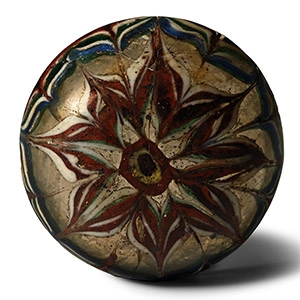
Polychrome Glass Bowl
Roman, 1st century A.D. or laterSold for (Inc. bp): £845
Shallow bowl with rounded rim, the outer face with dragged and marvered trails forming a rosette. 42.2 grams, 63 mm
S.S.H., South France, 1950s. Accompanied by a copy of an Art Loss Register certificate no.S00133093. This lot is accompanied by an illustrated lot declaration signed by the Head of the Antiquities Department, Dr Raffaele D’Amato.
Such decorated shallow bowls were mainly produced in the Eastern Provinces of the Roman Empire, and some scholars proposed Alexandria as the workshop. They were realised with mosaic glass technique, mould-pressed and tooled. -
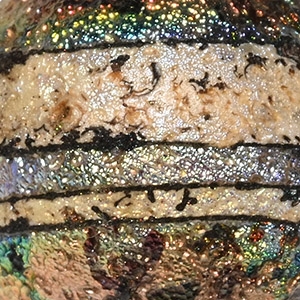
Roman Iridescent Glass Bead
2nd-3rd century A.D.Sold for (Inc. bp): £182
Sphere with circumferential banding, iridescent surface. 3.38 grams, 14 mm
From an old English collection. Acquired from Helios Gallery in 2011. Ian Wilkinson collection, Nottinghamshire, UK, formed since 1985. This lot is accompanied by an illustrated lot declaration signed by the Head of the Antiquities Department, Dr Raffaele D’Amato.
