
Loading, please wait...
LOT 0164
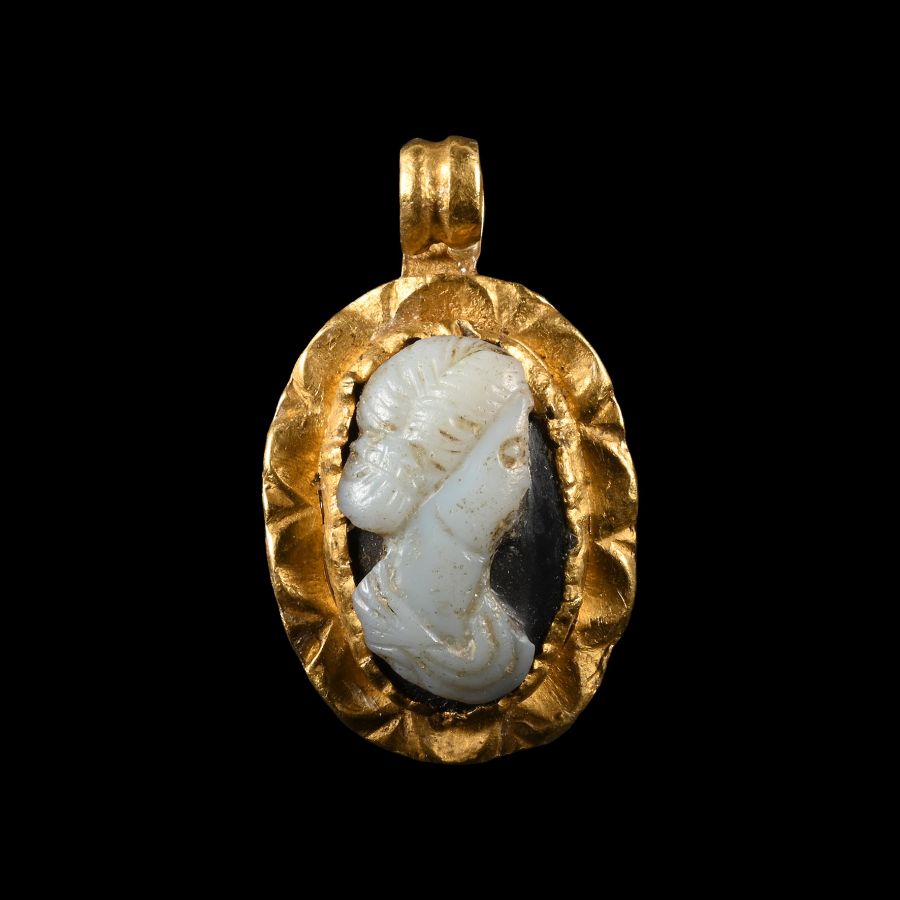
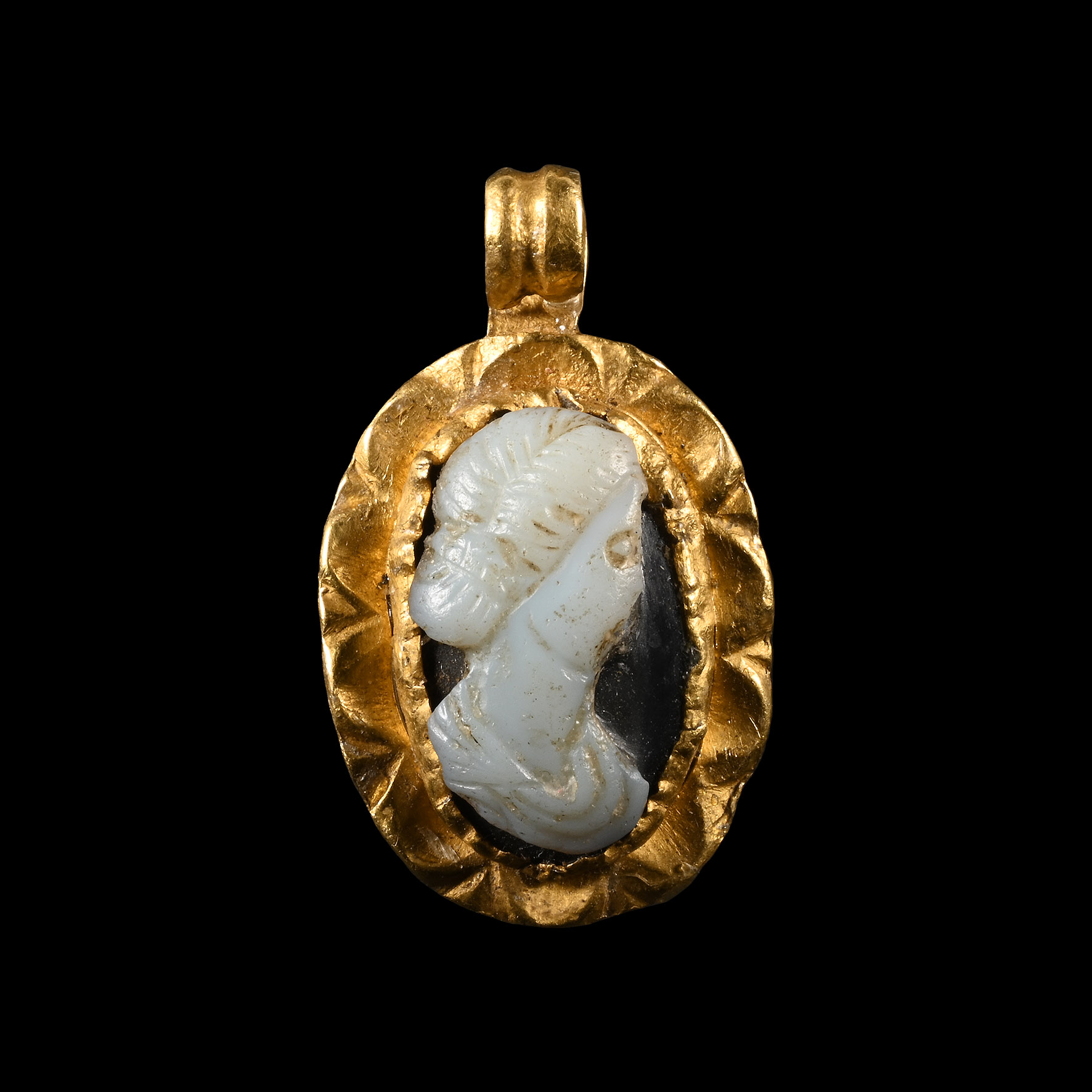
Roman Gold Pendant with Cameo
2ND CENTURY A.D.
1 in. (4.03 grams, 26 mm).
An oval box setting with flange rim, set with a female cameo bust; gusseted suspension loop to top edge.
ProvenanceFrom the collection of a Cambridge lady, 1990s.
LiteratureCf. Henig, M., The Content Cameos, Oxford, 1990, p.62, items 107-109, for comparable frame.
CONDITIONTimeLine Auctions follows a vetting process to ensure the authenticity and legality of all items, reinforcing our commitment to integrity and responsible trading. Each antiquity, antique, and coin lot undergoes thorough examination by a vetting committee of at least ten external specialists, professional trade association members, scientists, and archaeologists: Our Vetting Process
AUCTIONS:
TimeLine is a leading auction house specialising in antiquities, ancient art, collectables, natural history, coins, medals, and books. Our auctions offer museums, collectors, historians, and enthusiasts the opportunity to acquire unique and historically significant pieces.
LOT 0164
Roman Gold Pendant with Cameo
Estimate £1,500 - 2,000€1,740 - 2,320 (for guidance only)$2,030 - 2,700 (for guidance only)
-

Roman Bronze Lion Patera Handle Fitting
2nd-3rd century A.D.Estimate: £800 - 1,000 (+bp*)
Opening Bid: £444
Displaying a naturalistic lion's head projecting from a facetted bar with piercing for attachment; recessed eyes to accept separate inserts. 100 grams, 88 mm
‘The Ancient Menagerie Collection’ formerly the property of a Cambridgeshire lady, collected since the 1990s and acquired from auctions and dealers throughout Europe and the USA, now ex London collection. -
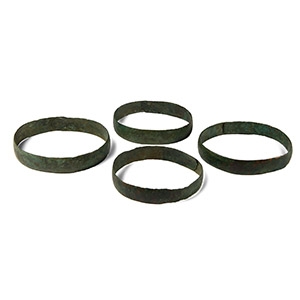
Roman Bronze Bracelet Group
1st-4th century A.D.Sold for (Inc. bp): £65
Comprising four flat-section bracelets with overlapping rounded terminals. 68 grams total, 61-71 mm
From the family collection of a Surrey gentleman since before 1960.
Bracelets were worn in Rome by ladies of rank, but it was considered a mark of effeminacy for civilian men to use such female ornaments (Suetonius, Caligula, 52; Nero, 30). The armillae (or psellia in Greek) were rings and bracelets worn by women in the Graeco-Roman world on both legs and arms. Homer mentions them (elikas) as being part of the hairstyle of the divine Aphrodite, thus giving an almost sacred character to these objects. There were different types, the most common consisting of a more or less thick metal wire, or a flat or cylindrical circle, like our examples. -
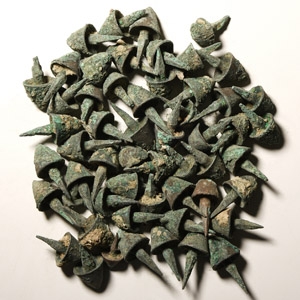
Roman Bronze Armoured Door Stud Group
1st-4th century A.D.Sold for (Inc. bp): £124
Fifty-five in total, most with conical or domed heads and tapering square-section pins. 1.67 kg total, 36-52 mm
From a UK collection before 2000. Acquired from a London, UK, gallery.
