
Loading, please wait...
LOT 0611
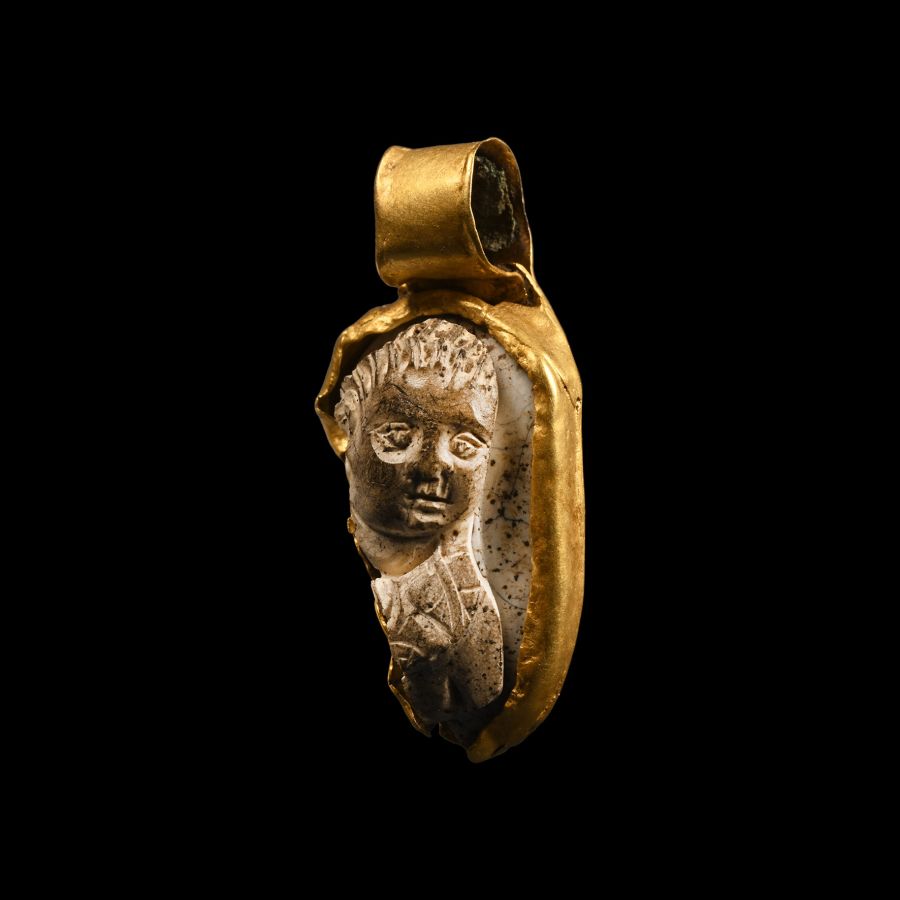
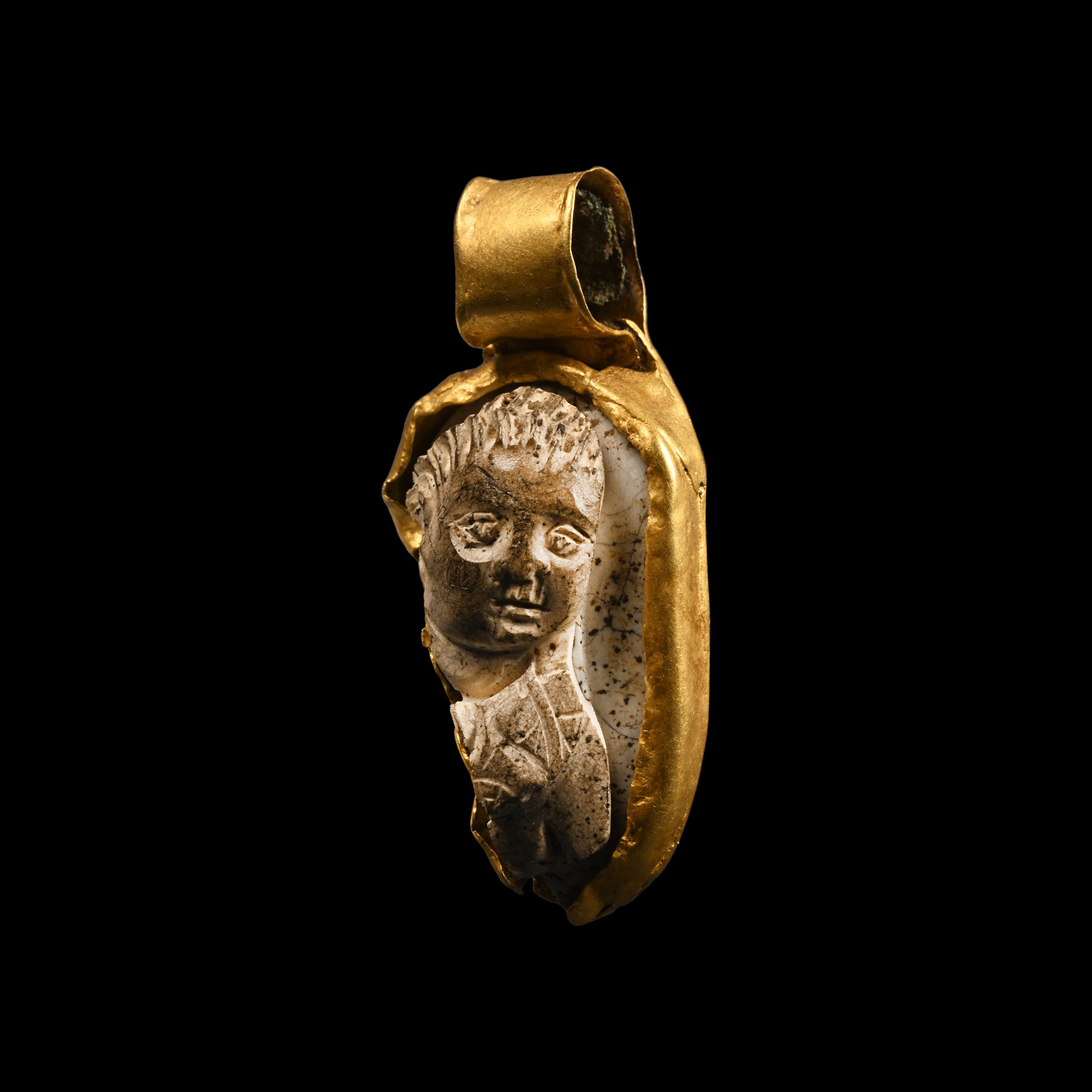
Roman Gold Pendant with Cameo
CIRCA 1ST-2ND CENTURY A.D.
1 1 /8 in. (3.84 grams, 30 mm).
Suspension loop to one edge, the stone cameo fragment portraying a young boy.
ProvenanceAcquired 1990s-early 2000s.
East Anglian private collection.
TimeLine Auctions follows a vetting process to ensure the authenticity and legality of all items, reinforcing our commitment to integrity and responsible trading. Each antiquity, antique, and coin lot undergoes thorough examination by a vetting committee of at least ten external specialists, professional trade association members, scientists, and archaeologists: Our Vetting Process
AUCTIONS:
TimeLine is a leading auction house specialising in antiquities, ancient art, collectables, natural history, coins, medals, and books. Our auctions offer museums, collectors, historians, and enthusiasts the opportunity to acquire unique and historically significant pieces.
-
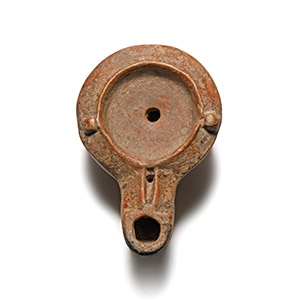
Roman FORTIS Terracotta Oil Lamp
Late 1st century A.D.Sold for (Inc. bp): £124
A factory lamp with flat-topped oval body, broad flat shoulder and small concave plain discus; flat bottom with Latin inscription 'FORTIS'. 77.7 grams, 96 mm
From the collection of a High Wycombe, Buckinghamshire, UK, gentleman, circa 2000.
At the end of the 1st century B.C., in the Po Valley, began the industrial production of Firmalampen, i.e. lamps signed on the bottom in relief noting the place of production or fabrica. The signature FORTIS, visible on this specimen, is one of the most documented and is attributable to the workshop of L. Aemilius Fortis, recently discovered to have been in Mutina (Modena). -
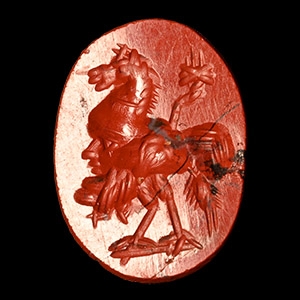
Roman Red Jasper Gemstone with Gryllos
2nd century A.D.Sold for (Inc. bp): £598
Oval in shape; the main subject of the gryllos a youth wearing a horse-head topped helmet, the body a ram's head holding an ear of corn in its mouth, the legs and tail that of a cockerel. 0.34 grams, 11 mm
Acquired 1980-2015. Ex Abelita family collection.
According to Plutarch, grylloi had apotropaic properties to ward off the evil eye. -
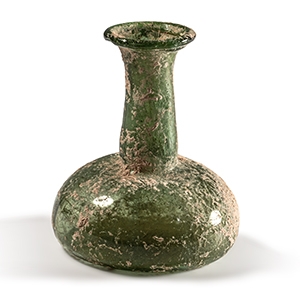
Roman Blue-Green Glass Vessel
3rd-4th century A.D.Sold for (Inc. bp): £195
Bulbous with flat base, tall neck and splayed lip. 39 grams, 77 mm high
Acquired 1980-2015. Ex Abelita family collection.
The ampulla was, in Ancient Rome, a small round vessel, usually made of glass and used for sacred purposes. The term can also refer to later flasks, often flatter and without handles, typically used as pilgrim souvenirs. Materials include glass, ceramics and metal. An unguentarium is a bottle believed to have been used to store perfume. Such vessels were often produced in Gaul.
