
Loading, please wait...
LOT 0708
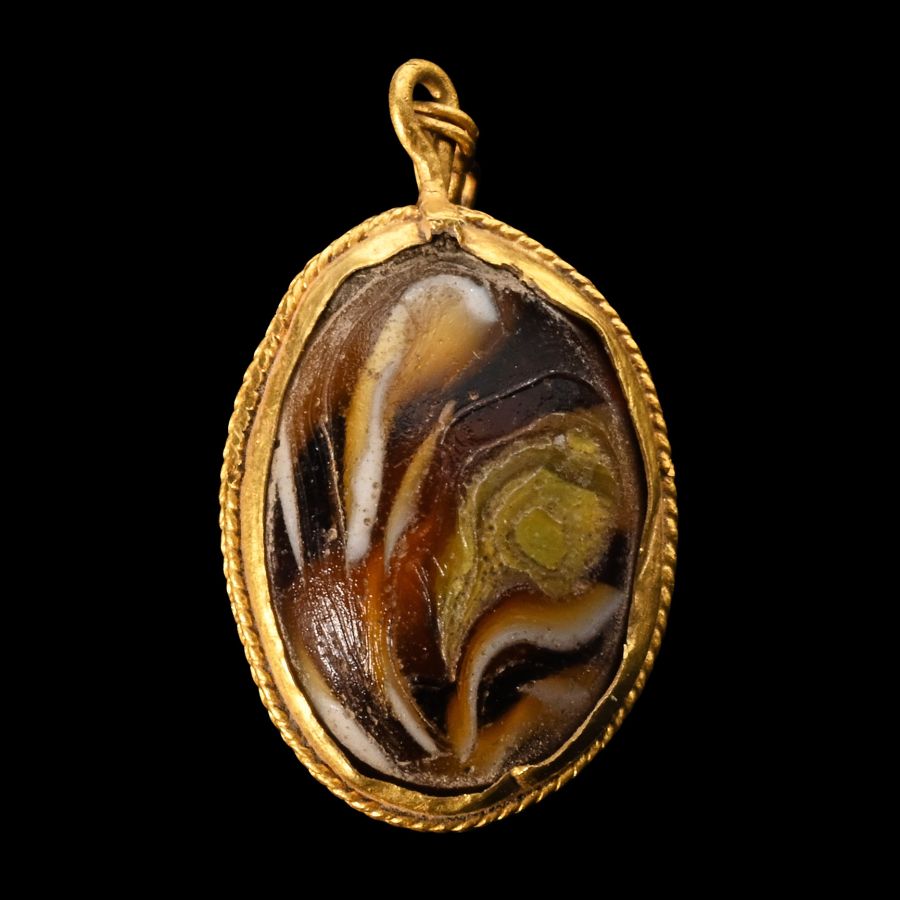
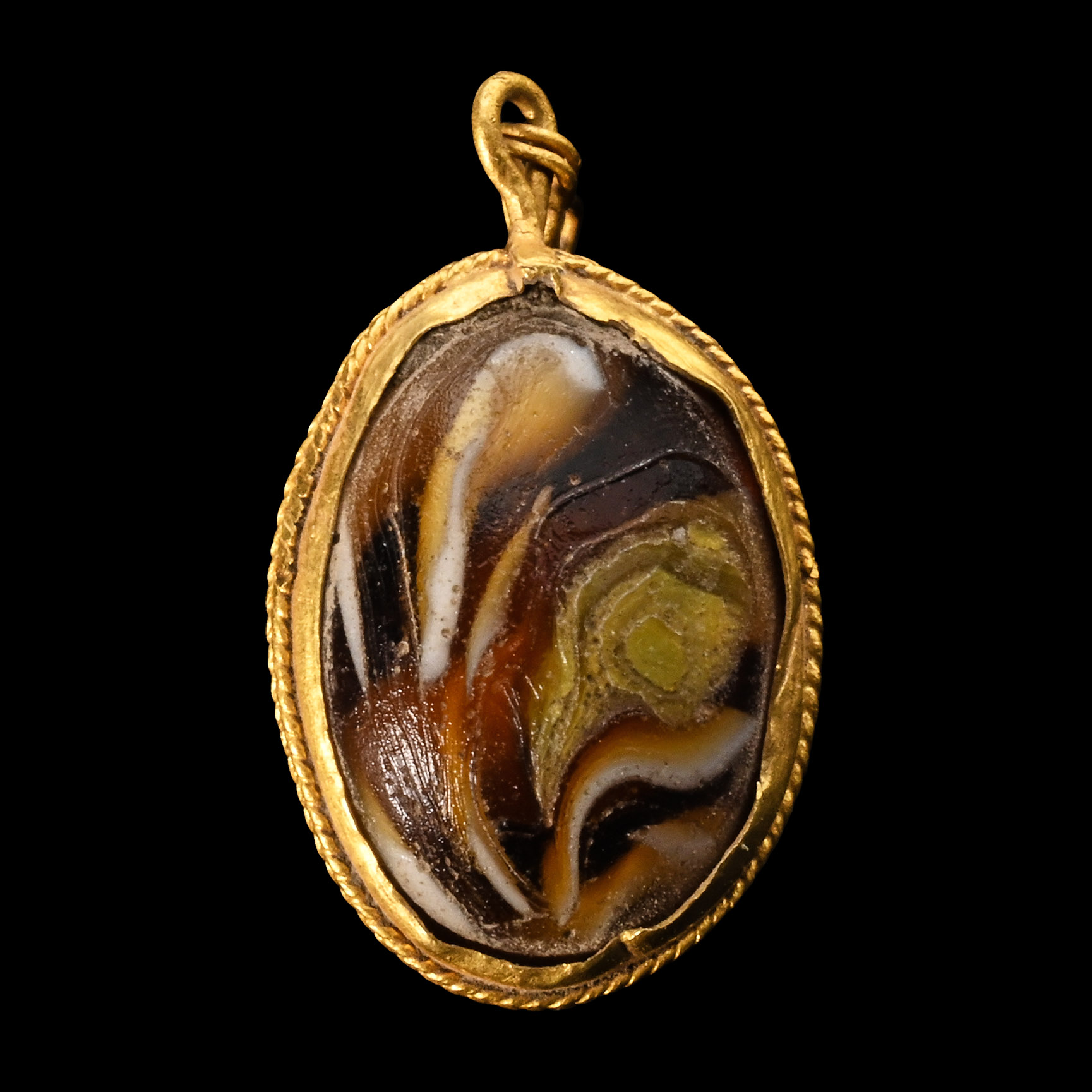
Roman Gold Pendant with Cabochon
1ST-2ND CENTURY A.D.
1 in. (1.54 grams, 23 mm).
With suspension loop and link, filigree fillet to the border, and an inset glass cabochon.
ProvenanceEx property of a European gentleman living in the UK; formerly in a private collection formed in the 1990s.
Private collection, Suffolk, UK.
See Ruseva-Slokoska, L., Roman Jewellery, Sofia, 1991, item 57b, for type.
CONDITIONTimeLine Auctions follows a vetting process to ensure the authenticity and legality of all items, reinforcing our commitment to integrity and responsible trading. Each antiquity, antique, and coin lot undergoes thorough examination by a vetting committee of at least ten external specialists, professional trade association members, scientists, and archaeologists: Our Vetting Process
AUCTIONS:
TimeLine is a leading auction house specialising in antiquities, ancient art, collectables, natural history, coins, medals, and books. Our auctions offer museums, collectors, historians, and enthusiasts the opportunity to acquire unique and historically significant pieces.
-
.jpg)
Roman Carnelian Gemstone Collection with Jupiter Effigies
1st century B.C.Sold for (Inc. bp): £572
Comprising three oval intaglios, one with a domed base and each featuring a profile bust, one wearing a modius and one wearing a laurel wreath; supplied with museum-quality impressions. 1.08 grams total, 9-14 mm
UK private collection, acquired on the English market in the 2000s. -
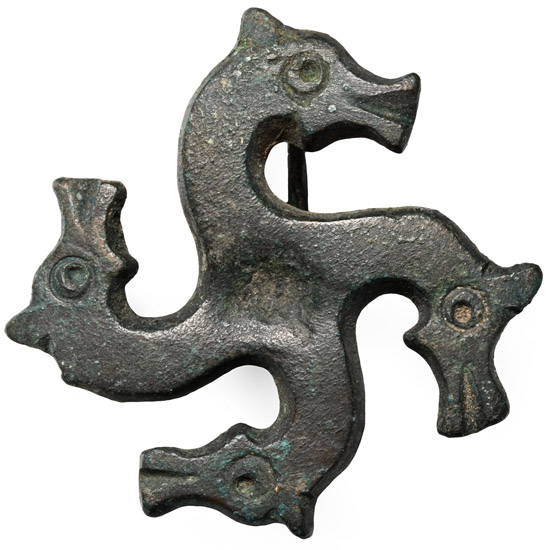
Roman Bronze Horse-Head Whorl Plate Brooch
3rd-4th century A.D.Sold for (Inc. bp): £286
With horse-head decoration to each arm, each head with punched ring-and-dot eye; a catchplate and hinged pin to verso. 14.2 grams, 41 mm
From the private coin collection of a West London, UK, gentleman, formed since the mid 1980s. -
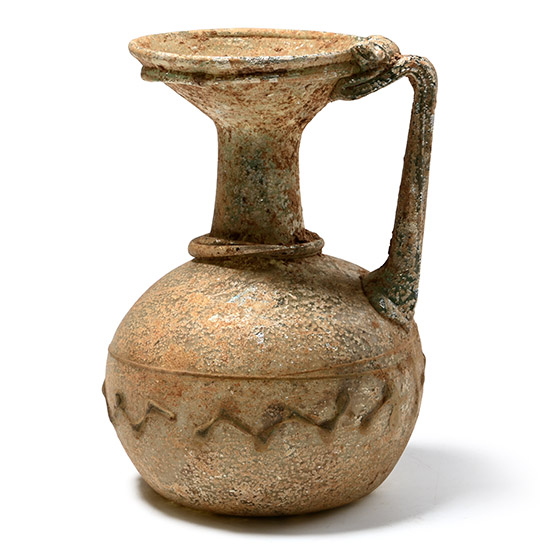
Roman Iridescent Glass Pitcher with Trail
3rd-4th century A.D.Sold for (Inc. bp): £338
Bulbous body with an applied zig-zag trail and a circumferential band above, and an applied collar at the base of the tubular neck and another beneath the flaring mouth, with a strap handle to the rear. 76 grams, 10.7 cm
Acquired in the 1990s from London dealerships and auction houses. From the Lonson collection.
In Ancient Rome, there were two different types of pitchers: the urcei used for water or the oinochoae, used for wine. They were employed to serve liquids at banquets, pour water for handwashing (probably the purpose of this urceus), and to store everyday goods.
