
Loading, please wait...
LOT 0617
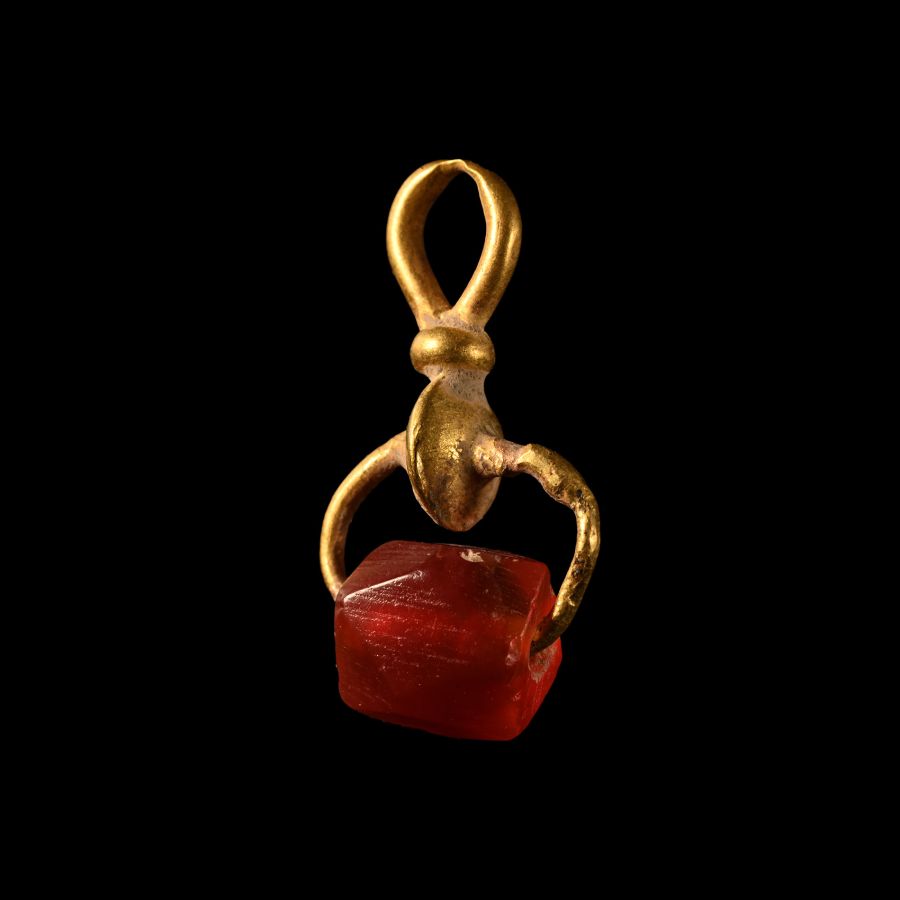
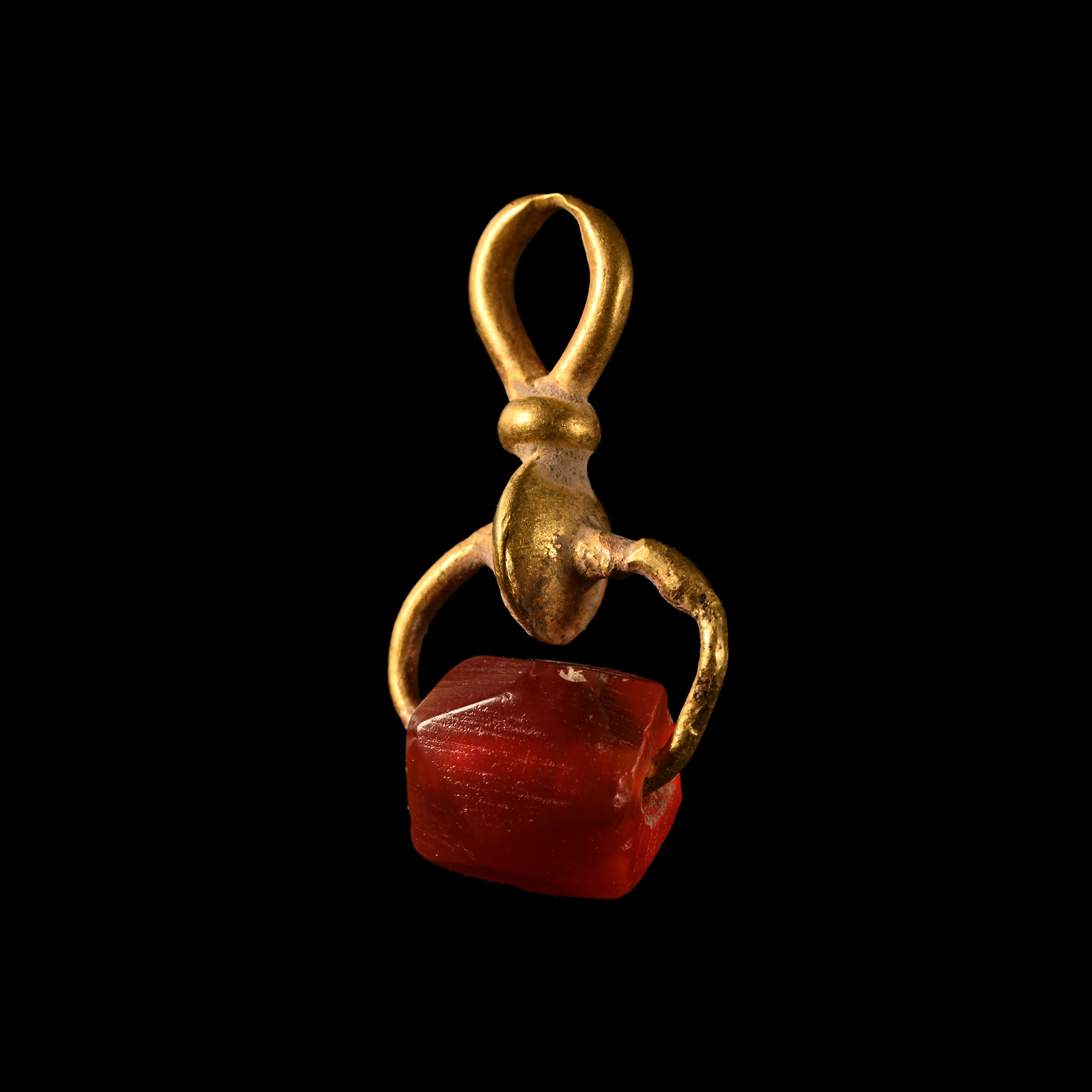
Roman Gold Pendant with Bead
1ST-4TH CENTURY A.D.
3/4 in. (1.22 grams, 19 mm).
Formed as a double loop with collar, set with a facetted red carnelian bead.
ProvenanceFrom a late Japanese specialist collector, 1970-2000s.
CONDITIONTimeLine Auctions follows a vetting process to ensure the authenticity and legality of all items, reinforcing our commitment to integrity and responsible trading. Each antiquity, antique, and coin lot undergoes thorough examination by a vetting committee of at least ten external specialists, professional trade association members, scientists, and archaeologists: Our Vetting Process
AUCTIONS:
TimeLine is a leading auction house specialising in antiquities, ancient art, collectables, natural history, coins, medals, and books. Our auctions offer museums, collectors, historians, and enthusiasts the opportunity to acquire unique and historically significant pieces.
-
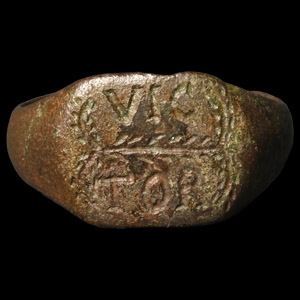
Roman Bronze Ring with VICTOR
2nd-3rd century A.D.Sold for (Inc. bp): £364
Rectangular plaque with rounded edges, incised legend 'VIC / TOR' with frond between and at each end. 5.20 grams, 21.89 mm overall, 18.42 mm internal diameter (approximate size British Q, USA 8, Europe 17.49, Japan 16)
Acquired on the UK art market before 2000. Property of a Surrey, UK, collector. -
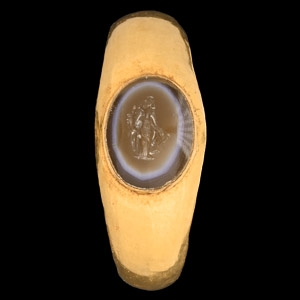
Roman Gold Ring with Fortuna Gemstone
1st-2nd century A.D.Estimate: £1,500 - 2,000 (‡+bp*)
Opening Bid: £750
Hollow-formed with inset banded agate cabochon, intaglio standing Fortuna. 2.22 grams, 21.90 mm overall, 15.21 mm internal diameter (approximate size British E 1/2, USA 2 1/2, Europe 3, Japan 3)
Acquired early 1990s. Ex private American collection; thence by descent. Private Swiss collection since 1998. This lot has been checked against the Interpol Database of stolen works of art and is accompanied by search certificate no.11619-199018. -
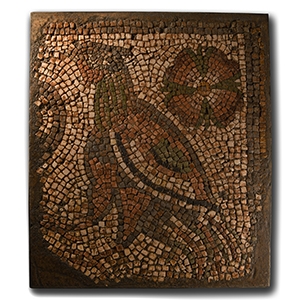
Eastern Roman Mosaic Depicting a Bird
4th-6th century A.D.Sold for (Inc. bp): £2,860
In a rectangular matrix; cream, olive, pink and other tesserae depicting a perching bird with rosette above. 15.4 kg, 43.5 x 50.4 cm
Former collection of Mr Pierre Bart (1889-1964), official of the French mandate in Syria and Lebanon (1919-1936) and delegate to the Lebanese government until 1946. Transmitted by descent.
