
Loading, please wait...
LOT 0218
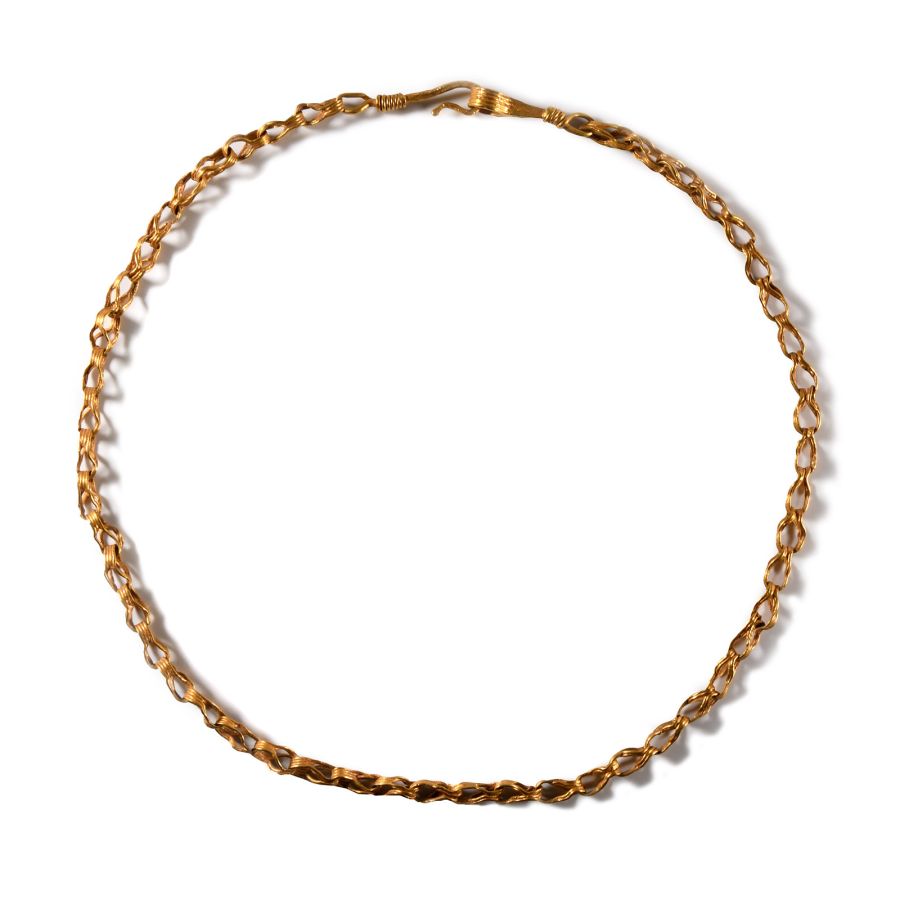
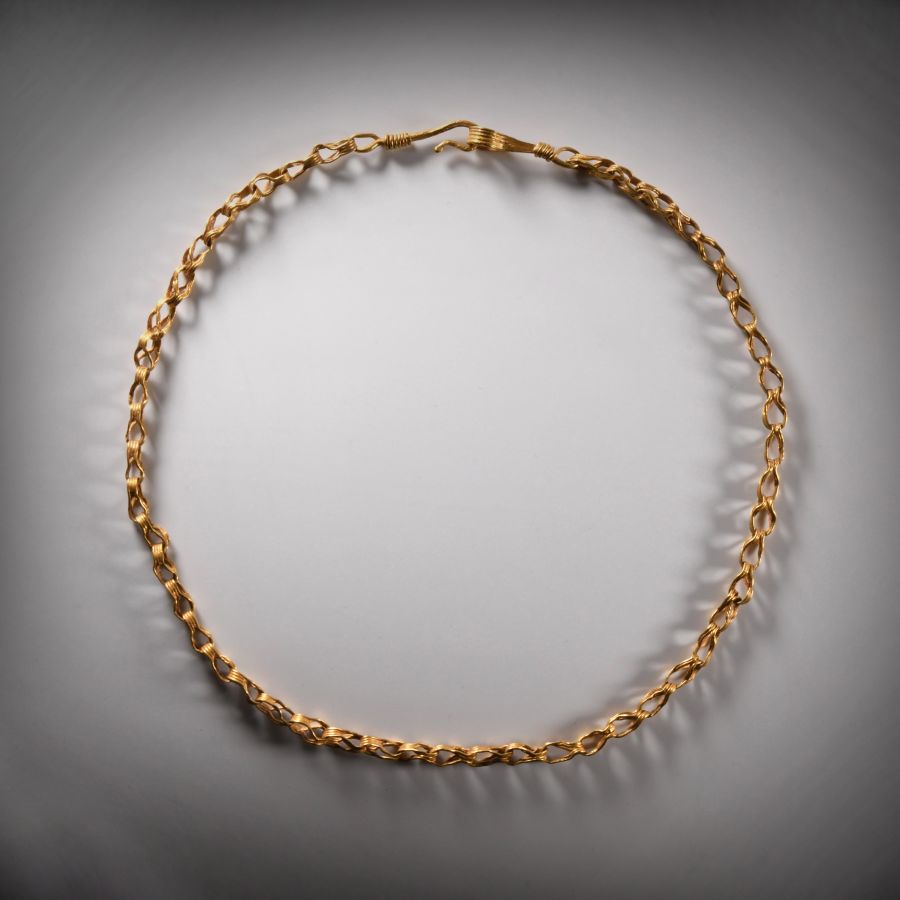
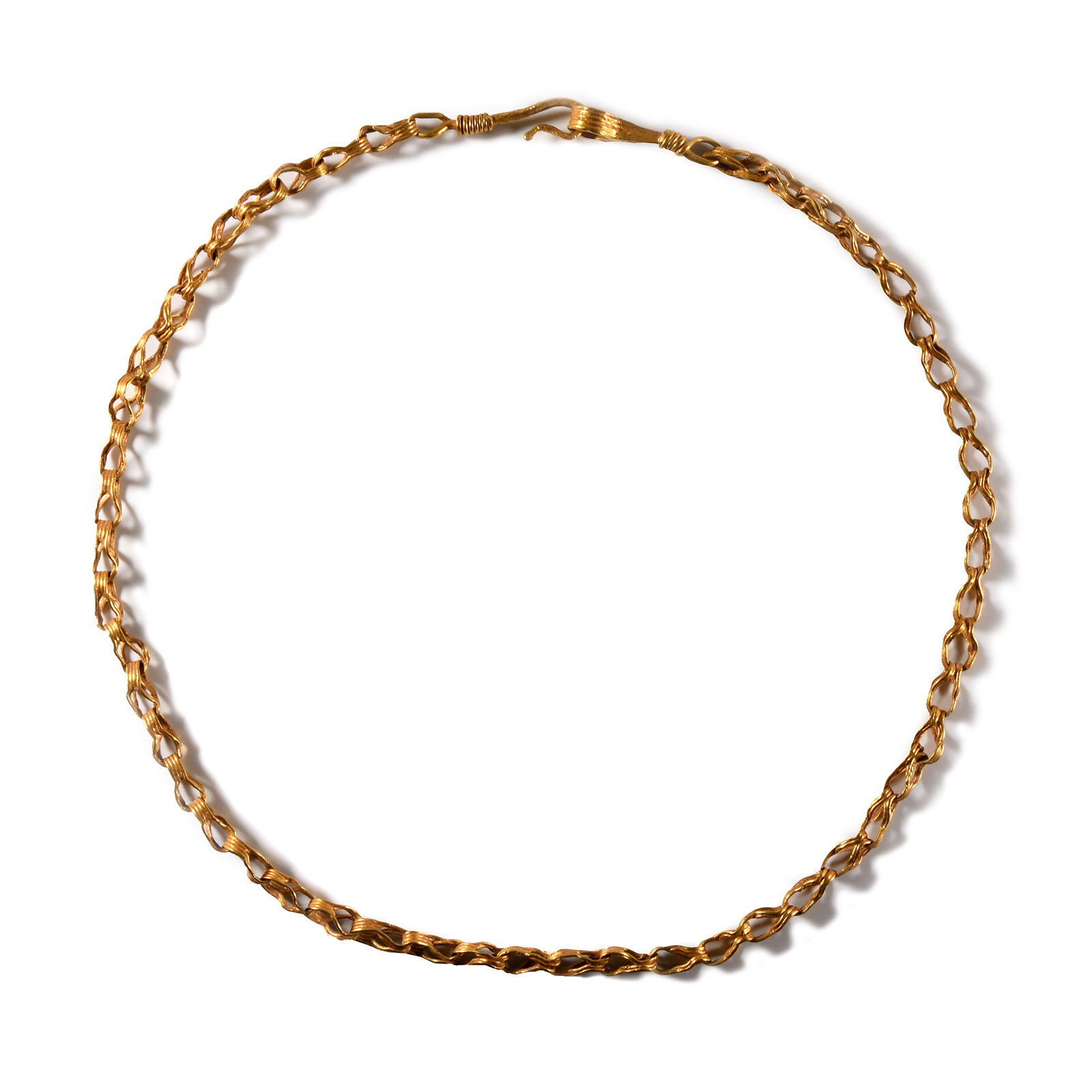
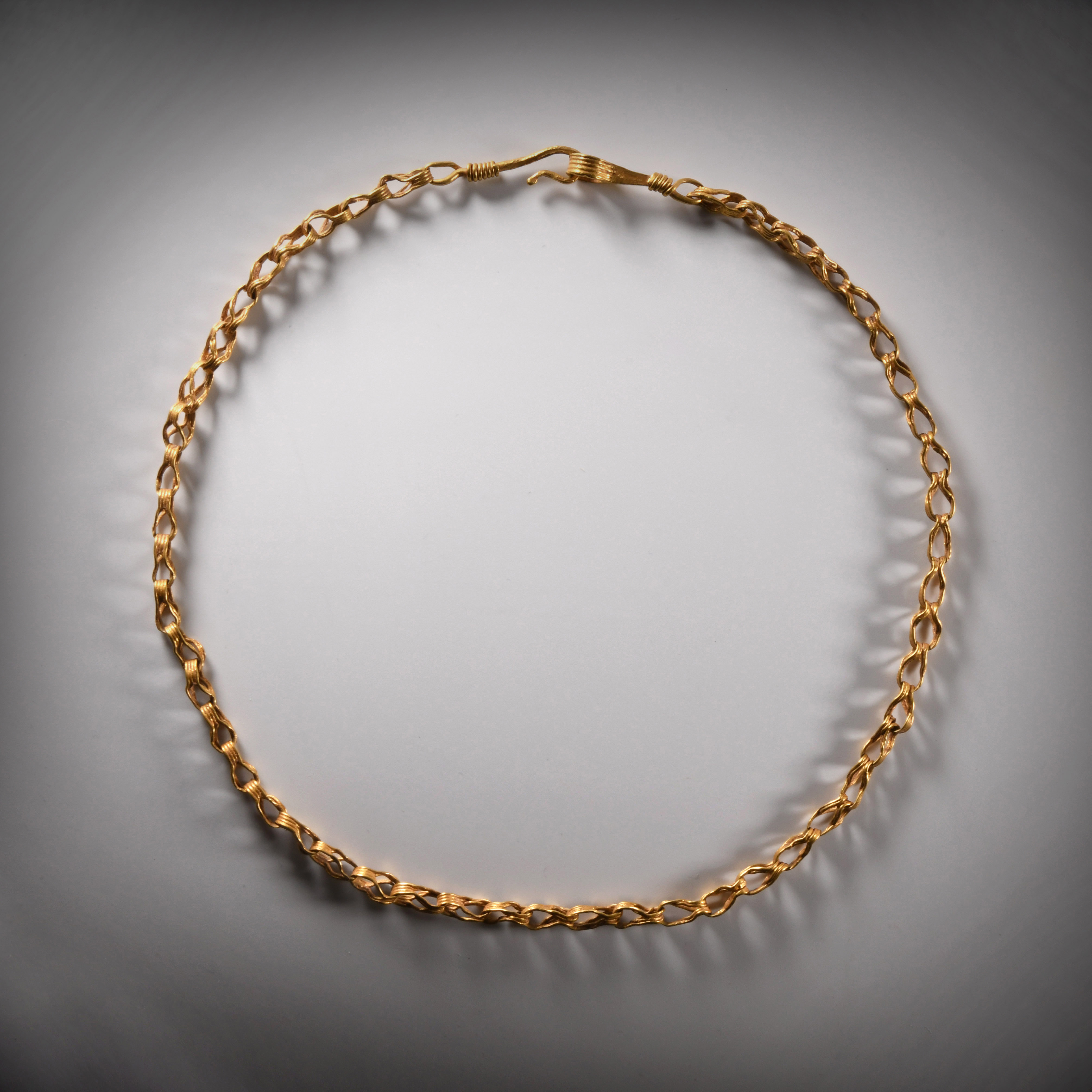
Roman Gold Linked Chain
1ST-2ND CENTURY A.D.
18 1/4 in. (28.15 grams, 46.5 cm long).
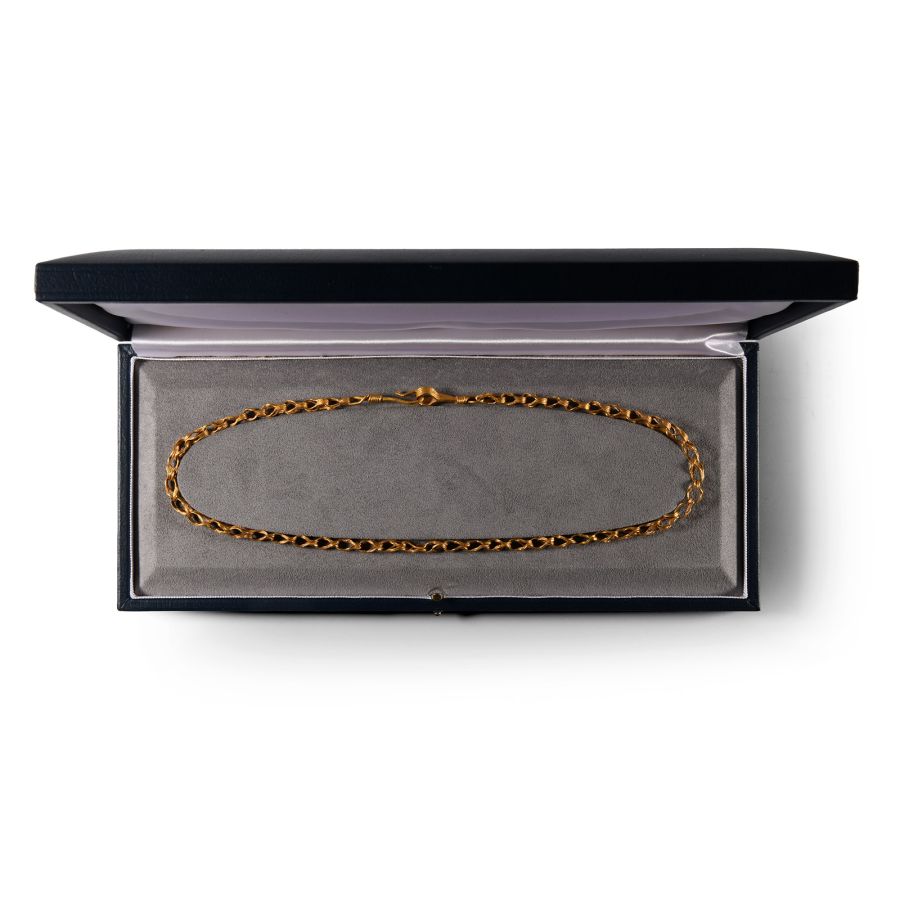
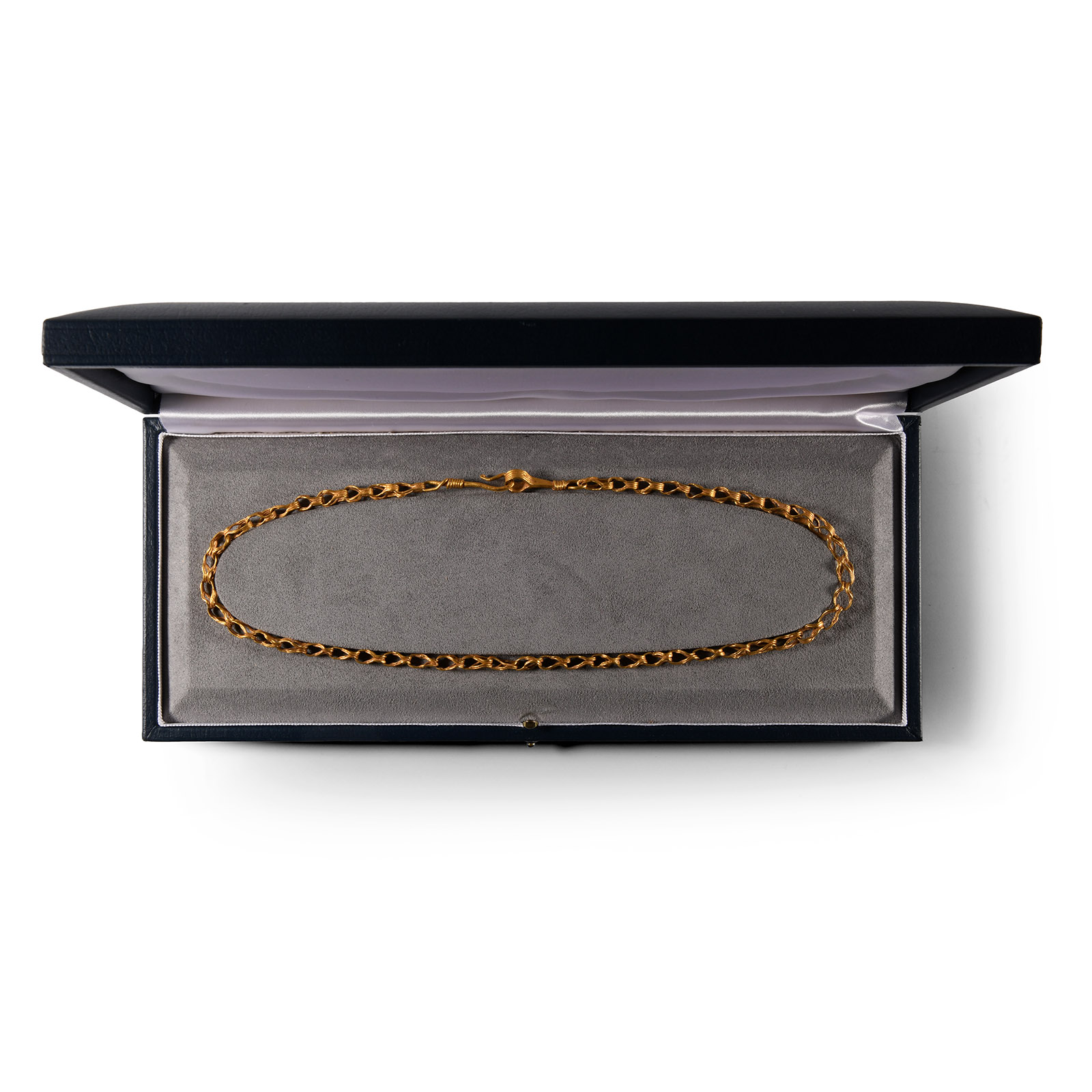
Loop-in-loop chain, each link formed from two strands of thick gold wire; thick hook with the end coiled about the shank; eye with ribbed detailing and coiled end; housed in a custom-made display case.
ProvenanceAcquired in the late 1980s-early 1990s.
Important North West London collection.
Accompanied by an academic report by Dr Raffaele D’Amato.
This lot has been checked against the Interpol Database of stolen works of art and is accompanied by search certificate no.11937-210478.
Cf. Marshall, F.H., Catalogue of the Jewellery, Greek, Etruscan and Roman, in the Department of Antiquities, British Museum, London, 1911, pls.LVIII (no.2734), LIX (no.2727 and especially 2716), LX (2736), and LXI (2738), for the same style of chain rings.
FootnotesAmong the necklaces manufactured from gold mesh (hormoi or chains), there are two recognisable fundamental types: the first, shorter and with endings suitable for being fixed on fabric, was used to adorn clothes, hooked at shoulder height. The second type (like our specimen) was worn around the neck and was generally fitted with a simple hook-and-eyelet closure.
CONDITIONTimeLine Auctions follows a vetting process to ensure the authenticity and legality of all items, reinforcing our commitment to integrity and responsible trading. Each antiquity, antique, and coin lot undergoes thorough examination by a vetting committee of at least ten external specialists, professional trade association members, scientists, and archaeologists: Our Vetting Process
AUCTIONS:
TimeLine is a leading auction house specialising in antiquities, ancient art, collectables, natural history, coins, medals, and books. Our auctions offer museums, collectors, historians, and enthusiasts the opportunity to acquire unique and historically significant pieces.
LOT 0218
Roman Gold Linked Chain
Estimate £15,000 - 20,000€17,400 - 23,200 (for guidance only)$20,250 - 27,000 (for guidance only)
-
Roman Bronze Brooch Group
1st-4th century A.D.Sold for (Inc. bp): £98
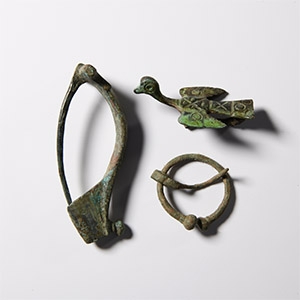
Comprising: a bird-in-flight with incised annulets and X-motifs to the body, accompanied by a typed ticket 'Roman bronze brooch of bird in flight, beautifully incised decoration, iron pin intact, 2nd century AD, authenticated by British Museum, 30/5/2006'; a penannular brooch with clubbed terminals; a bow brooch with carinated bow. 31 grams total, 31-63 mm
Acquired in the 1980s-1990s. Property of a Nottinghamshire gentleman. -
Large Roman Handled Terracotta Jar
1st-4th century A.D.Sold for (Inc. bp): £140
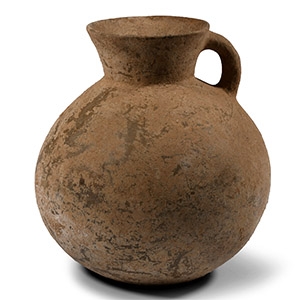
With globular profile, tall conical neck, single strap handle to the shoulder. 1.19 kg, 22.5 cm high
Acquired 1980-2015. Ex Abelita family collection. -
Roman Coin and Limited Edition Framed Print
3rd century A.D. and laterSold for (Inc. bp): £26
The coin mounted on 22 carat gold foil, framed with an art print signed by the artist David McAllister, depicting scenes of Roman military activity; limited edition number 23/1150. 1.3 kg total, 48.5 x 36.5 cm
UK gallery, early 2000s. Accompanied by an old certificate of authenticity.
David McAllister's exciting design is a 'one of a kind' work that portrays the might and riches of the Roman civilisation. This limited edition print is a celebration of the award winning artist's lifetime dedication to historical paintings of the ancient world. To enhance appreciation of this rare and historic work, each individual print is signed and numbered by the artist.
