
Loading, please wait...
LOT 0686
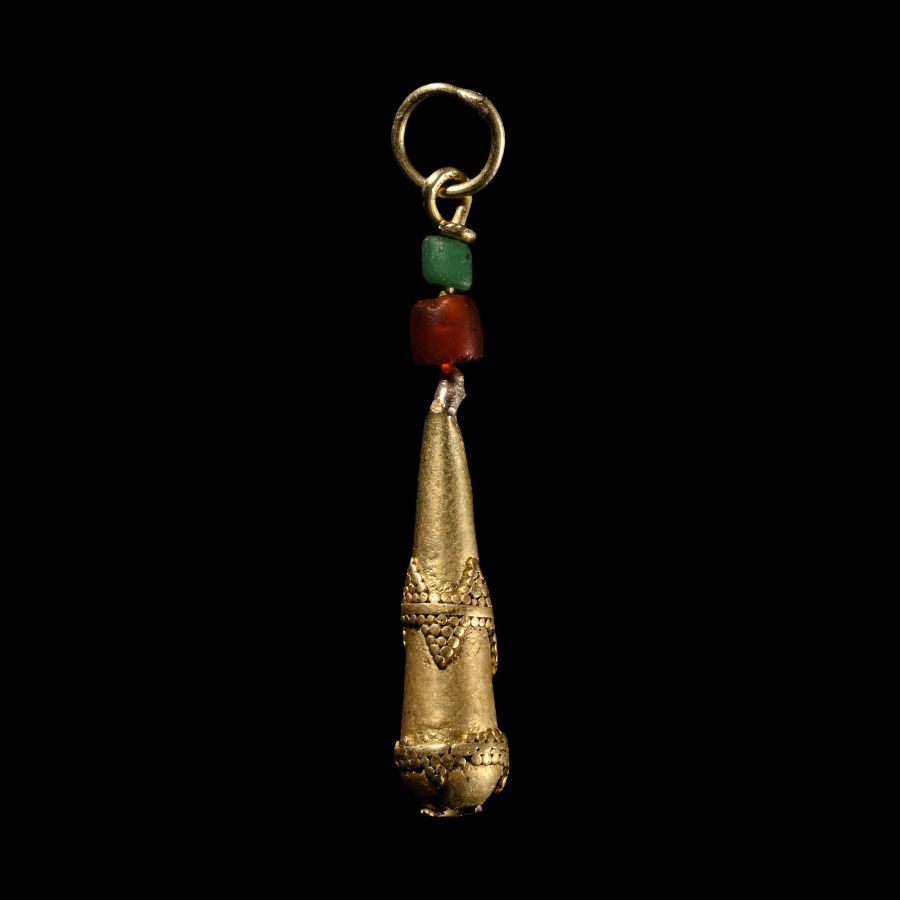
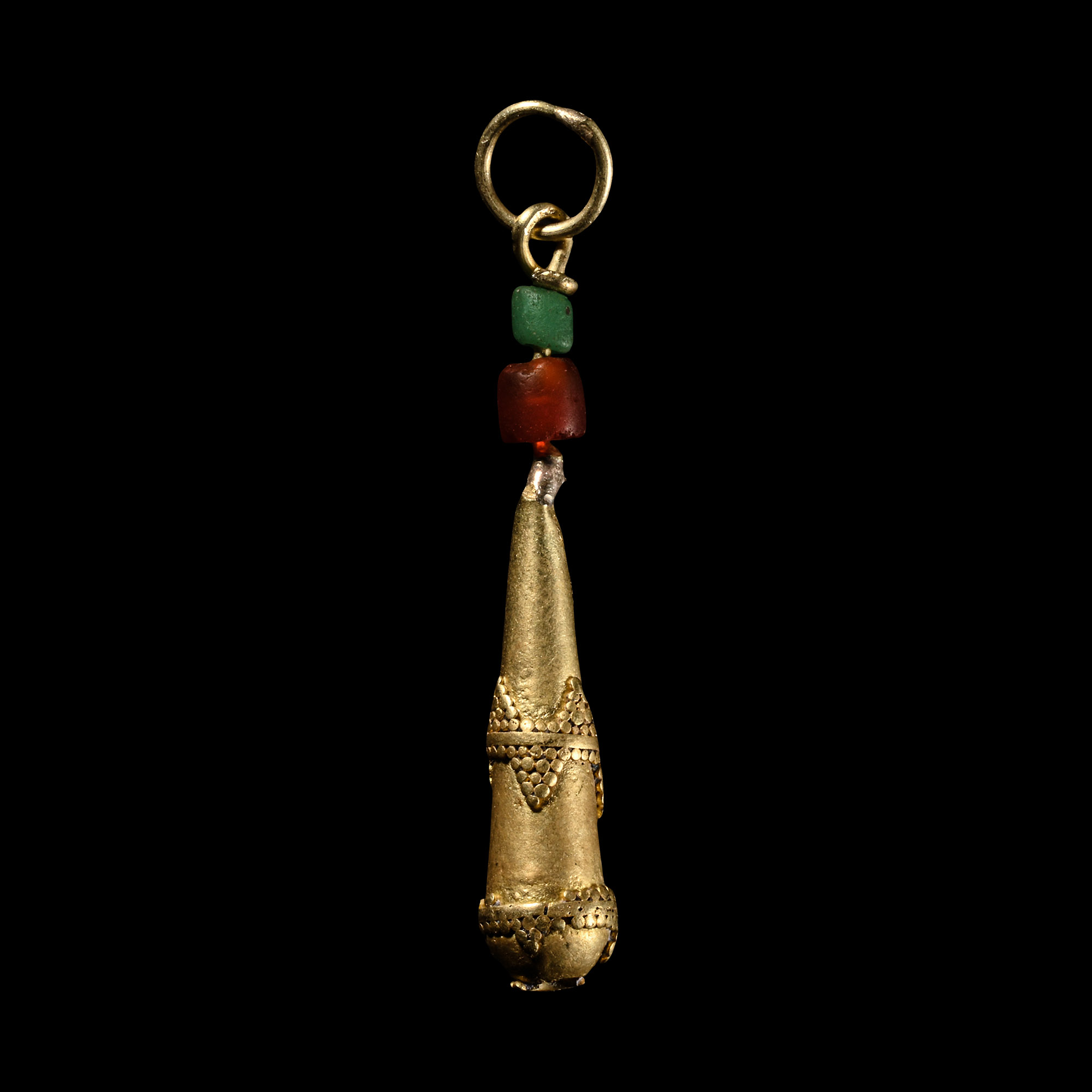
Roman Gold Hercules Club Pendant
1ST-4TH CENTURY A.D.
1 1/4 in. (1.44 grams, 32 mm).
Comprising a conical body with granulated collars to the lower end and centre, red and green glass bead above.
ProvenanceFrom a late Japanese specialist collector, 1970-2000s.
CONDITIONTimeLine Auctions follows a vetting process to ensure the authenticity and legality of all items, reinforcing our commitment to integrity and responsible trading. Each antiquity, antique, and coin lot undergoes thorough examination by a vetting committee of at least ten external specialists, professional trade association members, scientists, and archaeologists: Our Vetting Process
AUCTIONS:
TimeLine is a leading auction house specialising in antiquities, ancient art, collectables, natural history, coins, medals, and books. Our auctions offer museums, collectors, historians, and enthusiasts the opportunity to acquire unique and historically significant pieces.
-
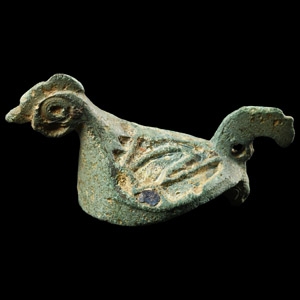
Roman 'Essex' Bronze Cockerel Brooch
Circa 2nd century A.D.Sold for (Inc. bp): £78
Modelled in the haf-round with hollow underside, pin-lugs at the tail and pierced lug for attachment of a securing chain or thong. 8.59 grams, 38 mm
Found Essex, UK, in the 1980s. Property of an Essex collector. -
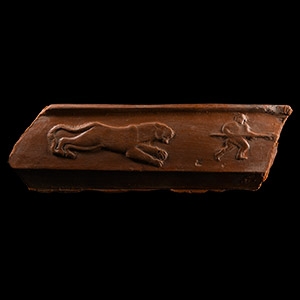
Roman North African Redware Shard with Lion and Bestiarius
4th-5th century A.D.Estimate: £250 - 350 (+bp*)
Opening Bid: £125
Of fine deep red clay, thin smooth slip on top, a large lioness leaping to right towards a bestiarius (animal fighter) armed with a hunting spear. 274 grams, 22 cm
Acquired 1960s-1990s. Late Alison Barker collection, a retired London barrister.
Possibly representing a hunt in the circus, i.e. a gladiatorial combat where bestiarii or venatores attacked wild animals. -
.jpg)
Roman Millefiori Glass Eye-Shaped Dish
1st-2nd century A.D.Estimate: £2,500 - 3,500 (+bp*)
Opening Bid: £1,250
Ellipsoidal in green and yellow millefiori glass imitating foliage, with a central almond-shaped bowl. 46.6 grams, 13 cm wide
Fine condition.
Paris collection, 1990s. From an important Paris gallery, France. Ex private Parisian collection. This lot has been checked against the Interpol Database of stolen works of art and is accompanied by search certificate no.11981-209793.
