
Loading, please wait...
LOT 0164
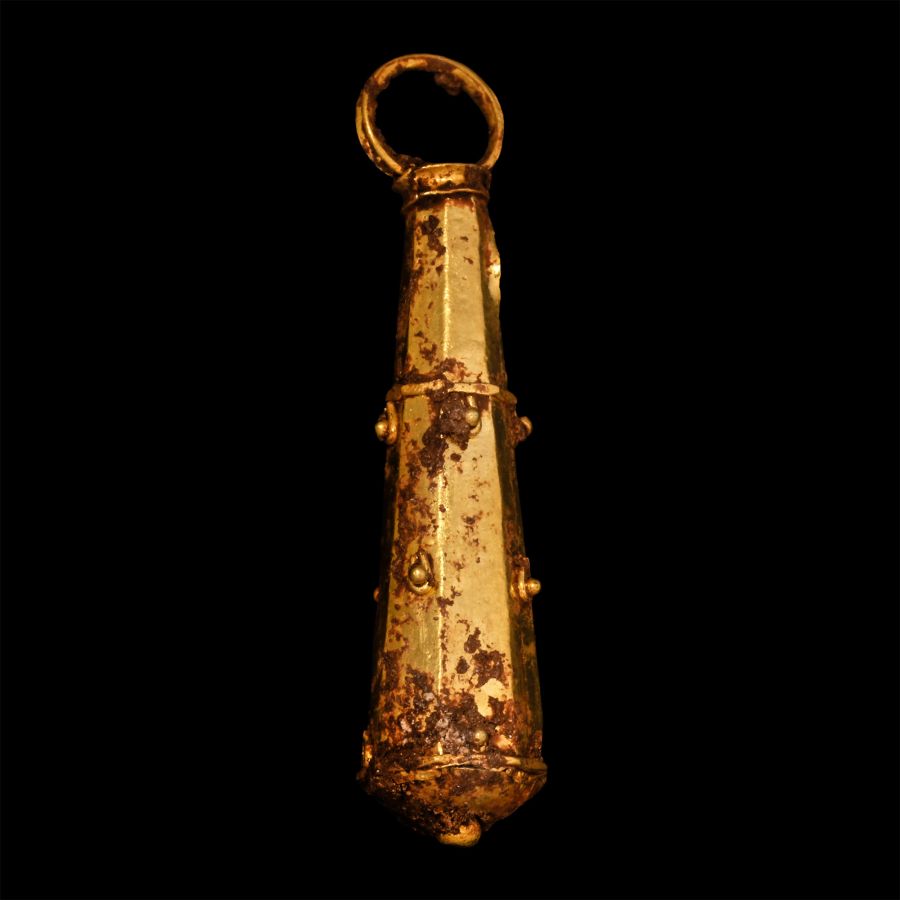
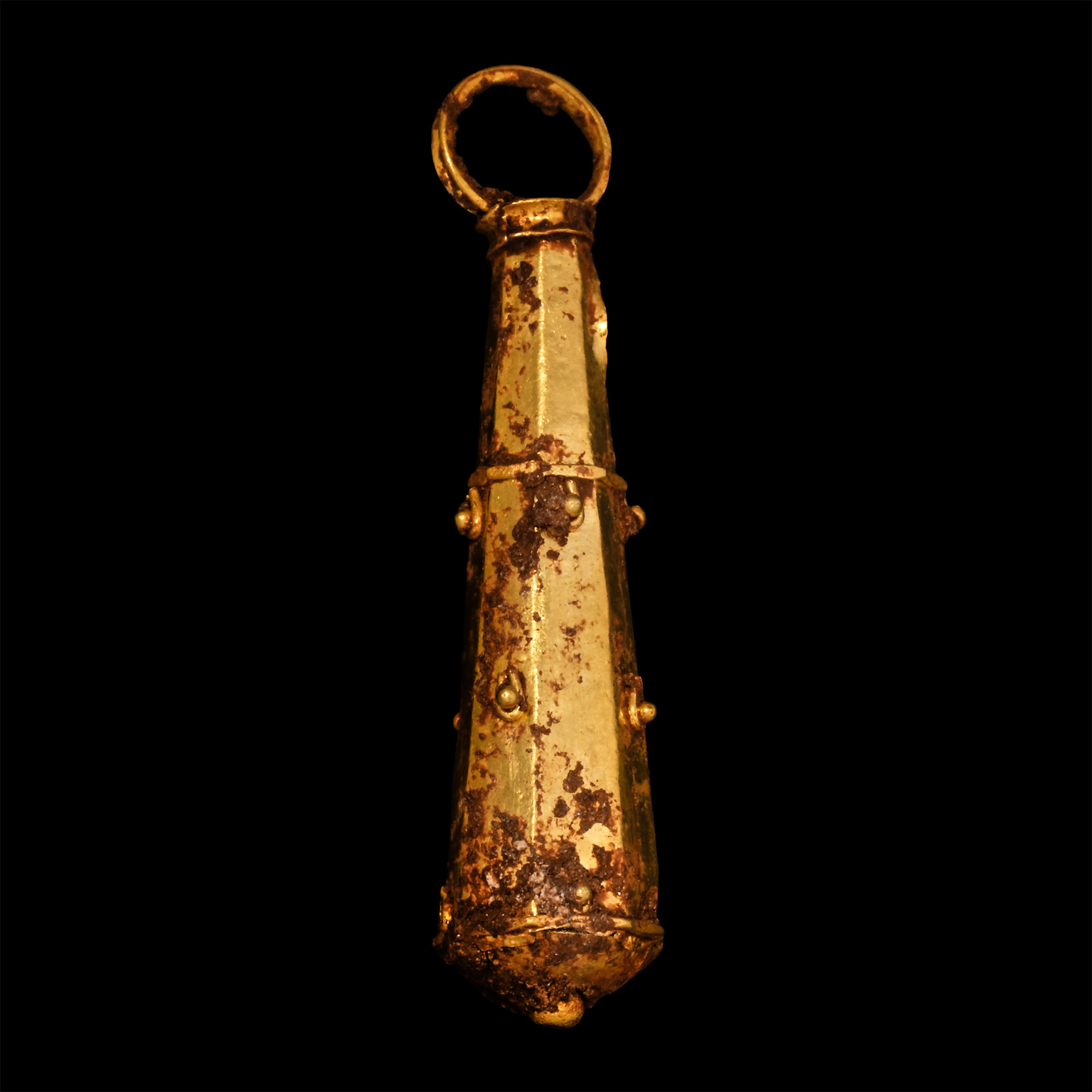
Roman Gold Hercules Club Amulet
1ST-3RD CENTURY A.D.
1 1/8 in. (1.1 grams, 28 mm).
Hexagonal in section, tapering with integral loop, applied granule studs, domed finial with a knop.
ProvenancePrivate collection, acquired in the late 1980s-early 1990s; thence by descent.
LiteratureCf. similar item in the British Museum, London, accession number 1981,0201.29, in Johns, C.M., Potter, T., The Thetford Treasure. Roman Jewellery and Silver, London, 1983, no.29.
FootnotesA similar object formed part of the remarkable hoard of late Roman gold jewellery and silver tableware found near Thetford, Norfolk, in 1979.
CONDITIONTimeLine Auctions follows a vetting process to ensure the authenticity and legality of all items, reinforcing our commitment to integrity and responsible trading. Each antiquity, antique, and coin lot undergoes thorough examination by a vetting committee of at least ten external specialists, professional trade association members, scientists, and archaeologists: Our Vetting Process
AUCTIONS:
TimeLine is a leading auction house specialising in antiquities, ancient art, collectables, natural history, coins, medals, and books. Our auctions offer museums, collectors, historians, and enthusiasts the opportunity to acquire unique and historically significant pieces.
-
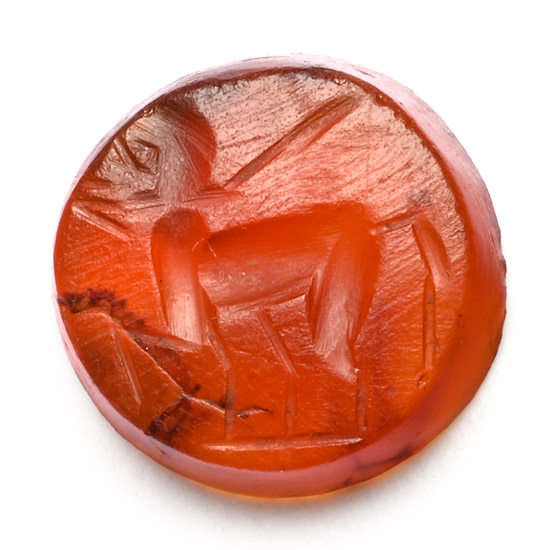
Roman Carnelian Gemstone with Centaur
2nd-3rd century A.D.Sold for (Inc. bp): £72
With intaglio centaur advancing with staff; supplied with a museum-quality impression. 0.60 grams, 10.03 mm
From the private collection of a European gentleman (1942-2024), formed since the 1970s. -
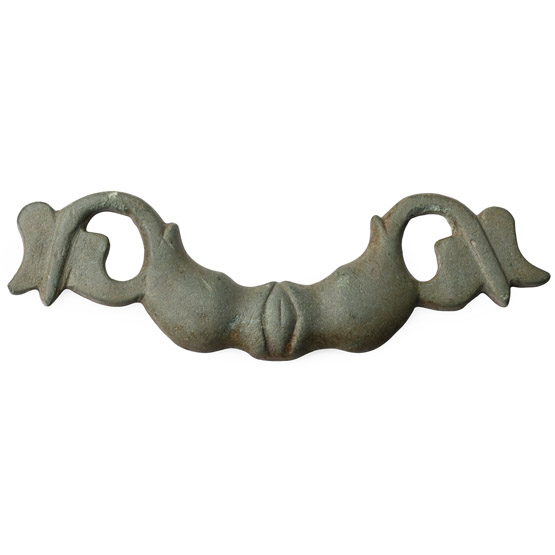
Roman Double Dolphin Handle
Circa 2nd century A.D.Sold for (Inc. bp): £130
Formed as two opposed dolphins with s-curved bodies terminating in vine leaves, vesica held between their open mouths; plano-convex in section with openwork. 59 grams, 12 cm
From an old English collection formed since 1960. -
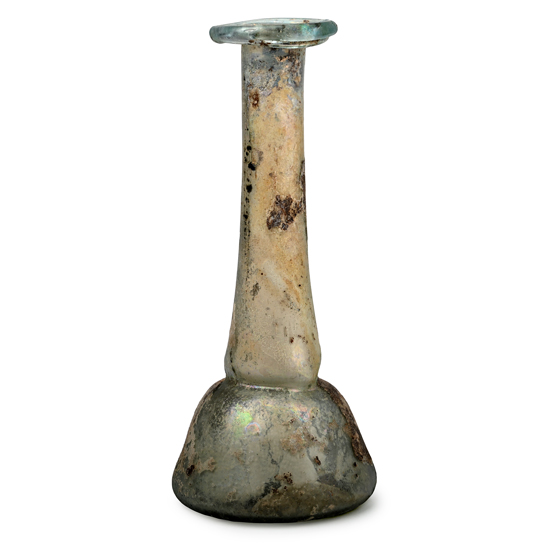
Roman Iridescent Tall Glass Unguentarium
Circa 1st century A.D.Sold for (Inc. bp): £130
With bell-shaped body, tall pinched neck, flared and rolled rim to the mouth; iridescent surface. 37.6 grams, 13.2 cm
Ex London, UK, art market 1990s.
