
Loading, please wait...
LOT 0159
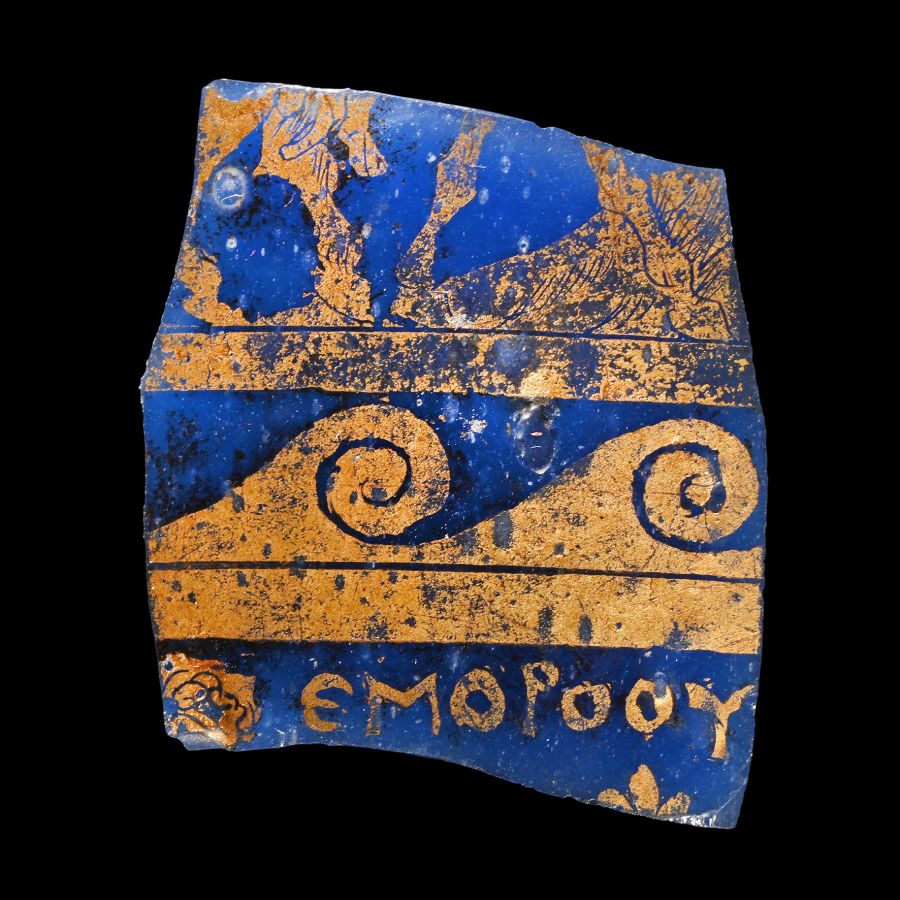
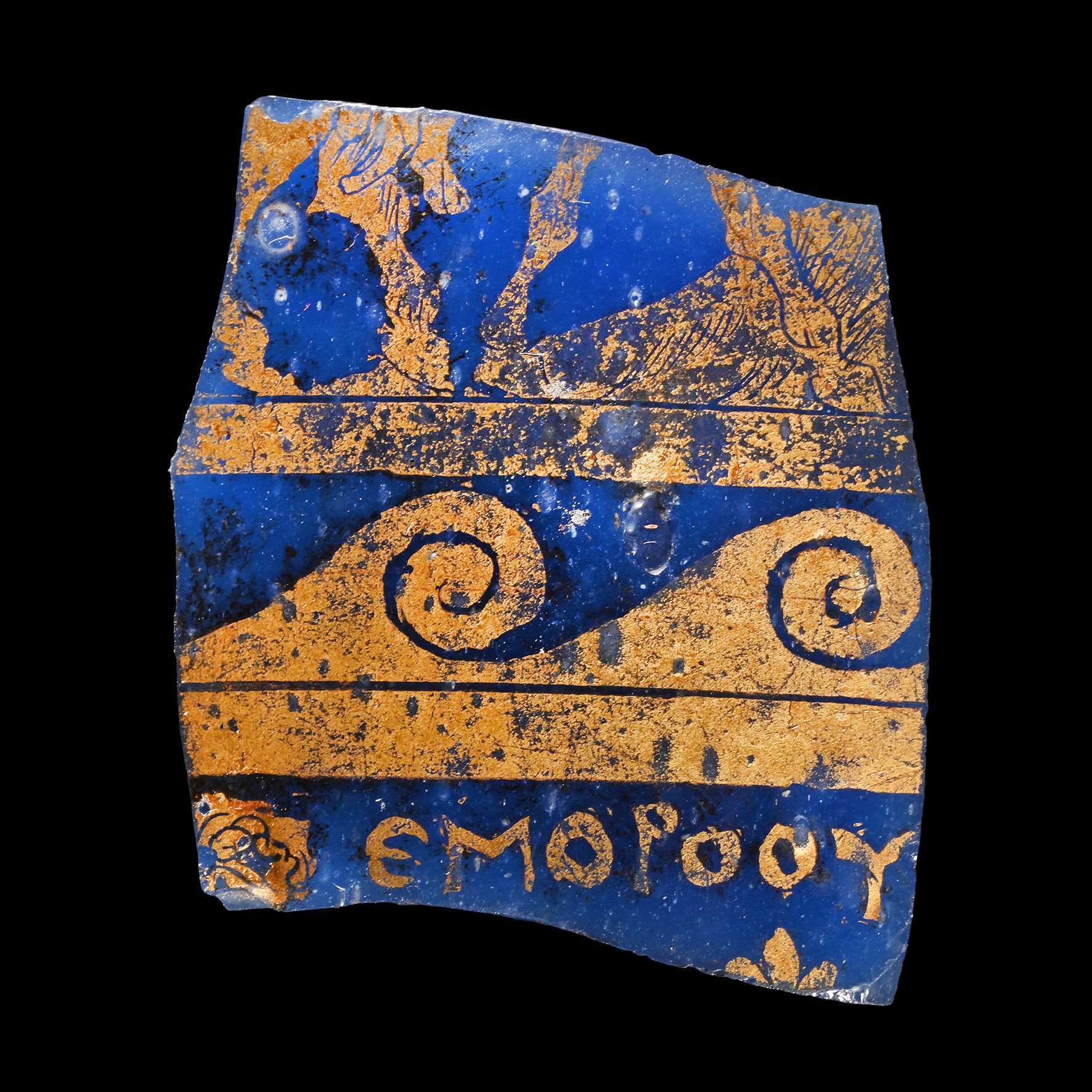
Roman Gold Foiled Glass with Inscription
4TH CENTURY A.D.
1 in. (2.19 grams, 25 mm).
Fragment of dark blue glass with applied gold-foil decoration: figural scene above a band of running scrolls; Greek script legend 'ЄΜΟΡΟΟΥ[...]'.
ProvenanceFrom a European collection, 1970s.
LiteratureCf. Whitehouse, D., Roman Glass in the Corning Museum of Glass, vol.2, New York, 2001, item 866, for type; La Magna & Annaratone, Vocabolario Greco-Italiano, Milano, 1966, p.794 s.v. μεἱρoμαι.
FootnotesThe fragment has a shallow curvature as if it was once part of a large drinking vessel. The Greek text 'εμορο ογ' appears to be derived from the verb εἵμαρται 'to be fatal' or 'to be destined by fate', so '[it was] not fatal'.
CONDITIONTimeLine Auctions follows a vetting process to ensure the authenticity and legality of all items, reinforcing our commitment to integrity and responsible trading. Each antiquity, antique, and coin lot undergoes thorough examination by a vetting committee of at least ten external specialists, professional trade association members, scientists, and archaeologists: Our Vetting Process
AUCTIONS:
TimeLine is a leading auction house specialising in antiquities, ancient art, collectables, natural history, coins, medals, and books. Our auctions offer museums, collectors, historians, and enthusiasts the opportunity to acquire unique and historically significant pieces.
-
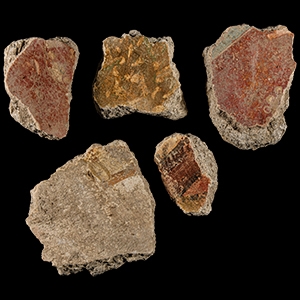
Roman Fresco Painted Wall Plaster Collection
1st century A.D.Sold for (Inc. bp): £65
Comprising five pieces in cream and red with sweeping and architectural motifs painted in contrasting colours. 539 grams total, 61-87 mm
Acquired in the 19th century. Ex Jeger collection, Switzerland. -
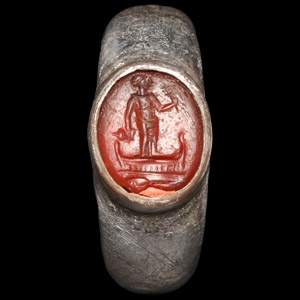
Roman Silver Ring with Isis Gemstone
1st century A.D.Sold for (Inc. bp): £338
Ellipsoid cell to the bezel, inset carnelian gemstone with intaglio Isis standing by the curved prow of a boat holding a sistrum in her raised hand. 5.53 grams, 23.13 mm overall, 17.36 mm internal diameter (approximate size British N 1/2, USA 6 3/4, Europe 14.35, Japan 13)
Old private collection, 1980s. European art market. -
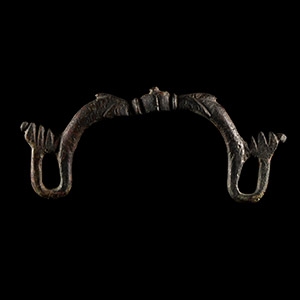
Roman Bronze Military Helmet Carry Handle with Dolphins
2nd-3rd century A.D.Sold for (Inc. bp): £59
Composed of two opposing helmets supporting the central knop with their noses, their curved tails forming the suspension loops. 37.3 grams, 95 mm
Found UK. Acquired from a private collector in 2005. Property of a Nottinghamshire gentleman. Accompanied by a typed identification card.
