
Loading, please wait...
LOT 0801
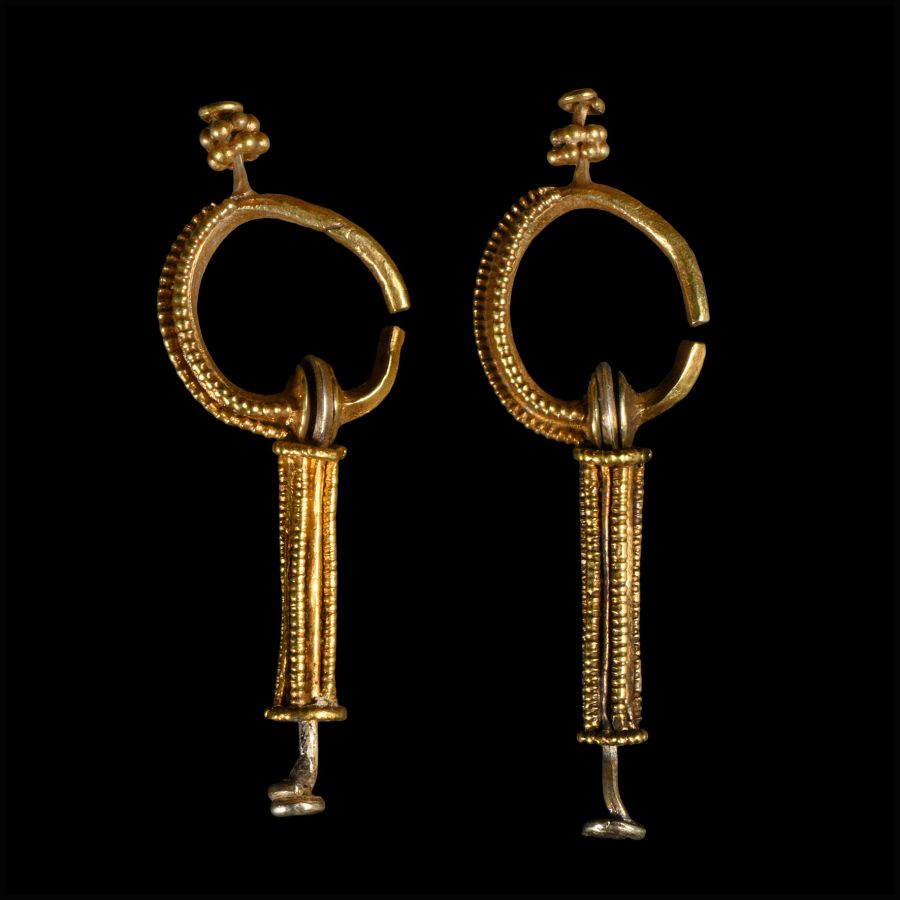
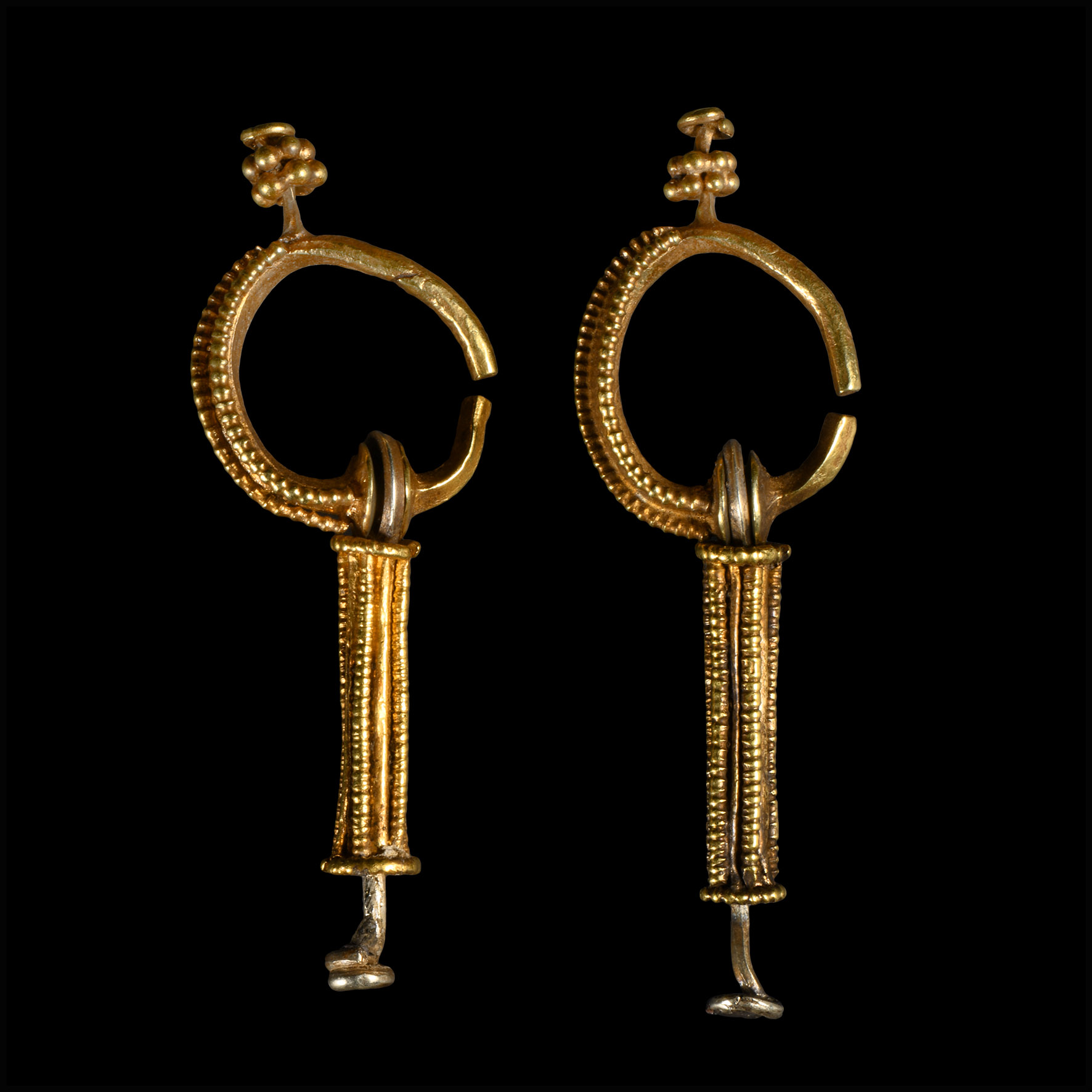
Roman Gold Earrings
2ND-3RD CENTURY A.D.
1 3/4 - 1 7/8 in. (10.33 grams total, 46-48 mm).
Each composed of a penannular hoop with filigree ornament, single granulated bead below, suspended on a cylindrical bar with vertical columns of filigree wire; elements joined with later silver wire; repaired. [2, No Reserve]
ProvenanceFrom the collection of a North American gentleman, formed in the 1990s.
CONDITIONTimeLine Auctions follows a vetting process to ensure the authenticity and legality of all items, reinforcing our commitment to integrity and responsible trading. Each antiquity, antique, and coin lot undergoes thorough examination by a vetting committee of at least ten external specialists, professional trade association members, scientists, and archaeologists: Our Vetting Process
AUCTIONS:
TimeLine is a leading auction house specialising in antiquities, ancient art, collectables, natural history, coins, medals, and books. Our auctions offer museums, collectors, historians, and enthusiasts the opportunity to acquire unique and historically significant pieces.
-
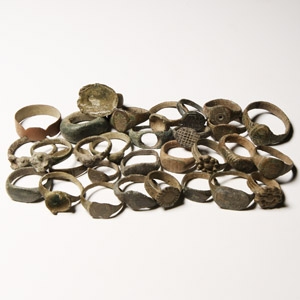
Roman to Medieval Bronze Ring Collection
1st-16th century A.D.Sold for (Inc. bp): £182
Composed of a variety of ring types and sizes from various time periods, including examples with decorative bezels. 86 grams total, 14-24 mm
Acquired on the German art market around 2000s. From the collection of an EU gentleman living in the UK. -
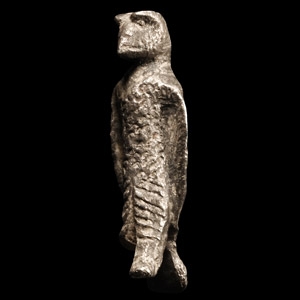
Roman Silver Standing Eagle Statuette
1st-4th century A.D.Sold for (Inc. bp): £104
Modelled in the round with naturalistic detailing, wings held slightly open. 10.9 grams, 34 mm
‘The Ancient Menagerie Collection’ formerly the property of a Cambridgeshire lady, collected since the 1990s and acquired from auctions and dealers throughout Europe and the USA, now ex London collection. -
.jpg)
Roman Bronze Figure of Diana
1st-2nd century A.D.Sold for (Inc. bp): £3,900
Standing with her weight on her right leg, the left leg slightly bent, looking towards her left; the hair gathered at the nape of the neck; dressed in a short pleated sleevelesschiton, puffed up at the waist and falling above her knees, small boots with the strings tied above the ankles; carrying a quiver held by a strap passing over the right shoulder across her breasts; her lowered left arm was probably holding a bow, her right arm raised above her shoulder in the act of drawing an arrow from her quiver; mounted on a custom-made display stand. 155 grams total, 12.5 cm high including stand
Ex Mr. A.J. collection, Geneva, Switzerland. Acquired in Europe in 2014. Private collection. This lot has been checked against the Interpol Database of stolen works of art and is accompanied by search certificate number no.11793-206487
This example depicts a well-attested type of Diana (Greek Artemis) goddess of the hunt. The slight swaying and the folds of the garment recall a Greek work of the classical period, widely copied by the Romans. The statuette is a good artwork from the Roman period, with identical copies spread throughout the empire, as many similar figures came from Naples, Bligny-sur-Dache, Trebizond, Carnuntum, and Vienna. The statuette was probably intended for a domestic altar (lararium).
