
Loading, please wait...
LOT 0169
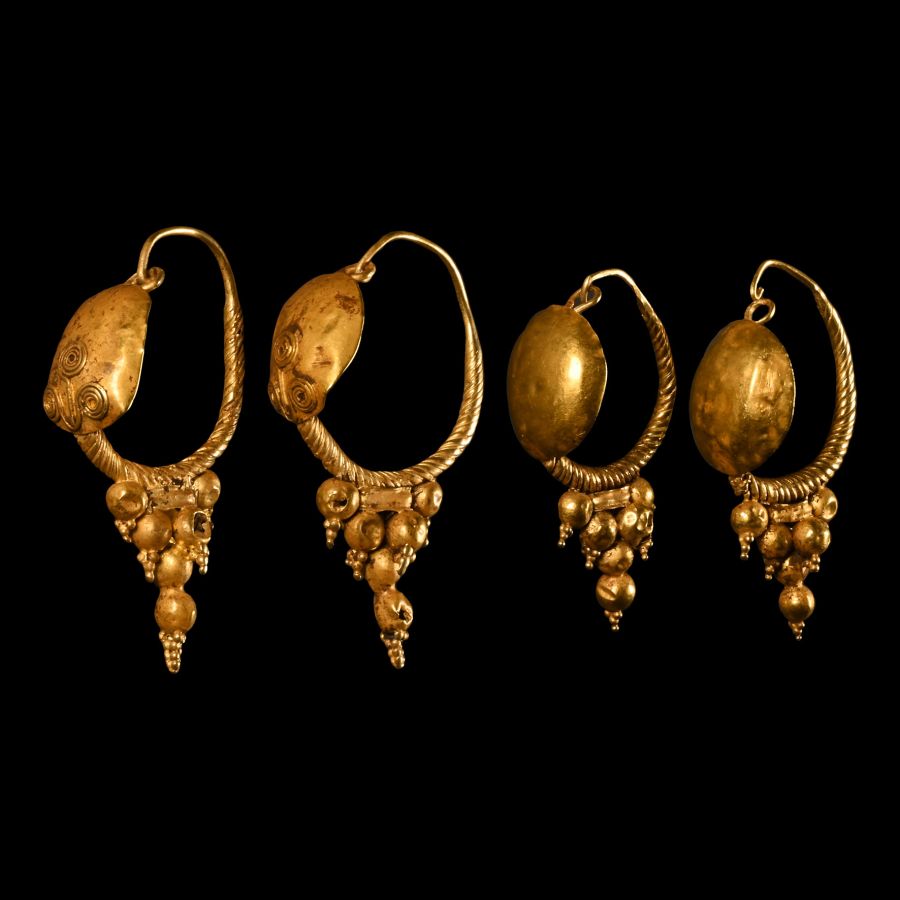
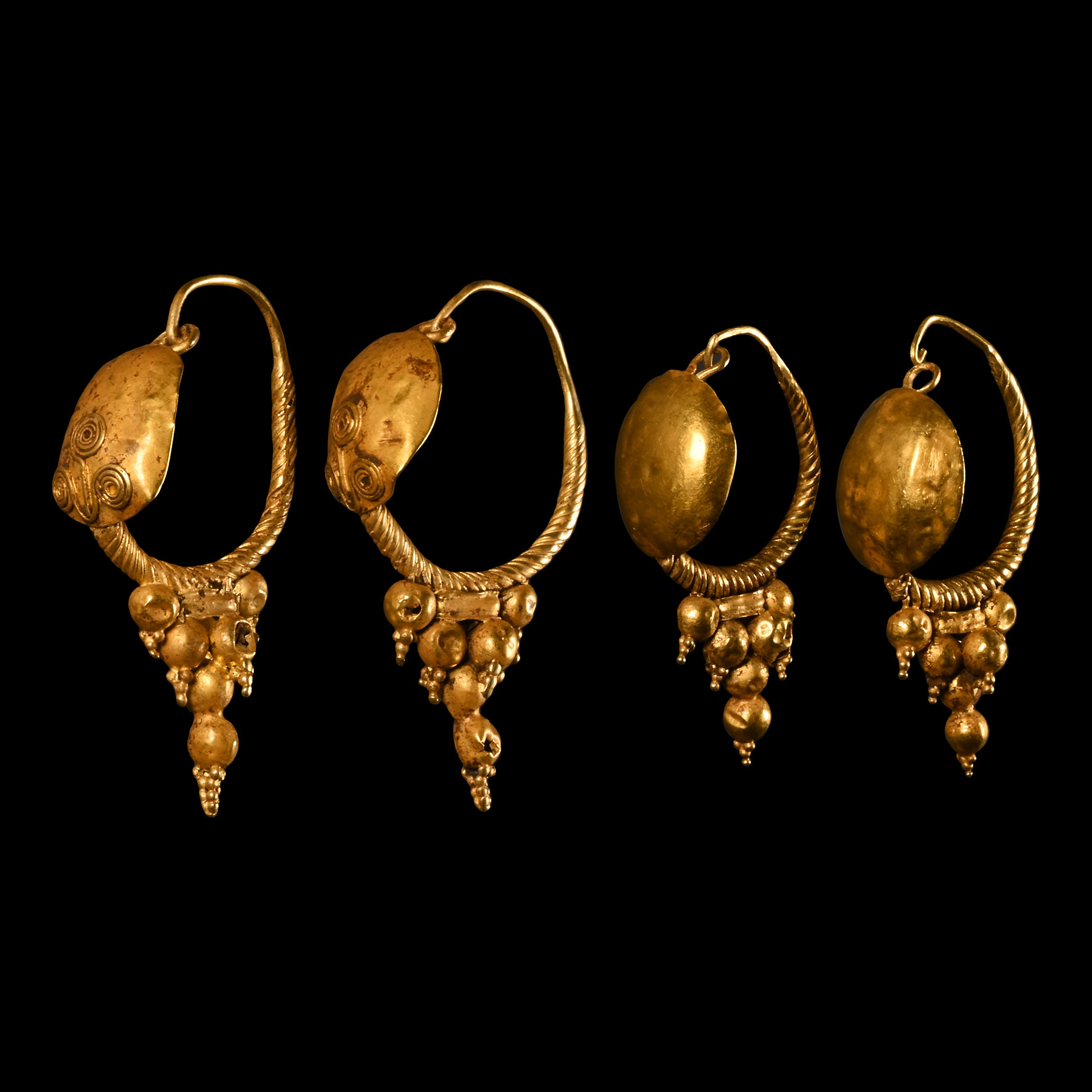
Roman Gold Earring Pairs
2ND-3RD CENTURY A.D. OR EARLIER
1 5/8 - 2 in. (16.97 grams total, 42-50 mm).
Two pairs of earrings with decoratively twisted hoops, domed plaques and pyramid bulbs embellished with granule clusters; one pair with gold wire spirals to the plaques. [4]
ProvenanceAcquired between 1950-1970s.
Ex Swiss private collection.
Cf. The Metropolitan Museum, New York, accession number 08.251.5, .6, for a broadly similar earring.
CONDITIONTimeLine Auctions follows a vetting process to ensure the authenticity and legality of all items, reinforcing our commitment to integrity and responsible trading. Each antiquity, antique, and coin lot undergoes thorough examination by a vetting committee of at least ten external specialists, professional trade association members, scientists, and archaeologists: Our Vetting Process
AUCTIONS:
TimeLine is a leading auction house specialising in antiquities, ancient art, collectables, natural history, coins, medals, and books. Our auctions offer museums, collectors, historians, and enthusiasts the opportunity to acquire unique and historically significant pieces.
LOT 0169
Roman Gold Earring Pairs
Estimate £1,500 - 2,000€1,740 - 2,320 (for guidance only)$2,030 - 2,700 (for guidance only)
-
Roman Silver Kantharos
2nd century B.C.-1st century A.D.Estimate: £3,500 - 4,500 (+bp*)
Opening Bid: £1,944
With deep spherical body supported on a round stand; incised with a band around the inner surface and concentric circles on the outer body; two looped high handles, one with stipple engraved monogram on the upper side. 156 grams, 14 cm wide
Ex Mansees collection, formed 1950s-early 1990s. From a large American collection formed in Chicago, Illinois, USA, in 1995. From a European collection. This lot has been checked against the Interpol Database of stolen works of art and is accompanied by search certificate no.11627-197618. -
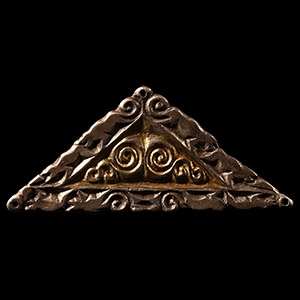
Late Roman Silver-Gilt Triangular Belt Mount with Lions
4th-5th century A.D.Estimate: £500 - 700 (+bp*)
Opening Bid: £200
The borders with spiral motifs and running lions, a hole in each corner for fastening pins. 8.97 grams, 60 mm
Acquired early 1990s. From an East Anglian private collection.
By the second half of the 4th century, broad Roman military belts were decorated with chip-carved mounts and plates. The fittings were realised by punching or by chip carving different patterns and motifs. -
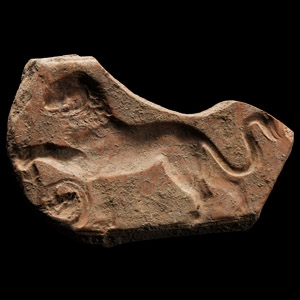
Roman Terracotta Lion Mould
1st-4th century A.D.Sold for (Inc. bp): £338
The amorphous fragment with a mould in the form of a lion advancing left to one face, one front paw raised. 107 grams, 10.4 cm
Acquired 1980-2015. Ex Abelita family collection.
