
Loading, please wait...
LOT 0096
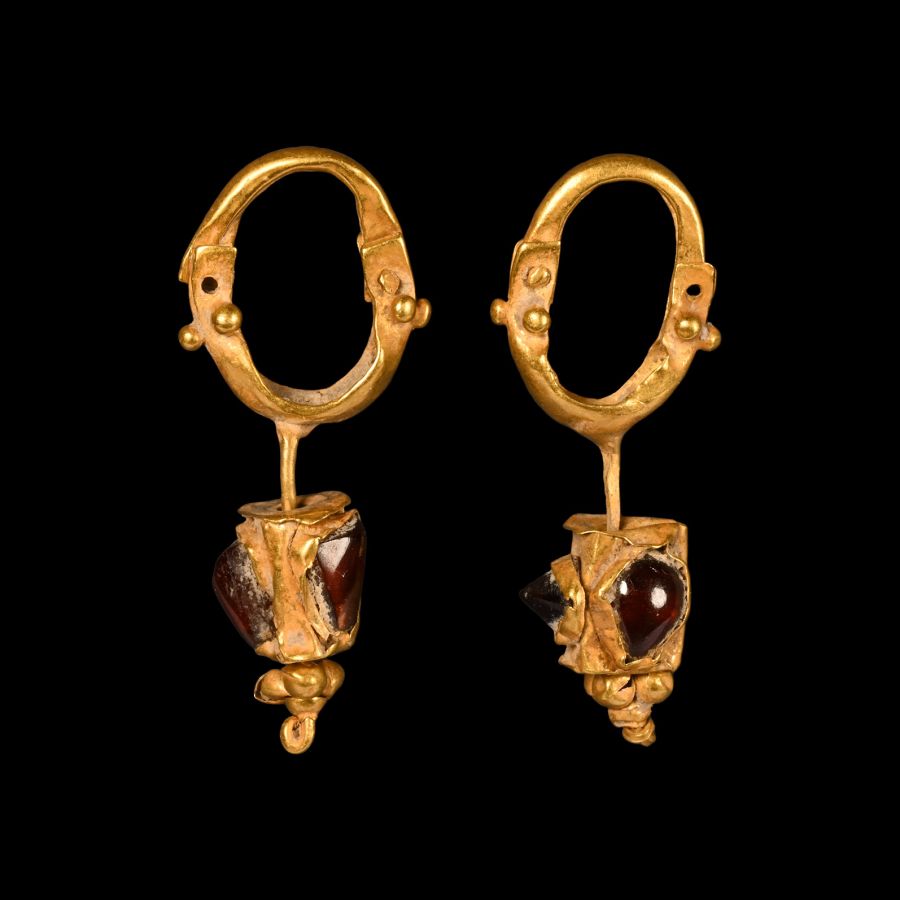
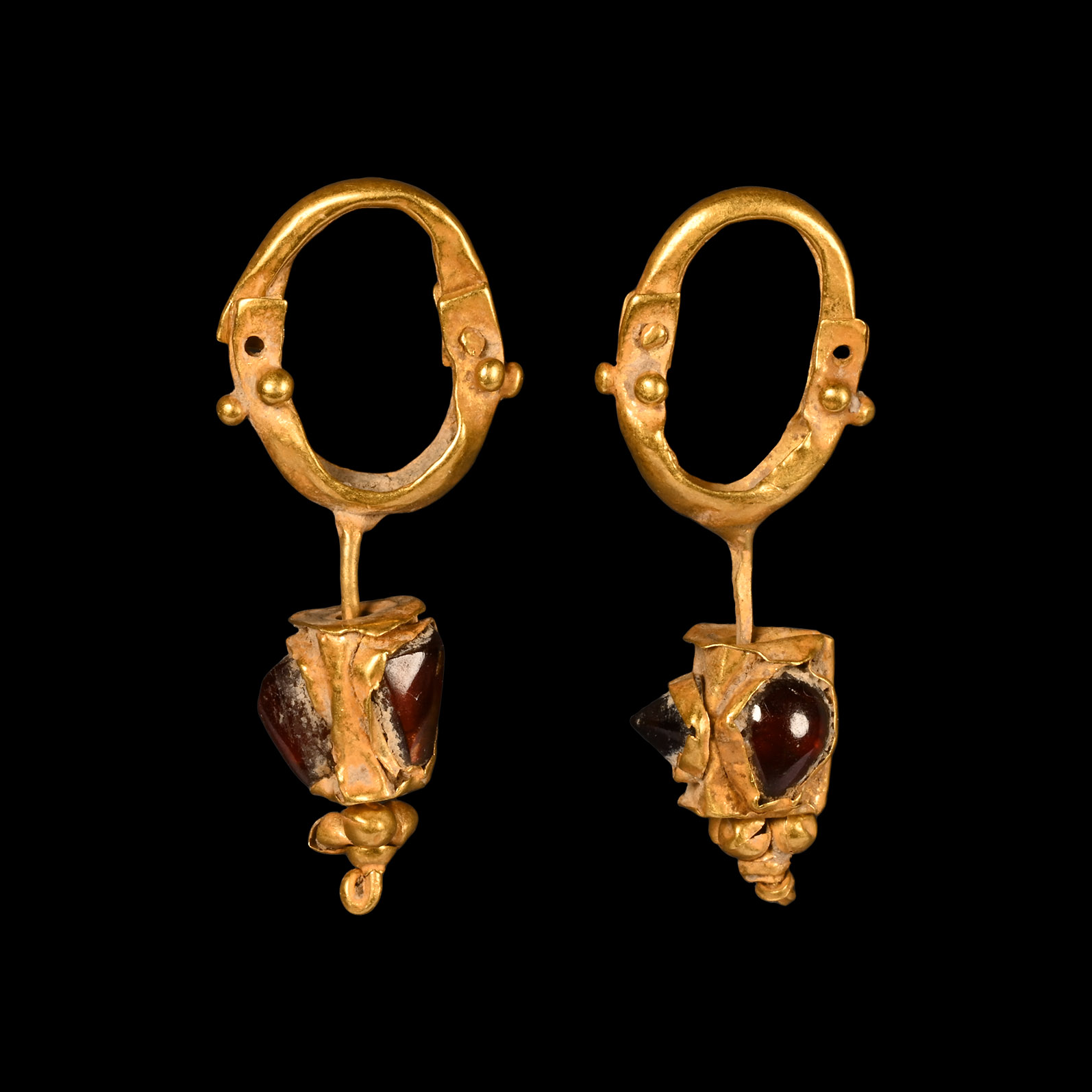
Roman Gold Earring Pair
1ST-3RD CENTURY A.D.
1 1/4 in. (3.45 grams total, 31 mm each).
A matched pair of gold earrings, each a substantial hoop with hinged closure and granule detailing, columnar sleeve with applied cells and inset carnelian cloisons, granule cluster finial. [2]
ProvenanceAcquired early 1990s.
Ex private American collection; thence by descent.
Private collection since 1998.
TimeLine Auctions follows a vetting process to ensure the authenticity and legality of all items, reinforcing our commitment to integrity and responsible trading. Each antiquity, antique, and coin lot undergoes thorough examination by a vetting committee of at least ten external specialists, professional trade association members, scientists, and archaeologists: Our Vetting Process
AUCTIONS:
TimeLine is a leading auction house specialising in antiquities, ancient art, collectables, natural history, coins, medals, and books. Our auctions offer museums, collectors, historians, and enthusiasts the opportunity to acquire unique and historically significant pieces.
-
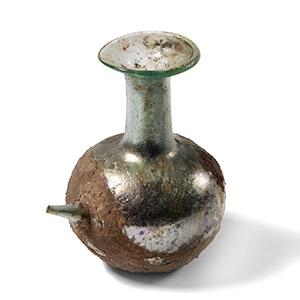
Roman Iridescent Glass Pourer
2nd-4th century A.D.Estimate: £300 - 400 (‡+bp*)
Opening Bid: £150
A clear glass feeder bottle with bulbous bottle, tubular neck, broad everted rim and conical spout; extensive iridescence. 40 grams, 10.2 cm high
Acquired early 1990s. Ex private American collection; thence by descent. Private collection since 1998. -
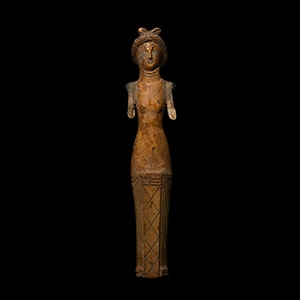
Romano-Parthian Female Bone Idol
3rd century B.C.-2nd century A.D.Estimate: £1,200 - 1,700 (+bp*)
Opening Bid: £480
A bone doll depicting a female figure with elaborately tied hairstyle, semi-naturalistic facial and anatomical detailing and geometric detailing to the garment wrapped around her lower body; stub arms; copper-alloy rivets to the shoulders. 77 grams, 19 cm high
with a London, UK gallery 1971-early 2000s. -
.jpg)
Roman Storage Jar
1st-4th century A.D.Sold for (Inc. bp): £143
A bulbous ceramic storage jar with everted rim and splayed foot. 486 grams, 14 cm
Fine condition.
English collection formed in the 1990s. UK art market. Property of an Essex gentleman.
