
Loading, please wait...
_900x900.jpg "Roman Gold Earring Pair with Gemstone Drops")
_200x200.jpg "Roman Gold Earring Pair with Gemstone Drops")
.jpg "Roman Gold Earring Pair with Gemstone Drops")
LOT 0647
Roman Gold Earring Pair with Gemstone Drops
2ND-3RD CENTURY A.D.
2 3/8 in. (9.32 grams total, 60-62 mm).
Matched pair, each a hoop and suspension hook; a crescent plaque supported by filigree wires with granulated collars, lateral dangles with turquoise seed beads and median longer dangle with granulated collars and gemstone finial; a marriage. [2]
ProvenanceAcquired in 1995.
Private collection, thence by descent.
Private collection, since the late 1990s.
This lot has been checked against the Interpol Database of stolen works of art and is accompanied by a search certificate number no.12863-241727.
TimeLine Auctions follows a vetting process to ensure the authenticity and legality of all items, reinforcing our commitment to integrity and responsible trading. Each antiquity, antique, and coin lot undergoes thorough examination by a vetting committee of at least ten external specialists, professional trade association members, scientists, and archaeologists: Our Vetting Process
AUCTIONS:
TimeLine is a leading auction house specialising in antiquities, ancient art, collectables, natural history, coins, medals, and books. Our auctions offer museums, collectors, historians, and enthusiasts the opportunity to acquire unique and historically significant pieces.
-
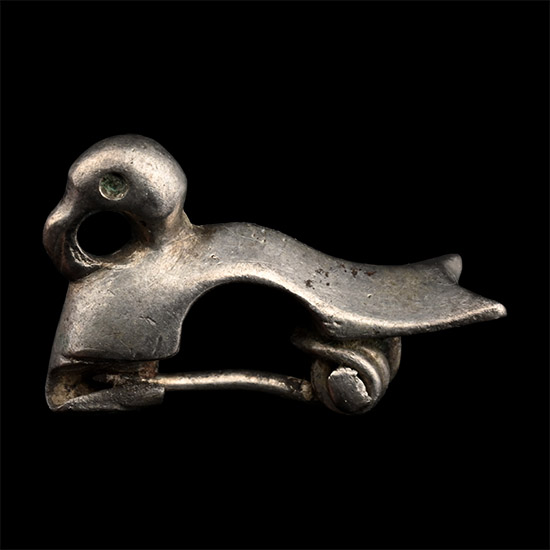
Roman Silver Duck Brooch
Circa 2nd century A.D.Sold for (Inc. bp): £585
The bow formed as the arched body of the bird with looped head and beak; pin-lugs and pin to underside. 5.78 grams, 24 mm
Ex 'S' collection, London, UK, 1970s-1990s. -
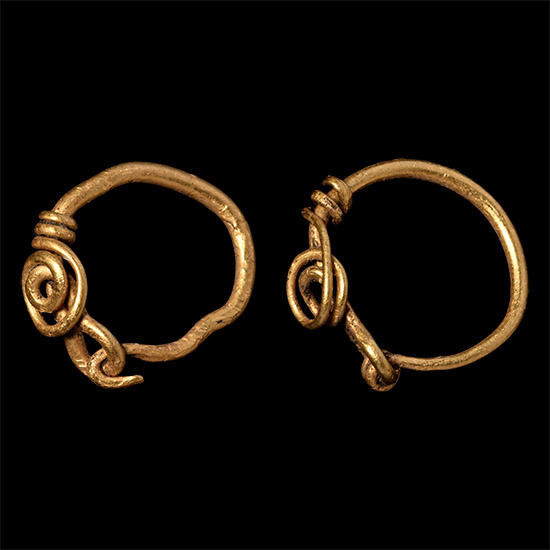
Roman Gold Earring Pair
1st-4th century A.D.Sold for (Inc. bp): £247
Each a small filigree hoop with looped knots and ends wound round the shank. 1.08 grams total, 11 mm each
Ex German art market, 2000s. Acquired from an EU collector living in London. From the collection of a Surrey, UK, gentleman. -
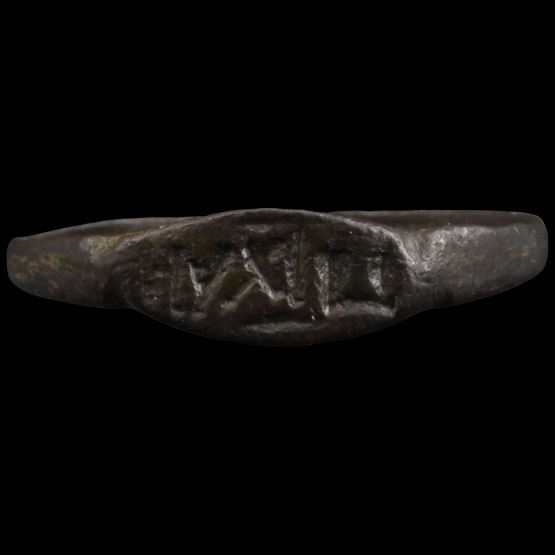
Roman Bronze Ring with Inscription
1st-4th century A.D.Sold for (Inc. bp): £65
Slender hoop with rectangular bezel, impressed legend 'ΠΙΧΑ[.]'. 0.69 grams, 20.41 mm overall, 19.22 mm internal diameter (approximate size British P, USA 7 1/2, Europe 16.23, Japan 15)
Ex German art market, 2000s. Acquired from an EU collector living in London. From the collection of a Surrey, UK, gentleman.
