
Loading, please wait...
LOT 0143
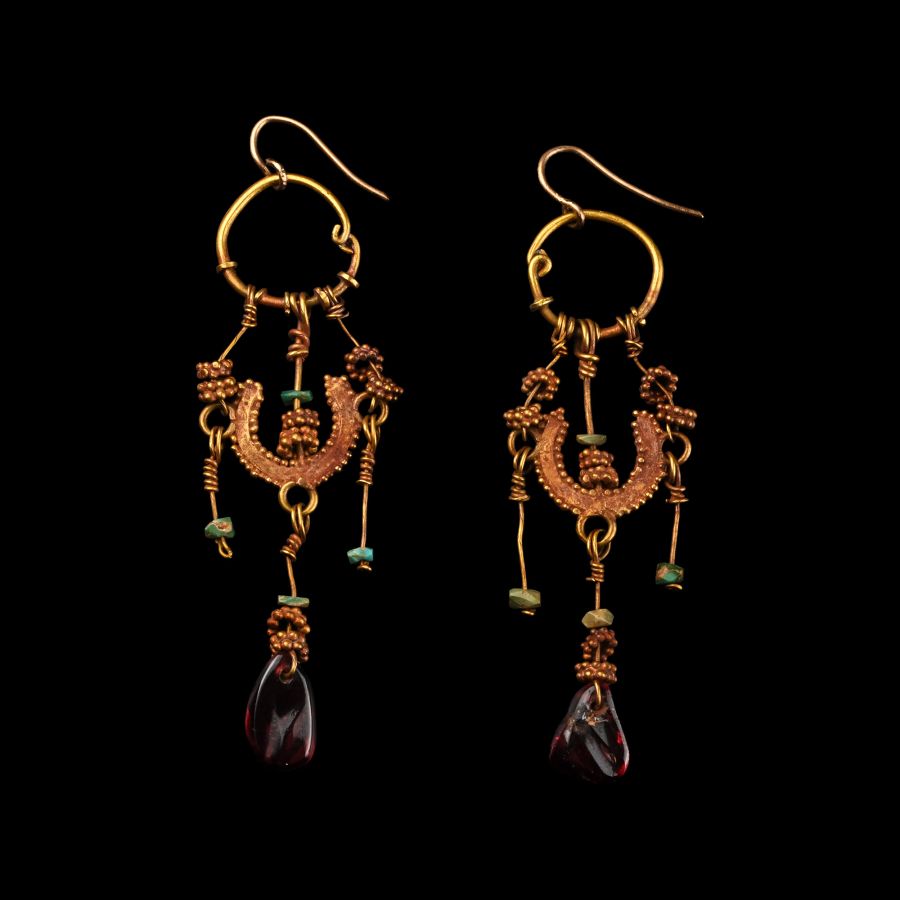
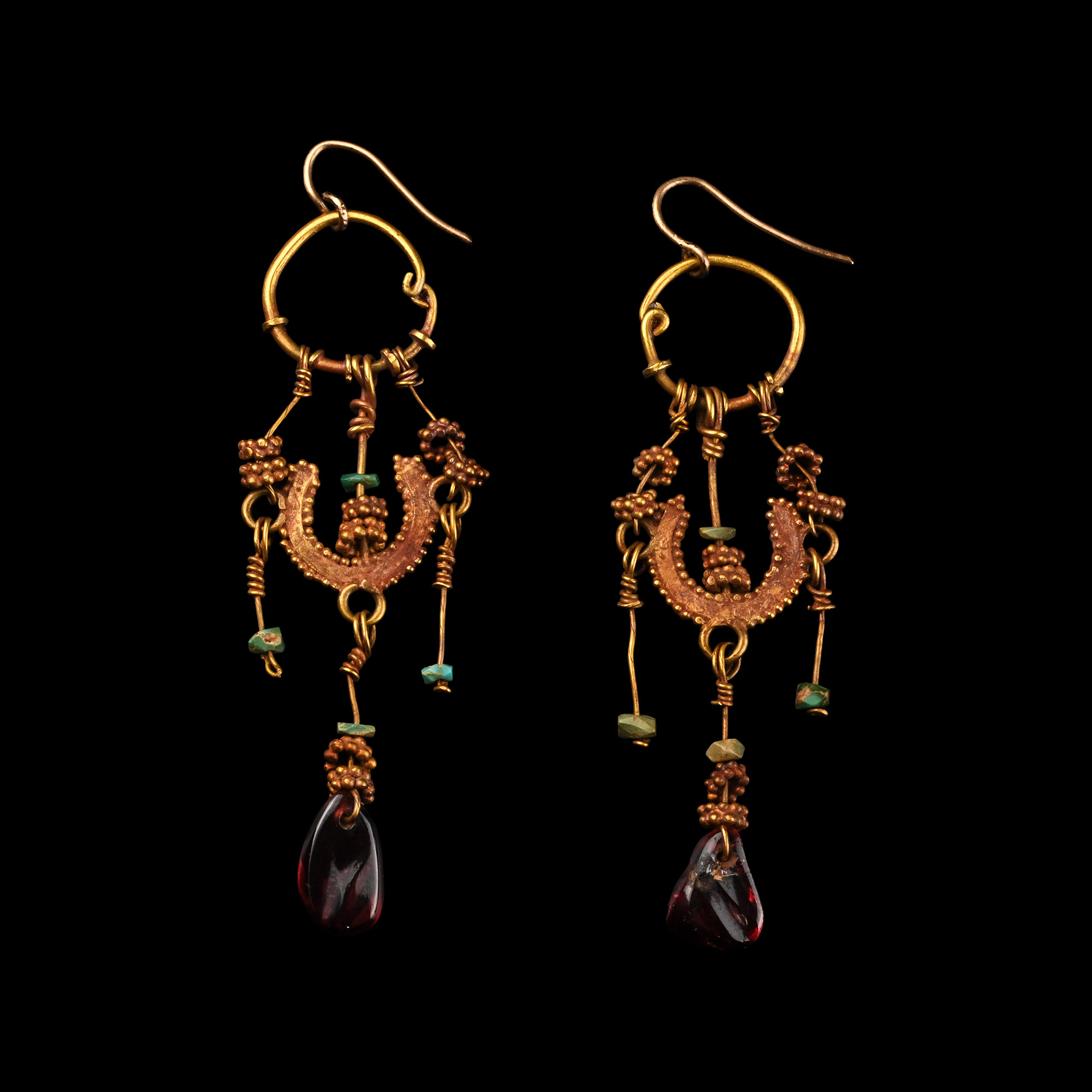
Roman Gold Earring Pair with Gemstone Drops
2ND-3RD CENTURY A.D.
2 3/8 in. (9.32 grams total, 60-62 mm).
Matched pair, each a hoop and suspension hook; a crescent plaque supported by filigree wires with granulated collars, lateral dangles with turquoise seed beads and median longer dangle with granulated collars and gemstone finial. [2]
ProvenanceAcquired in 1995.
Private collection, thence by descent.
Private collection, since the late 1990s.
This lot has been checked against the Interpol Database of stolen works of art and is accompanied by a search certificate number no.12863-241727.
This lot has been cleared against the Art Loss Register database, and is accompanied by an illustrated lot declaration signed by the Head of the Antiquities Department, Dr Raffaele D'Amato.
TimeLine Auctions follows a vetting process to ensure the authenticity and legality of all items, reinforcing our commitment to integrity and responsible trading. Each antiquity, antique, and coin lot undergoes thorough examination by a vetting committee of at least ten external specialists, professional trade association members, scientists, and archaeologists: Our Vetting Process
AUCTIONS:
TimeLine is a leading auction house specialising in antiquities, ancient art, collectables, natural history, coins, medals, and books. Our auctions offer museums, collectors, historians, and enthusiasts the opportunity to acquire unique and historically significant pieces.
LOT 0143
Roman Gold Earring Pair with Gemstone Drops
Estimate £2,000 - 3,000€2,320 - 3,480 (for guidance only)$2,700 - 4,050 (for guidance only)
-
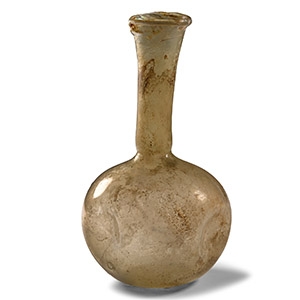
Roman Spherical Glass Bottle
3rd century A.D.Estimate: £350 - 450 (‡+bp*)
Opening Bid: £175
With dimple base and five impressed dimples to the equator, tubular neck with flared and rolled rim. 74.5 grams, 15.2 cm
Ex W. Kern, Zurich, 1950s-1970s (d.1980s). Accompanied by a copy of an Art Loss Register certificate no.S00086750. This lot is accompanied by an illustrated lot declaration signed by the Head of the Antiquities Department, Dr Raffaele D'Amato. -
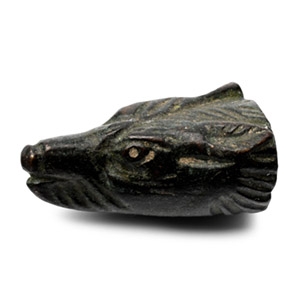
Roman Bronze Wolf's Head Terminal
1st-4th century A.D.Sold for (Inc. bp): £159
Modelled in the round with shallow socket to the reverse, high-relief facial detailing. 17.01 grams, 28 mm
Acquired on the London art market in the late 1980s-1990s. From the family collection of an East London, UK, gentleman. This lot is accompanied by an illustrated lot declaration signed by the Head of the Antiquities Department, Dr Raffaele D'Amato. -
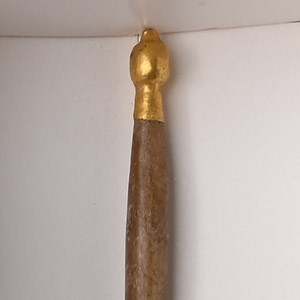
Roman Bone Pin with Gold Terminal
3rd century A.D.Sold for (Inc. bp): £143
Round in section and tapering to each end, with knop finial and applied gilding. 1.99 grams, 74 mm
Acquired from Coincraft, London, UK. From the private collection of Kenneth Machin (1936-2020), Buckinghamshire, UK; his collection of antiquities and natural history was formed since 1948; thence by descent. Accompanied by a Coincraft certificate of authenticity. This lot is accompanied by an illustrated lot declaration signed by the Head of the Antiquities Department, Dr Raffaele D'Amato.
