
Loading, please wait...

LOT 0839
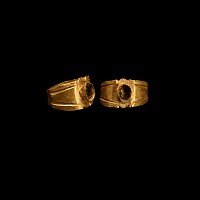
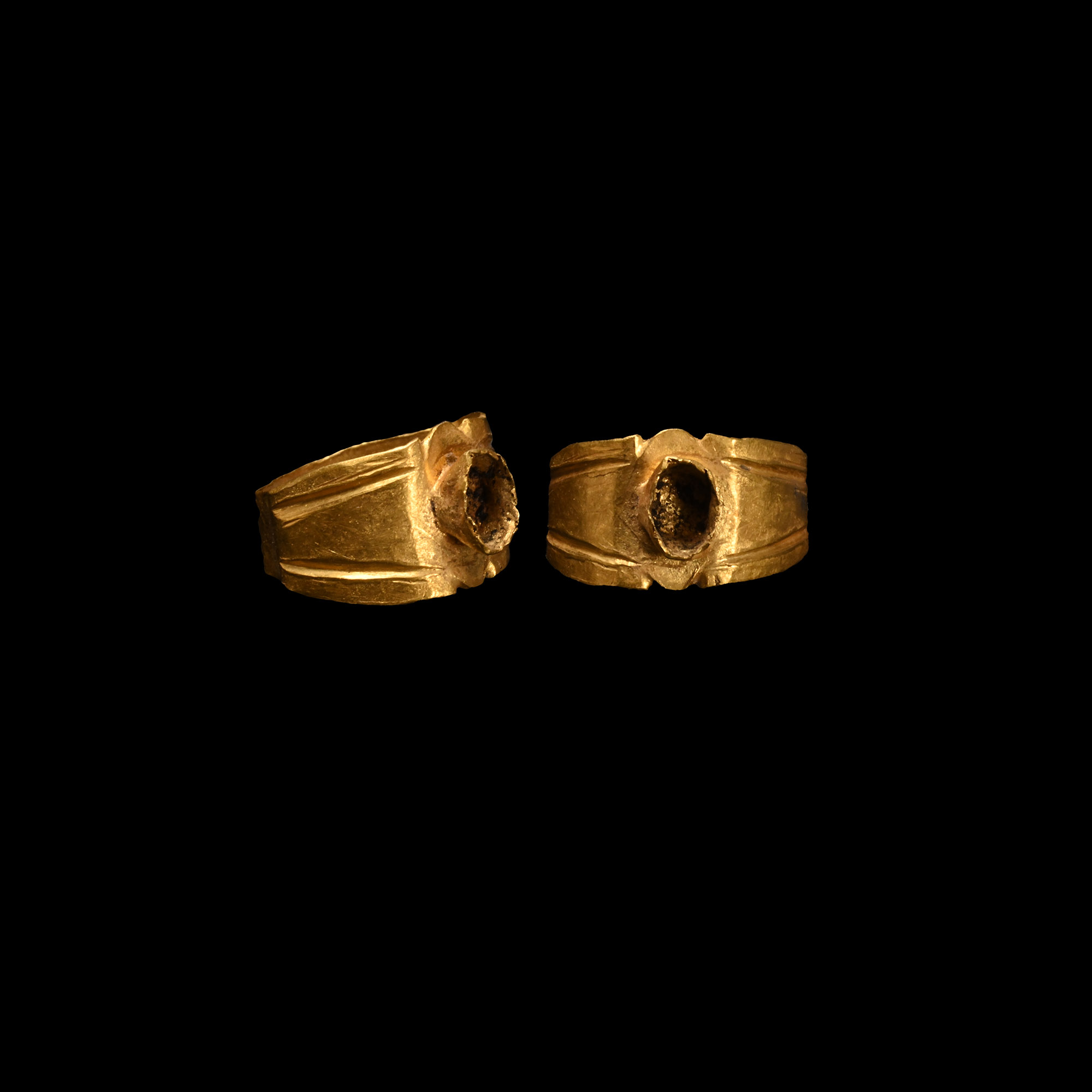
Roman Gold Child's Ring
3RD CENTURY A.D.
1/2 in. (1.06 grams, 13.02 mm overall, 11.30 mm internal diameter).
With broad hoop, incised lines to shoulders, plaque with cell. [No Reserve]
ProvenanceAcquired from Brigantia Antiques, York, UK, in the early 1990s.
Ian Wilkinson collection, Nottinghamshire, UK, formed since 1985.
Accompanied by a previous illustrated catalogue slip.
This lot is accompanied by an illustrated lot declaration signed by the Head of the Antiquities Department, Dr Raffaele D’Amato.
Cf. Ruseva-Slokoska, L., Roman Jewellery, Sofia, 1991, item 218, for type.
CONDITIONTimeLine Auctions follows a vetting process to ensure the authenticity and legality of all items, reinforcing our commitment to integrity and responsible trading. Each antiquity, antique, and coin lot undergoes thorough examination by a vetting committee of at least ten external specialists, professional trade association members, scientists, and archaeologists: Our Vetting Process
AUCTIONS:
TimeLine is a leading auction house specialising in antiquities, ancient art, collectables, natural history, coins, medals, and books. Our auctions offer museums, collectors, historians, and enthusiasts the opportunity to acquire unique and historically significant pieces.
-
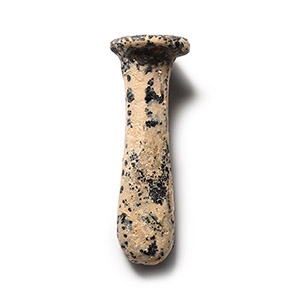
Roman Miniature Glass Vessel
3rd-4th century A.D.Sold for (Inc. bp): £26
With bulbous body and rolled rim to the mouth. 2.2 grams, 42 mm
Ian Wilkinson collection, Nottinghamshire, UK, formed since 1985. This lot is accompanied by an illustrated lot declaration signed by the Head of the Antiquities Department, Dr Raffaele D’Amato. -
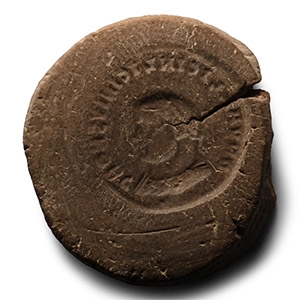
Roman Bifacial Terracotta Forger's Coin Mould
4th century A.D.Sold for (Inc. bp): £124
Discoid in plan, the obverse with a diademed profile bust of Constantine I, legend surrounding; the reverse with Jupiter holding Victory on globe and a sceptre on his other hand, eagle at his feet. 3.6 grams, 28 mm
From the collection of a gentleman, acquired on the London art market in the 1990s. This lot is accompanied by an illustrated lot declaration signed by the Head of the Antiquities Department, Dr Raffaele D’Amato. -
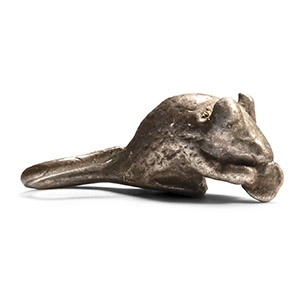
Roman Silver Mouse Nibbling a Nut
1st-4th century A.D.Sold for (Inc. bp): £234
Modelled in the round, with disc (nut or biscuit?) held in the forepaws. 3.45 grams, 22 mm
Private collection, Arundel, West Sussex, UK, 1980s. This lot is accompanied by an illustrated lot declaration signed by the Head of the Antiquities Department, Dr Raffaele D’Amato.
