
Loading, please wait...
LOT 0845
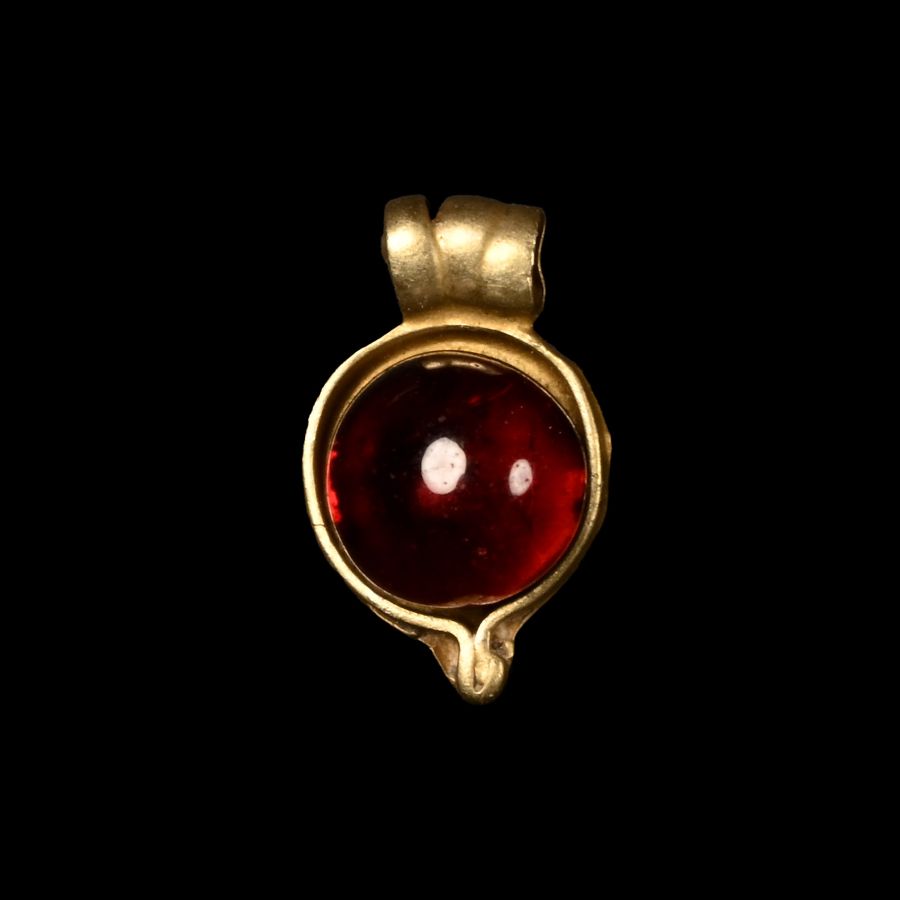
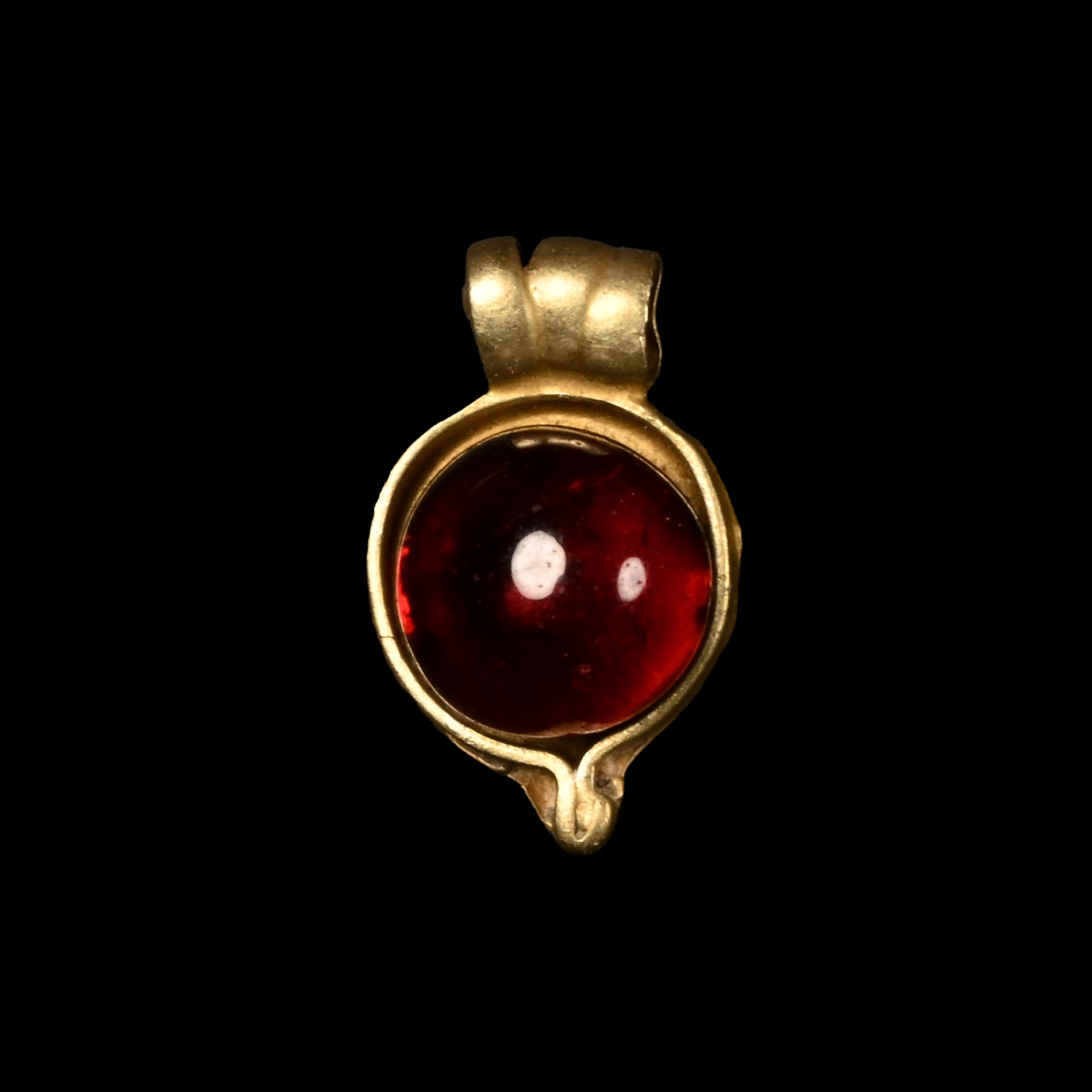
Roman Gold and Garnet Pendant
3RD-4TH CENTURY A.D.
1/4 in. (0.18 grams, 8 mm).
Displaying a polished garnet cabochon on a discoid setting, ribbed tubular suspension loop above. [No Reserve]
ProvenanceEx property of a late Japanese collector, 1970-2000s.
This lot is accompanied by an illustrated lot declaration signed by the Head of the Antiquities Department, Dr Raffaele D’Amato.
TimeLine Auctions follows a vetting process to ensure the authenticity and legality of all items, reinforcing our commitment to integrity and responsible trading. Each antiquity, antique, and coin lot undergoes thorough examination by a vetting committee of at least ten external specialists, professional trade association members, scientists, and archaeologists: Our Vetting Process
AUCTIONS:
TimeLine is a leading auction house specialising in antiquities, ancient art, collectables, natural history, coins, medals, and books. Our auctions offer museums, collectors, historians, and enthusiasts the opportunity to acquire unique and historically significant pieces.
-
Roman Bronze Ring with Animal
1st-4th century A.D.Sold for (Inc. bp): £111
Comprising a slender hoop, disc bezel, incuse figure of a sow around a central socket. 2.72 grams, 23.23 mm overall, 20.29 mm internal diameter (approximate size British U 1/2, USA 10 1/4, Europe 23.15, Japan 22)
Acquired on the London art market in the late 1980s-1990s. From the family collection of an East London, UK, gentleman. This lot is accompanied by an illustrated lot declaration signed by the Head of the Antiquities Department, Dr Raffaele D’Amato. -
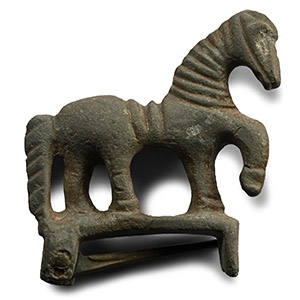
Roman Bronze Prancing Horse Brooch
2nd-3rd century A.D.Estimate: £120 - 170 (+bp*)
Opening Bid: £60
The horse standing on a groundline with its front leg raised and head turned to right, ribbed tail and mane, simple saddle on the back; hinged pin and remains of catchplate beneath. 17.7 grams, 37 mm
Ex German art market, 2000s. Acquired from an EU collector living in London. From the collection of Surrey, UK, gentleman. This lot is accompanied by an illustrated lot declaration signed by the Head of the Antiquities Department, Dr Raffaele D’Amato. -
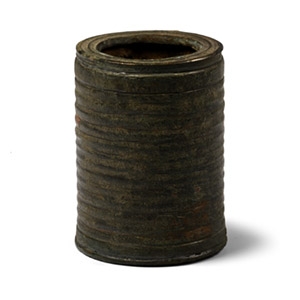
Roman Cast Bronze Pyxis
2nd-3rd century A.D.Sold for (Inc. bp): £65
Formed as a cylinder with horizontal ribbing to the outer face, socketted mouth, applied discoid bottom plate. 98 grams, 46 mm
Acquired from Alan Cherry, Bournemouth, UK, circa 2005. Ian Wilkinson collection, Nottinghamshire, UK, formed since 1985. This lot is accompanied by an illustrated lot declaration signed by the Head of the Antiquities Department, Dr Raffaele D’Amato.
