
Loading, please wait...
LOT 0171
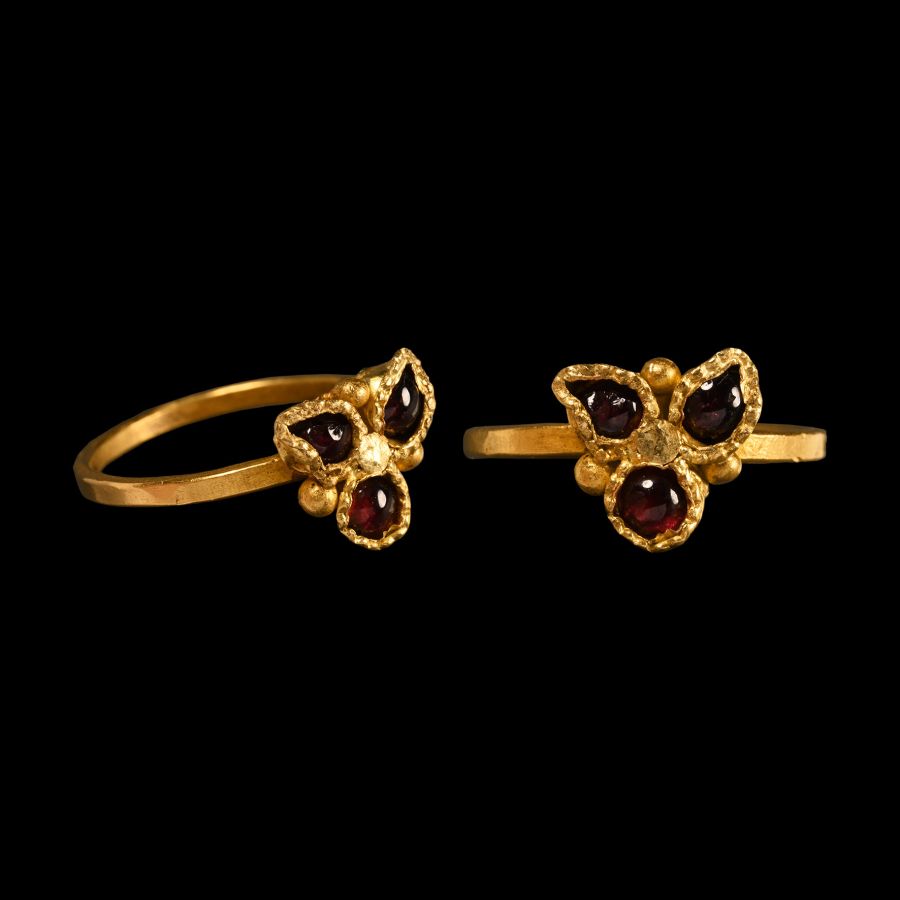
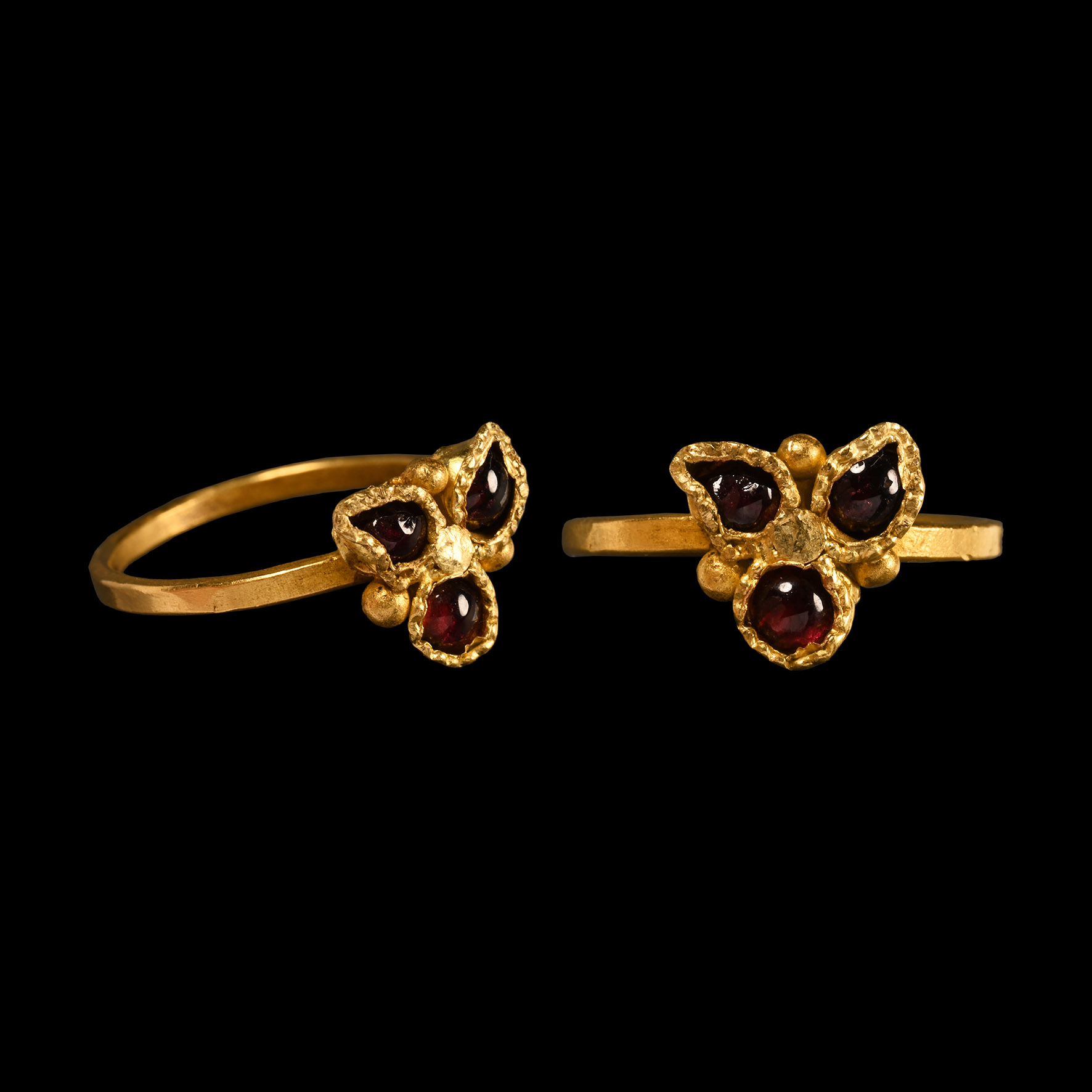
Roman Gold and Garnet Floral Ring
1ST CENTURY B.C. AND LATER
3/4 in. (2.39 grams, 21.13 mm overall, 16.53 mm internal diameter (approximate size British L 1/2, USA 6, Europe 11.87, Japan 11)).
Bezel formed as one circular and two piriform gold cells with large granules between and granulation to the rim of each cell; inset garnet cabochons, with later rectangular-section hoop.
ProvenanceFrom a late Japanese specialist collector, 1970-2000s.
LiteratureCf. Chadour, A.B., Rings. The Alice and Louis Koch Collection, volume I, Leeds, 1994, item 119, for type.
CONDITIONTimeLine Auctions follows a vetting process to ensure the authenticity and legality of all items, reinforcing our commitment to integrity and responsible trading. Each antiquity, antique, and coin lot undergoes thorough examination by a vetting committee of at least ten external specialists, professional trade association members, scientists, and archaeologists: Our Vetting Process
AUCTIONS:
TimeLine is a leading auction house specialising in antiquities, ancient art, collectables, natural history, coins, medals, and books. Our auctions offer museums, collectors, historians, and enthusiasts the opportunity to acquire unique and historically significant pieces.
-
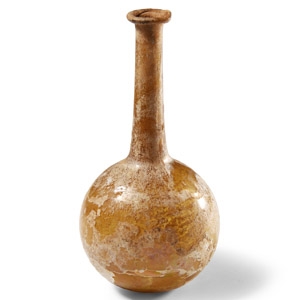
Roman Glass Bulbous Vase
2nd-3rd century A.D.Sold for (Inc. bp): £143
With long slender neck and everted rim. 37 grams, 12.5 cm
Acquired 1970s-1996. Property of a North American collector. London collection, 2016. -
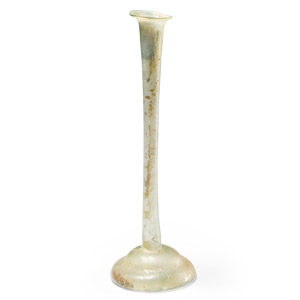
Roman Glass Candlestick Unguentarium
2nd-3rd century A.D.Sold for (Inc. bp): £143
Tall thin translucent pale green vessel with wide base and flared rim. 15 grams, 15.5 cm high
Acquired 1980-2015. Ex Abelita family collection. -
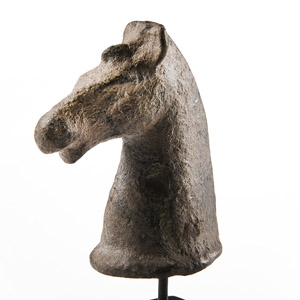
Roman Bronze Horse Head Protome
1st-4th century A.D.Sold for (Inc. bp): £338
Modelled with naturalistic detailing with signs of attachment. 81 grams, 49 mm
‘The Ancient Menagerie Collection’ formerly the property of a Cambridgeshire lady, collected since the 1990s and acquired from auctions and dealers throughout Europe and the USA, now ex London collection.
