
Loading, please wait...
LOT 0951
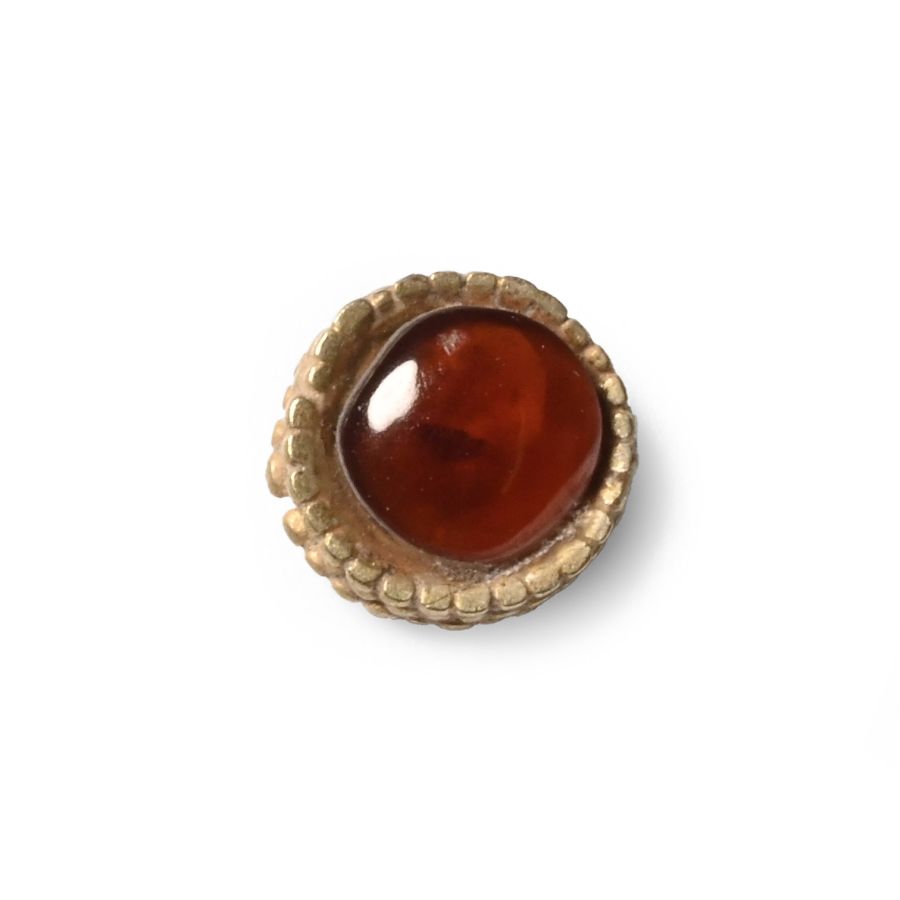
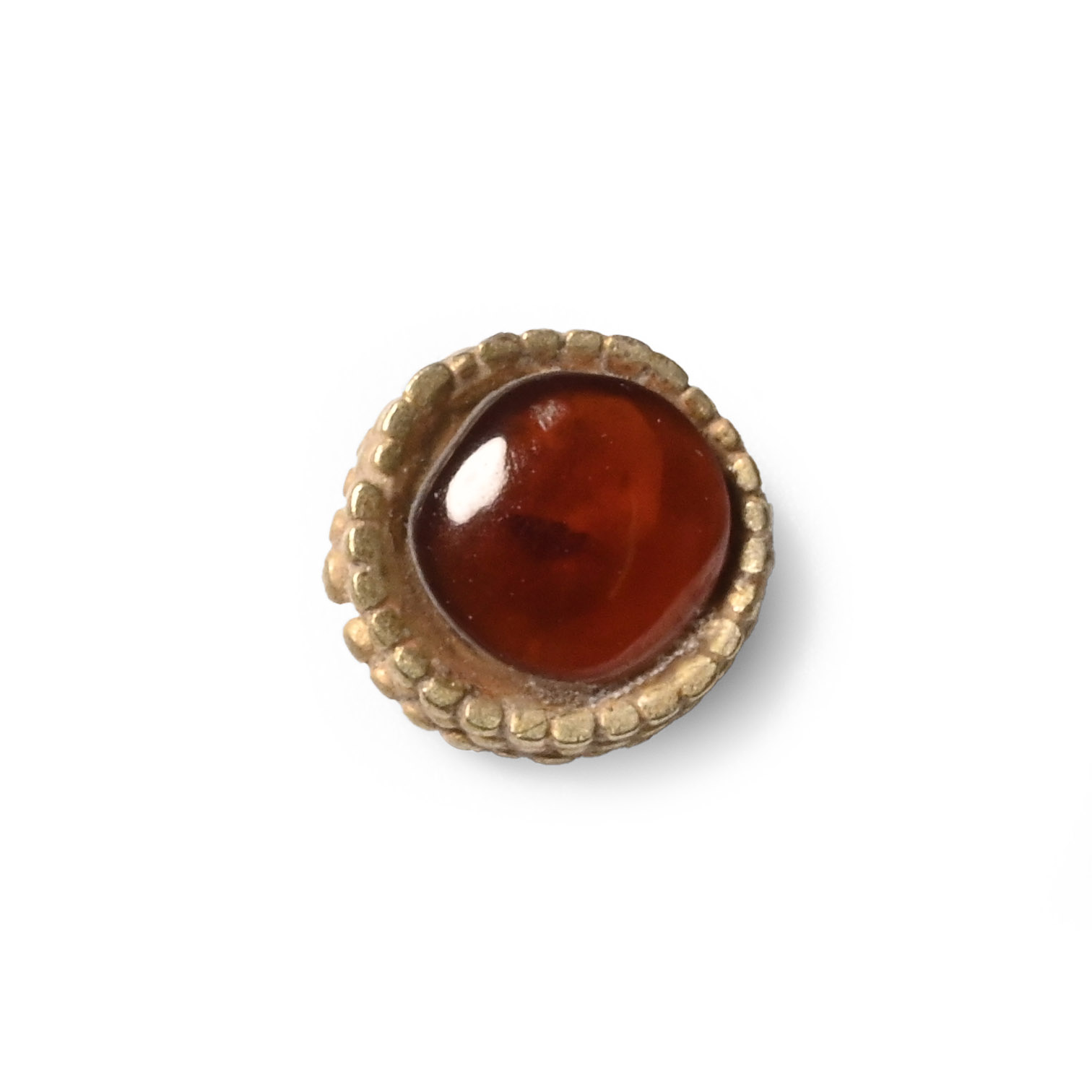
Roman Gold and Garnet Bead Pendant
1ST-4TH CENTURY A.D.
1/4 in. (0.24 grams, 5 mm).
Spherical garnet bead with granulated gold collar. [No Reserve]
ProvenanceEx property of a late Japanese collector, 1970-2000s.
This lot is accompanied by an illustrated lot declaration signed by the Head of the Antiquities Department, Dr Raffaele D’Amato.
TimeLine Auctions follows a vetting process to ensure the authenticity and legality of all items, reinforcing our commitment to integrity and responsible trading. Each antiquity, antique, and coin lot undergoes thorough examination by a vetting committee of at least ten external specialists, professional trade association members, scientists, and archaeologists: Our Vetting Process
AUCTIONS:
TimeLine is a leading auction house specialising in antiquities, ancient art, collectables, natural history, coins, medals, and books. Our auctions offer museums, collectors, historians, and enthusiasts the opportunity to acquire unique and historically significant pieces.
-
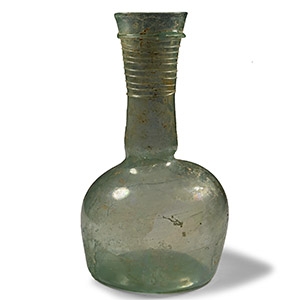
Large Roman Green Glass Bottle
2nd-4th century A.D.Sold for (Inc. bp): £234
Aqua glass, with rounded shoulder, tubular neck tapering slightly and flaring towards the mouth; applied trail to the upper neck, pontil base; some fine encrustations, slightly iridescent; reassembled from fragments, with small lacuna. 170 grams, 21.7 cm
Prof. Skalweit, Bonn, acquired in the 1970s. Two labels on the base: "92" and "09-22 DRR". Accompanied by a copy of an Art Loss Register certificate no.S00097255. This lot is accompanied by an illustrated lot declaration signed by the Head of the Antiquities Department, Dr Raffaele D’Amato. -
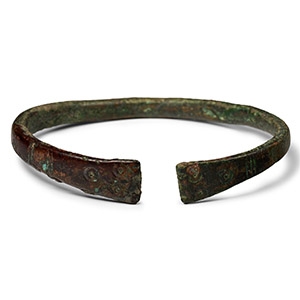
Roman Decorated Bronze Bracelet
1st-4th century A.D.Sold for (Inc. bp): £91
D-shaped in section splaying to triangular finials with ribbing and ring-and-dot ornament. 16.5 grams, 55 mm
Acquired from Ancient & Orient, 1980s-1990s. Ian Wilkinson collection, Nottinghamshire, UK, formed since 1985. This lot is accompanied by an illustrated lot declaration signed by the Head of the Antiquities Department, Dr Raffaele D’Amato. -
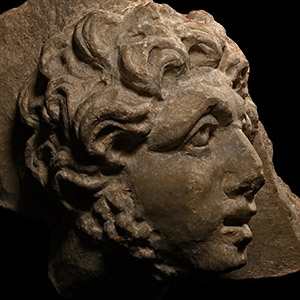
Roman Marble Head of a Man in Relief
3rd-early 4th century A.D.Sold for (Inc. bp): £5,980
Frieze fragment with bust of a male in animated pose, head tilted upwards and eyes wide open; the hair executed in successive curly waves around the thick brow, the broad nose merging into the small open mouth; short curly beard on the neck but face clean-shaven; with steel mounting rod beneath. 9.85 kg, 31 cm
Private collection of a sculptor, Munich; acquired in the 1970s on the Munich art market (Ohlendorf). Accompanied by an academic report by Dr Raffaele D'Amato. Accompanied by a copy of an Art Loss Register certificate no.S00044779. This lot has been checked against the Interpol Database of stolen works of art and is accompanied by search certificate number no.12478-228802. This lot has been cleared against the Art Loss Register database, and is accompanied by an illustrated lot declaration signed by the Head of the Antiquities Department, Dr Raffaele D’Amato.
The subject seems to be a retainer of military commanders, usually represented on their sarcophagi in wild hunting parties where men, lions and boars fight. It is highly probable that the head was originally from a massive sarcophagus of a general, like the one in Palazzo Mattei in Rome.
