
Loading, please wait...
LOT 0755
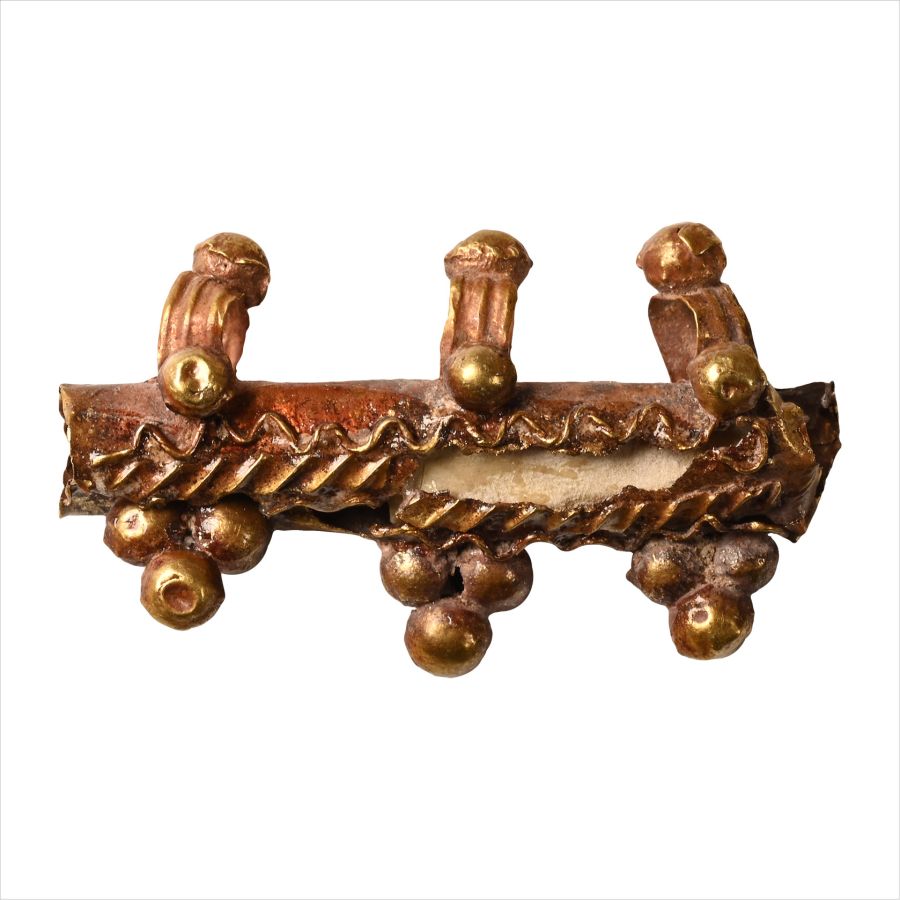
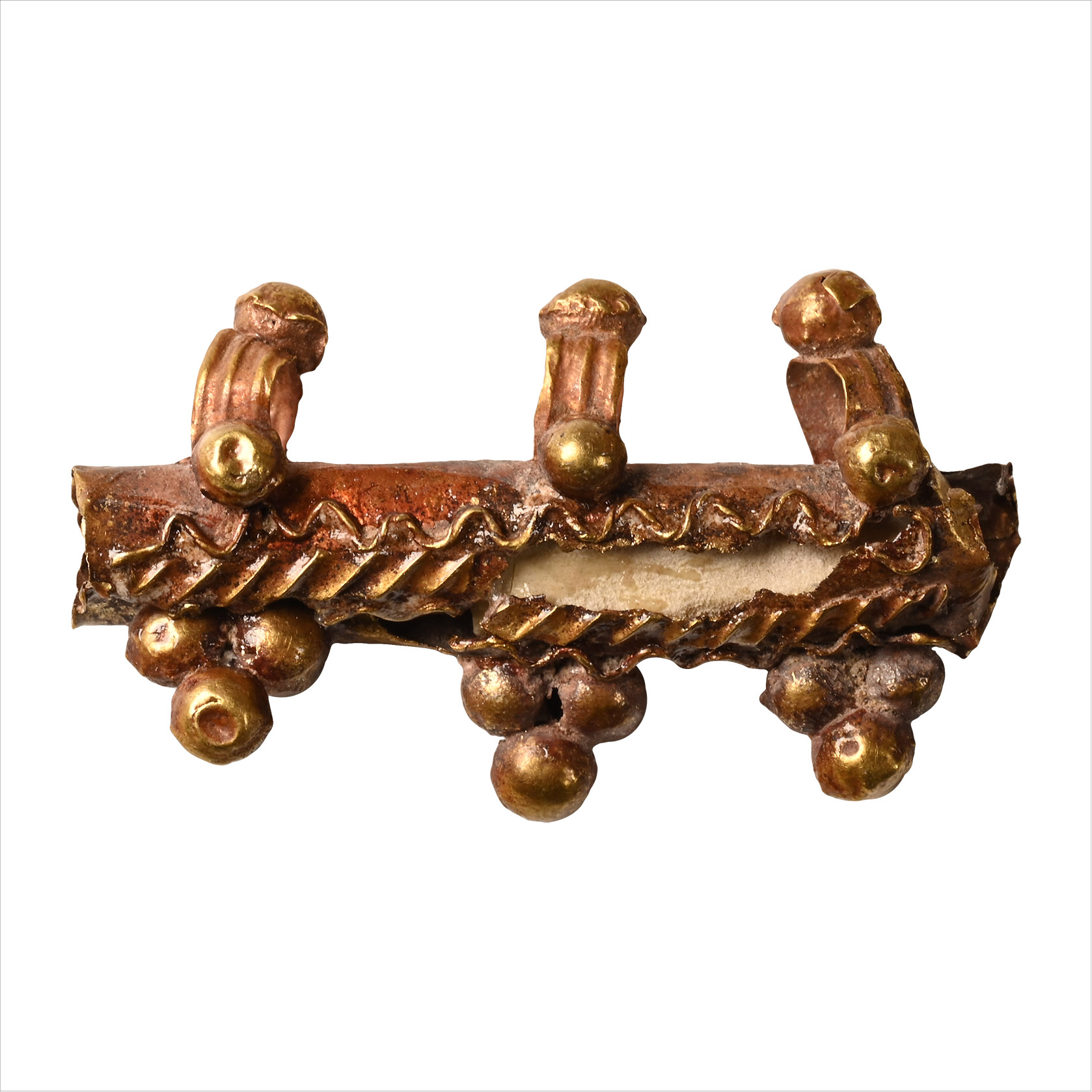
Roman Gold Amuletic Case
3RD-5TH CENTURY A.D.
1 3/8 in. (2.34 grams, 33 mm).
Hollow-formed sheet gold sleeve with three ribbed suspension loop with applied granules, granule clusters to the lower edge, corrugated surface and applied filigree trails.
ProvenanceCollected from 1970-1999.
From the collection of the late Mr S.M., London, UK.
This lot is accompanied by an illustrated lot declaration signed by the Head of the Antiquities Department, Dr Raffaele D’Amato.
TimeLine Auctions follows a vetting process to ensure the authenticity and legality of all items, reinforcing our commitment to integrity and responsible trading. Each antiquity, antique, and coin lot undergoes thorough examination by a vetting committee of at least ten external specialists, professional trade association members, scientists, and archaeologists: Our Vetting Process
AUCTIONS:
TimeLine is a leading auction house specialising in antiquities, ancient art, collectables, natural history, coins, medals, and books. Our auctions offer museums, collectors, historians, and enthusiasts the opportunity to acquire unique and historically significant pieces.
-
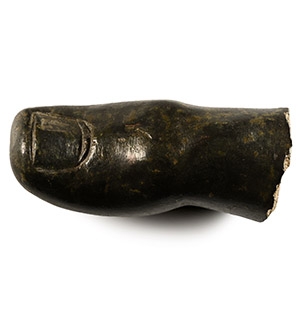
Life-Size Roman Bronze Thumb
1st-2nd century A.D.Sold for (Inc. bp): £1,430
Hollow-form with accurate anatomical detailing. 137 grams, 68 mm
From the collection of a London antiquarian, formed since the 1980s. This lot is accompanied by an illustrated lot declaration signed by the Head of the Antiquities Department, Dr Raffaele D’Amato. -
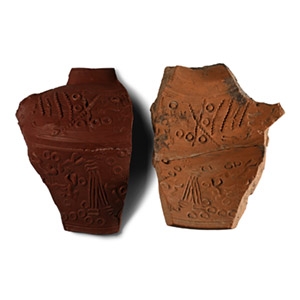
Romano-British Potter's Bowl Mould Fragment with Massacre by Lions
3rd-4th century A.D.Sold for (Inc. bp): £104
Fragment of terracotta mould for a bowl, sidewall and rim with impressed decoration: horizontal bands to rim and equator delimiting two registers; upper: two ribbed columns angled to suggest toppling, with pelletted rings in the field, three running human figures and a leaping lion; lower: three sheep advancing towards bands of wavy lines and rings (to suggest vegetation?) with two leaping lions advancing towards them and a preying eagle above; supplied with a modern impression. 695 grams total, 18 cm each
Found Suffolk, UK. From an old English collection. Ian Wilkinson collection, Nottinghamshire, UK, formed since 1985. This lot is accompanied by an illustrated lot declaration signed by the Head of the Antiquities Department, Dr Raffaele D’Amato.
The terracotta fragment represents a scene rarely seen in Roman art, the condemnation ad bestias, of criminals; the dating of the terracotta, between the 3rd and 4th century, could refer the scene to the last great persecution against Christians unleashed by Diocletian and Maximian in 303 AD. -
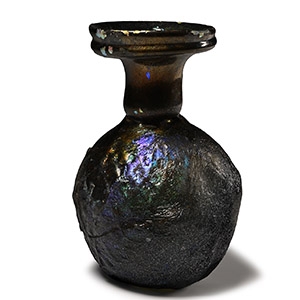
Roman Glass Vessel
1st-2nd century A.D.Sold for (Inc. bp): £85
With bulbous body and regular pattern of shallow dimples, flat base, narrow obstructed neck, mouth with flared and folded rim. 85 grams, 10.2 cm
Ex London art market 1990s. From a London, UK, collection. This lot is accompanied by an illustrated lot declaration signed by the Head of the Antiquities Department, Dr Raffaele D’Amato.
