
Loading, please wait...
LOT 0774
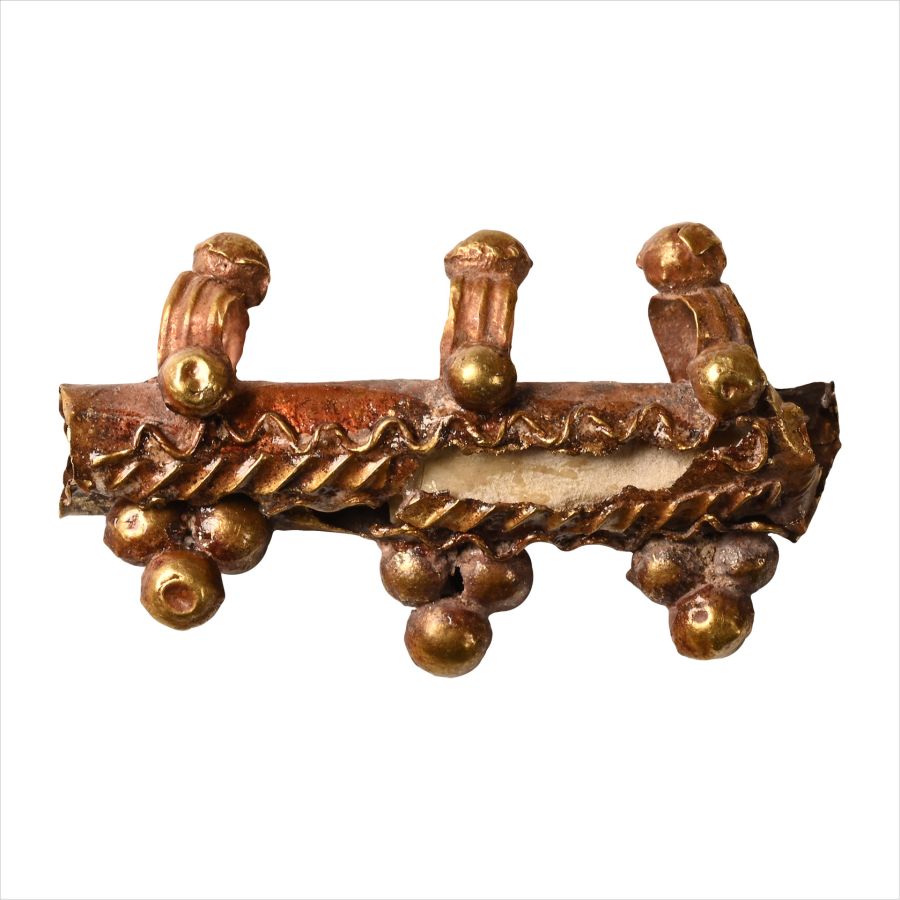
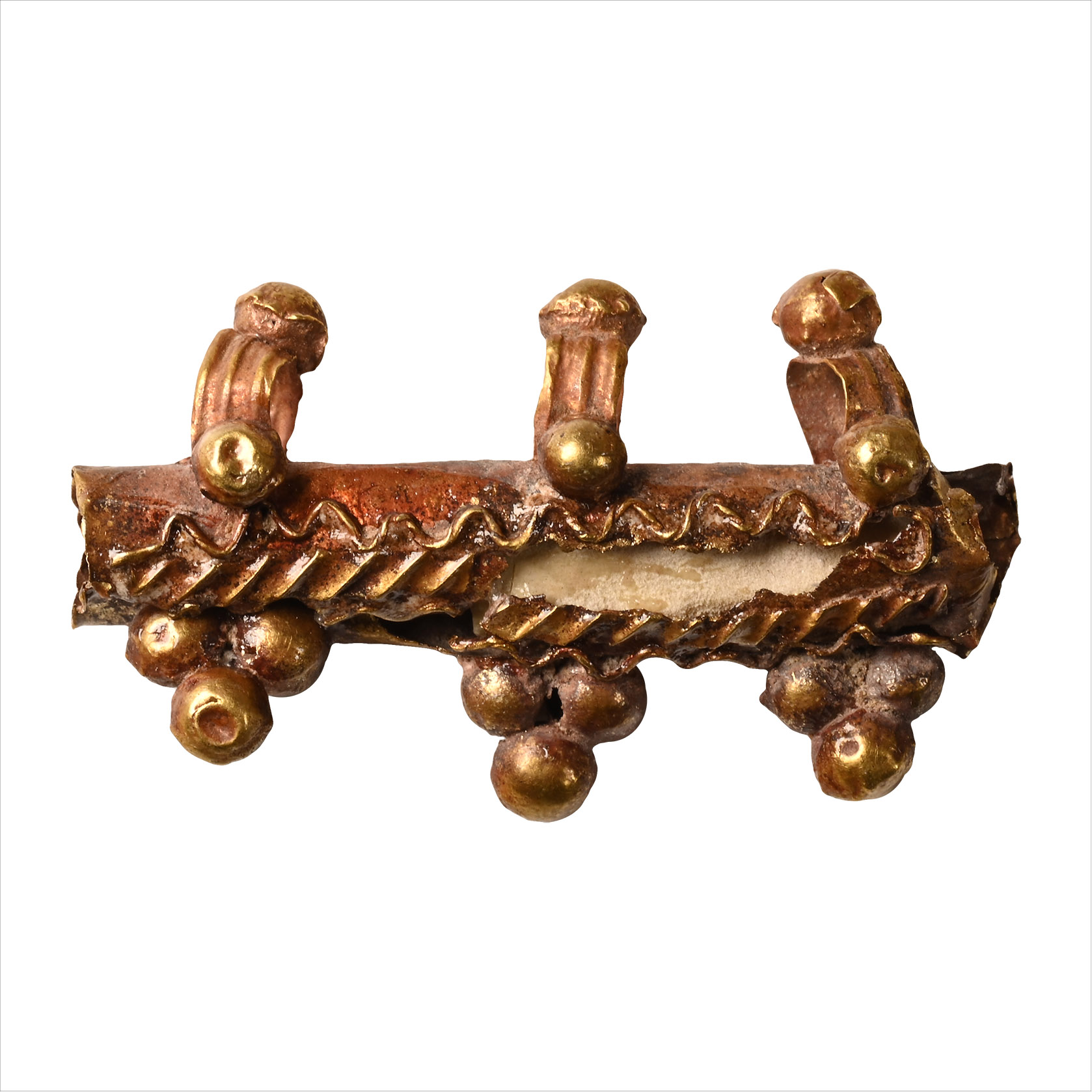
Roman Gold Amuletic Case
3RD-5TH CENTURY A.D.
1 3/8 in. (2.34 grams, 33 mm).
Hollow-formed sheet gold sleeve with three ribbed suspension loop with applied granules, granule clusters to the lower edge, corrugated surface and applied filigree trails.
ProvenanceCollected from 1970-1999.
From the collection of the late Mr S.M., London, UK.
TimeLine Auctions follows a vetting process to ensure the authenticity and legality of all items, reinforcing our commitment to integrity and responsible trading. Each antiquity, antique, and coin lot undergoes thorough examination by a vetting committee of at least ten external specialists, professional trade association members, scientists, and archaeologists: Our Vetting Process
AUCTIONS:
TimeLine is a leading auction house specialising in antiquities, ancient art, collectables, natural history, coins, medals, and books. Our auctions offer museums, collectors, historians, and enthusiasts the opportunity to acquire unique and historically significant pieces.
LOT 0774
Roman Gold Amuletic Case
Estimate £150 - 200€170 - 230 (for guidance only)$200 - 270 (for guidance only)
-

Roman Terracotta Votive Arm Group
1st-4th century A.D.Sold for (Inc. bp): £13
Comprising two right arms with incised finger detailing. 15.5 grams total, 55-64 mm
Ex German art market, 2000s. Acquired from an EU collector living in London. From the collection of Surrey, UK, gentleman. -

Romano-Parthian Bone Idol of a Female
Eastern Roman, 3rd century B.C.-2nd century A.D.Sold for (Inc. bp): £910
Depicting a female figure with elaborately tied hairstyle, semi-naturalistic facial and anatomical detailing and geometric detailing to the garment wrapped around her lower body; stub arms; copper-alloy rivets to the shoulders. 77 grams, 19 cm high
with a London, UK gallery, 1971-early 2000s. -
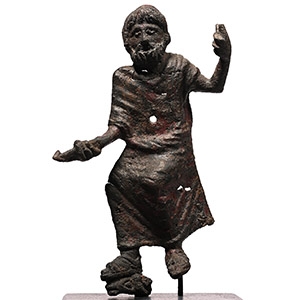
Large Roman Bronze Statuette of Jupiter
Circa 3rd century A.D.Sold for (Inc. bp): £468
Modelled in the half-round and hollow to the reverse, the god with knees flexed, one of his sandaled feet resting on a ram's head; left arm raised to hold a sceptre (absent) and right hand holding a thunderbolt; pierced at the midriff for attachment; mounted on a custom-made stand. 1.1 kg, 21.5 cm including stand
From a collection acquired on the UK art market from various auction houses and collections mostly before 2000. From an important Cambridgeshire estate; thence by descent.
The figurine of Jupiter seems to be a provincial work of Gallo-Roman origin. Contrary to the iconographic tradition of the king of the gods, he is usually depicted nude and with a cloak on his left arm, the statuette shows a Jupiter covered by a large cloak and vestis talaris, which also closely resembles the Gallo-Roman iconography of Jupiter-Sucellus.
