
Loading, please wait...
LOT 0116
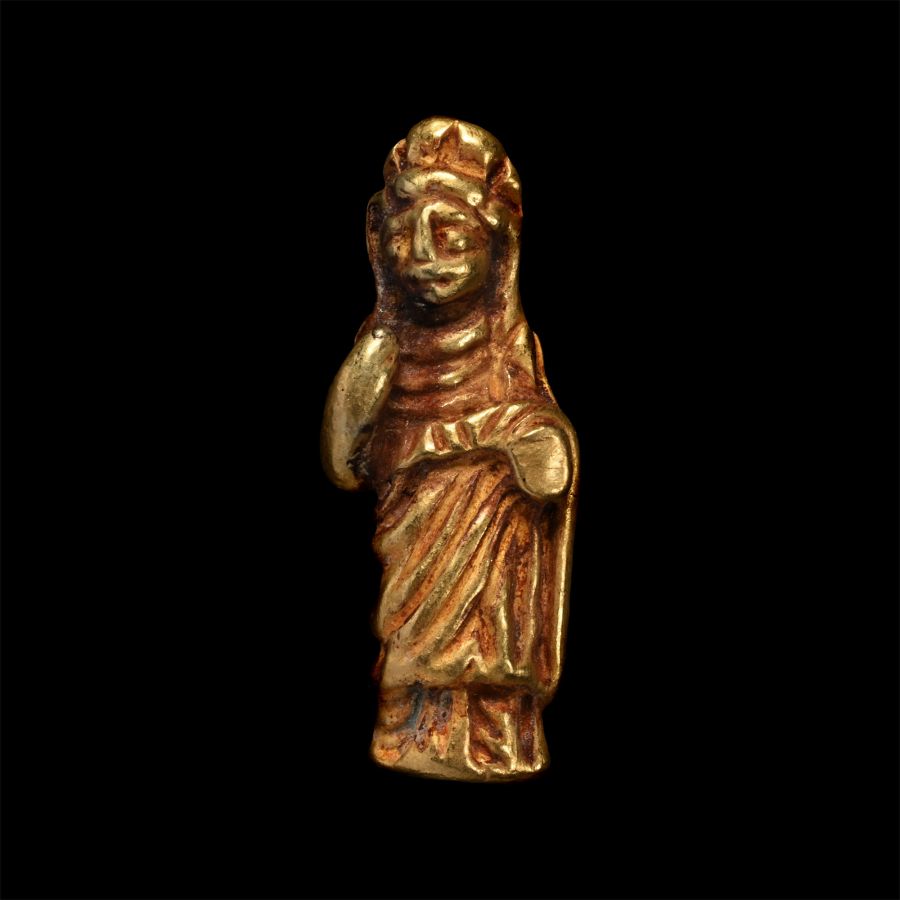
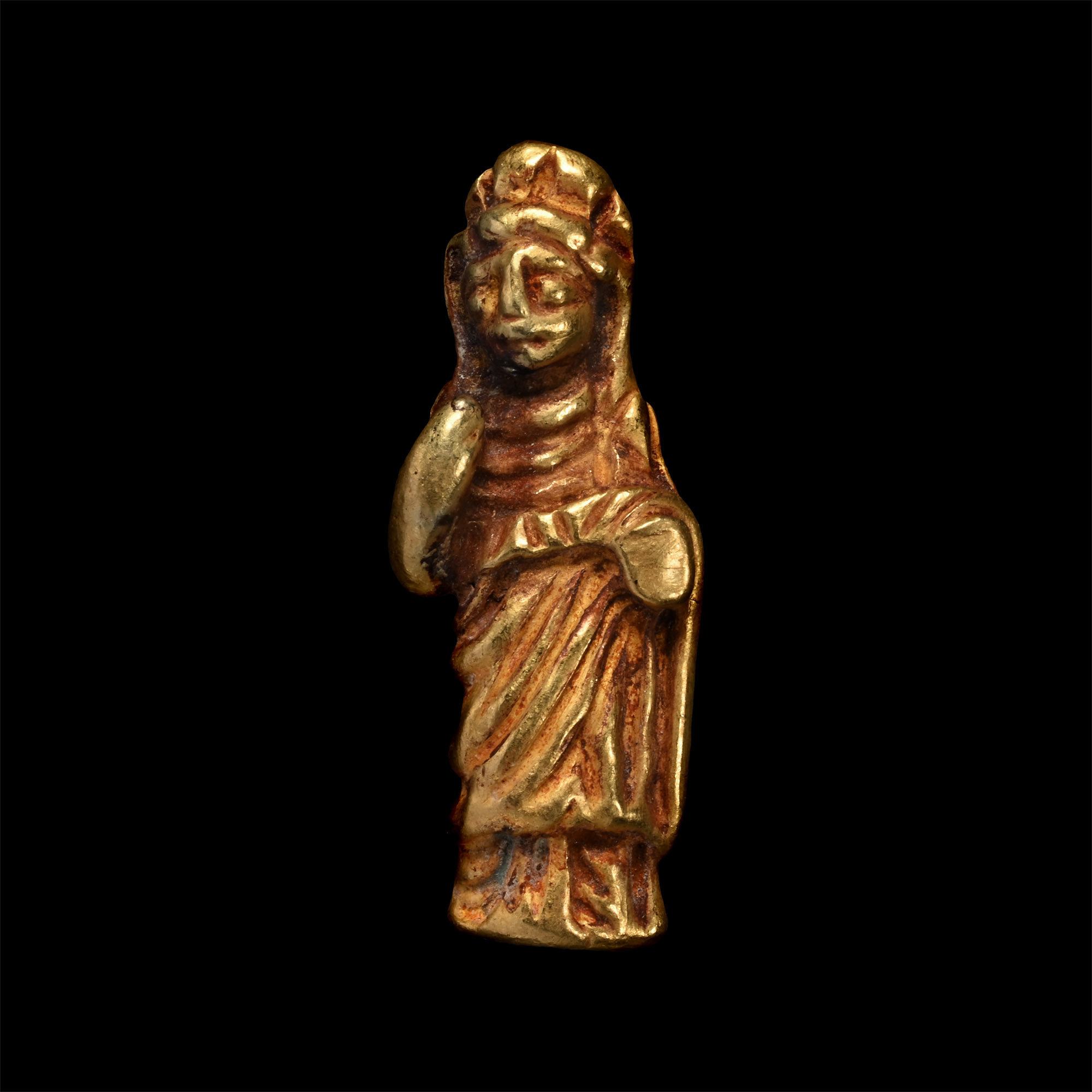
Roman Gold Amulet of a Draped Female
1ST-4TH CENTURY A.D.
1 in. (7.93 grams, 27 mm).
Standing, wearing a palla over her hair and holding her proper right hand to her face; loop to the rear.
ProvenanceFrom the collection of a gentleman, acquired on the London art market in the 1990s.
CONDITIONTimeLine Auctions follows a vetting process to ensure the authenticity and legality of all items, reinforcing our commitment to integrity and responsible trading. Each antiquity, antique, and coin lot undergoes thorough examination by a vetting committee of at least ten external specialists, professional trade association members, scientists, and archaeologists: Our Vetting Process
AUCTIONS:
TimeLine is a leading auction house specialising in antiquities, ancient art, collectables, natural history, coins, medals, and books. Our auctions offer museums, collectors, historians, and enthusiasts the opportunity to acquire unique and historically significant pieces.
LOT 0116
Roman Gold Amulet of a Draped Female
Estimate £800 - 1,000€930 - 1,160 (for guidance only)$1,080 - 1,350 (for guidance only)
-
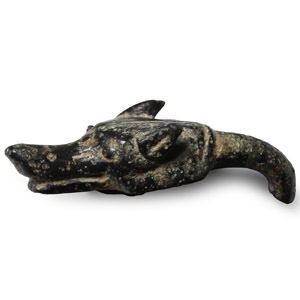
Roman Bronze Dog Finial
1st century B.C.-1st century A.D.Sold for (Inc. bp): £91
Comprising a canine head with raised snout and swept ears; hooked bar to the rear. 7.8 grams, 33 mm
From the collection of a gentleman, acquired on the London art market in the 1990s. -
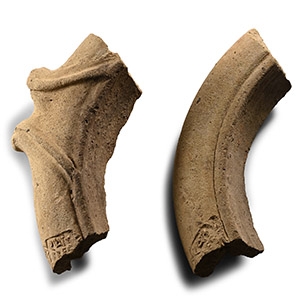
Roman Terracotta Mortarium Fragments with Maker's Stamps in Tabula Ansata
2nd century A.D.Sold for (Inc. bp): £46
Two fragments of the returned rim of a mortarium, one with the convergent ribs for the pouring lip; each stamped with legend 'Q[I]V[S]-A / CRE[S]C = Quintus Iustius Crescens ?' in tabula ansata. 707 grams total, 17.5-19.8 cm
Found UK, possibly from Lincolnshire. From the collection of a late East Anglian teacher and antiquarian who retired to the Isle of Wight in Hampshire, UK. He amassed a large collection of objects between the 1960s-1980s.
Significant mortaria were manufactured at several sites in and around Lincoln during 2nd century A.D.; they had a wide distribution across northern England and southern Scotland. Quintus Iustius Crescens was active producer in Lincolnshire during 100-140 A.D. -
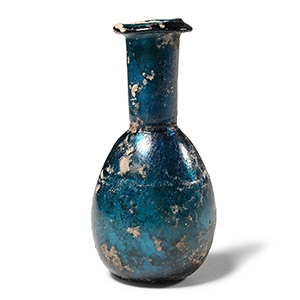
Roman Azure Blue Glass Unguentarium
1st-4th century A.D.Sold for (Inc. bp): £410
With piriform body and dimple base, narrow neck and everted rim; rich blue iridescent surface. 22.23 grams, 71 mm
From a London, UK, collection, 1990s.
