
Loading, please wait...
LOT 0762
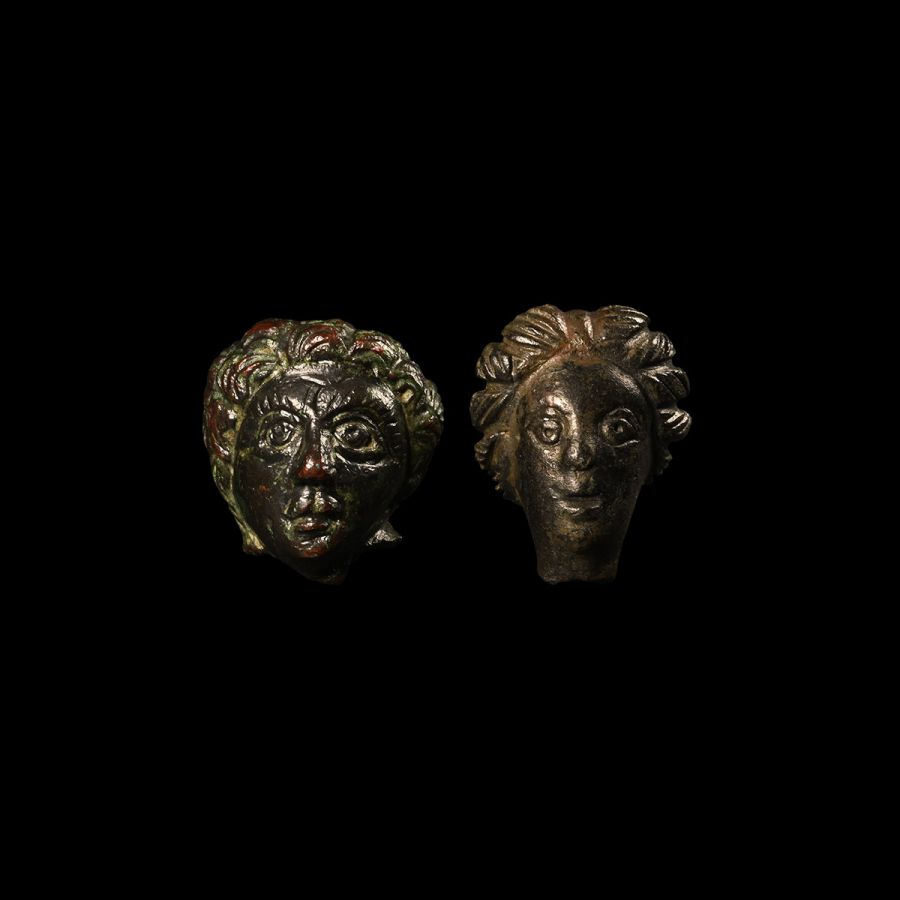
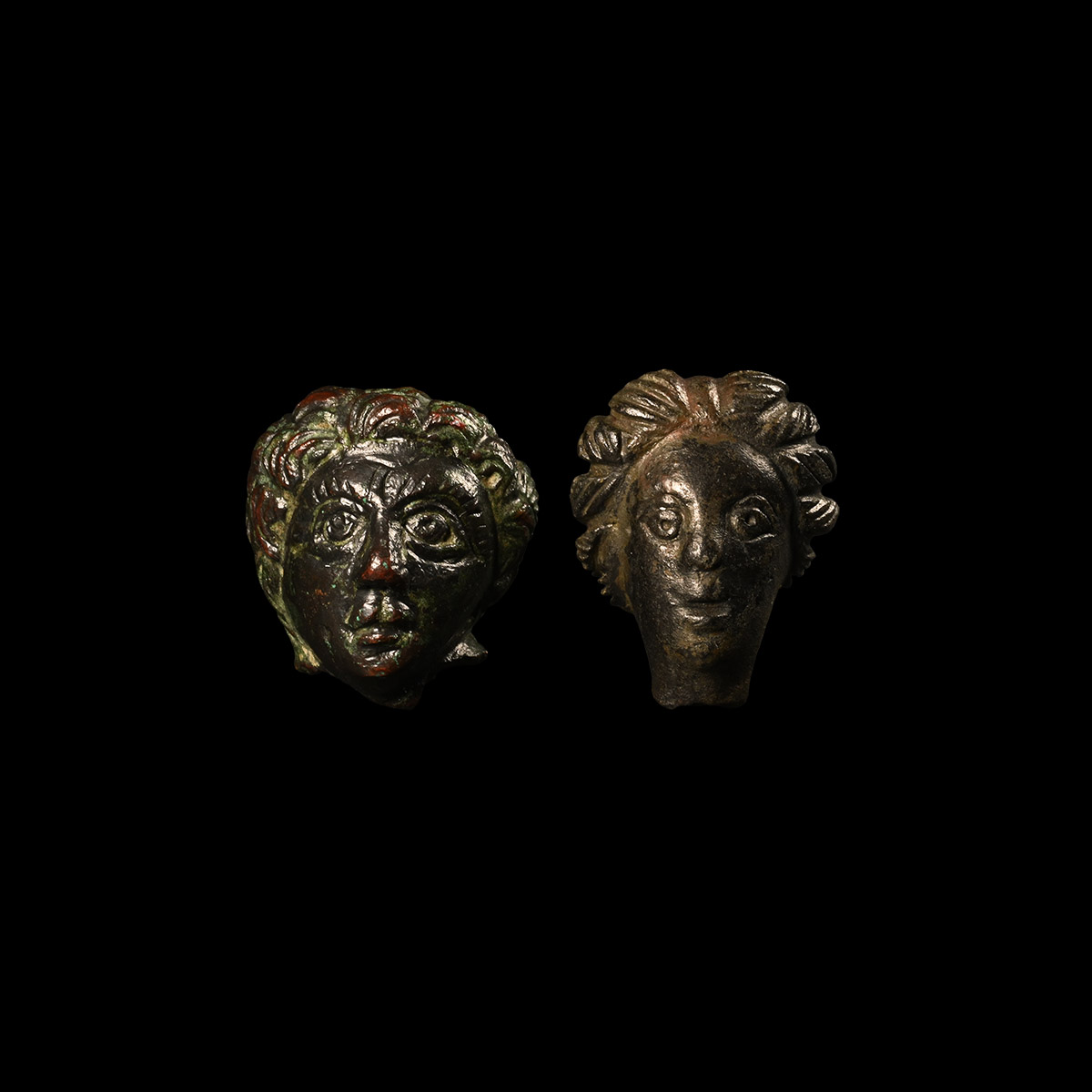
Roman Goddess Statuette Heads
CIRCA 1ST-3RD CENTURY A.D.
7/8 - 1 in. (71 grams total, 23-25 mm).
A pair of semi-naturalistic bronze statue heads modelled in the round: a female with hair held in a chignon at the nape; figure with hair dressed in short wavy tufts, large eyes with exaggerated eyelashes. [2]
ProvenanceAcquired before 2000.
From the collection of a European gentleman living in the UK.
See statuettes with similar heads and dimensions in Politikens Forlag, Jeg ser på oldsager (I look at antiquities), Kopenhagen, 1966, nos.585-586.
FootnotesBronze statuettes of Roman work representing Roman gods and goddesses were widespread all around the empire, and are also known as far as archaeological sites of Jutland and the islands. The two heads represent probably tutela divinities of the home, like Vesta and Juno (Greek Hera).
CONDITIONTimeLine Auctions follows a vetting process to ensure the authenticity and legality of all items, reinforcing our commitment to integrity and responsible trading. Each antiquity, antique, and coin lot undergoes thorough examination by a vetting committee of at least ten external specialists, professional trade association members, scientists, and archaeologists: Our Vetting Process
AUCTIONS:
TimeLine is a leading auction house specialising in antiquities, ancient art, collectables, natural history, coins, medals, and books. Our auctions offer museums, collectors, historians, and enthusiasts the opportunity to acquire unique and historically significant pieces.
LOT 0762
Roman Goddess Statuette Heads
Estimate £300 - 400€350 - 460 (for guidance only)$410 - 540 (for guidance only)
-
Large Roman Aucissa Bow Brooch with Wolf's Face
1st-2nd century A.D.Sold for (Inc. bp): £91
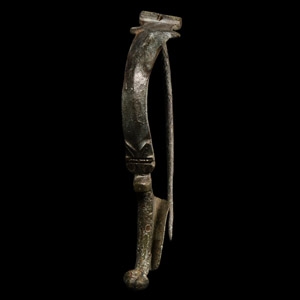
A large bronze Aucissa variant type bow brooch with annulet decoration to the head, narrow half-round cross-section bow; the lower bow and foot forming a stylised wolf's face with pellet eyes and curved muzzle; hinged pin and catch to the reverse. 36 grams, 94 mm
German art market before 2000. With a European gentleman living in the UK. Property of a Surrey gentleman.
The fibula belongs to the series C of the Buchem classification of variant Aucissa fibulae. According to Kovrig, these military fibulae were produced in specific centres like Siscia (Sisak) in Pannonia and distributed throughout the Empire because of the mobility of the army. -
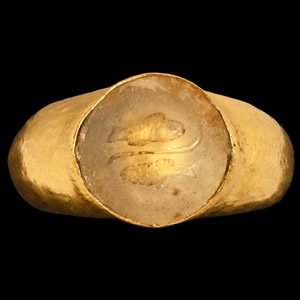
Roman Gold Ring with Fish Gemstone
3rd-4th century A.D.Sold for (Inc. bp): £1,170
A hollow-formed gold finger ring with inset glass intaglio of two fishes placed tête-bêche; the astrological symbol for the Pisces constellation. 6.11 grams, 26.55 mm overall, 20.73 mm internal diameter (approximate size British W 1/2, USA 11 1/4, Europe 25.6, Japan 24)
English private collection. -
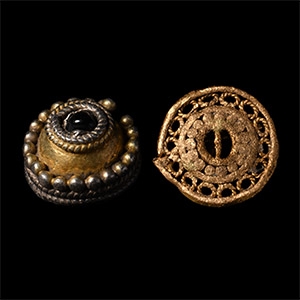
Roman and Other Artefact Group
Circa 2nd-3rd century A.D. and laterSold for (Inc. bp): £78
A pair of decorative artefacts comprising: a gold flat-section openwork disc with filigree annulets and pellets; a domed silver-gilt 'stud' with striptwist borders and pellet granules, set with a possible garnet stone at the apex. 4.37 grams total, 14 mm each
Essex gallery, early 2000s.
