
Loading, please wait...
LOT 0901
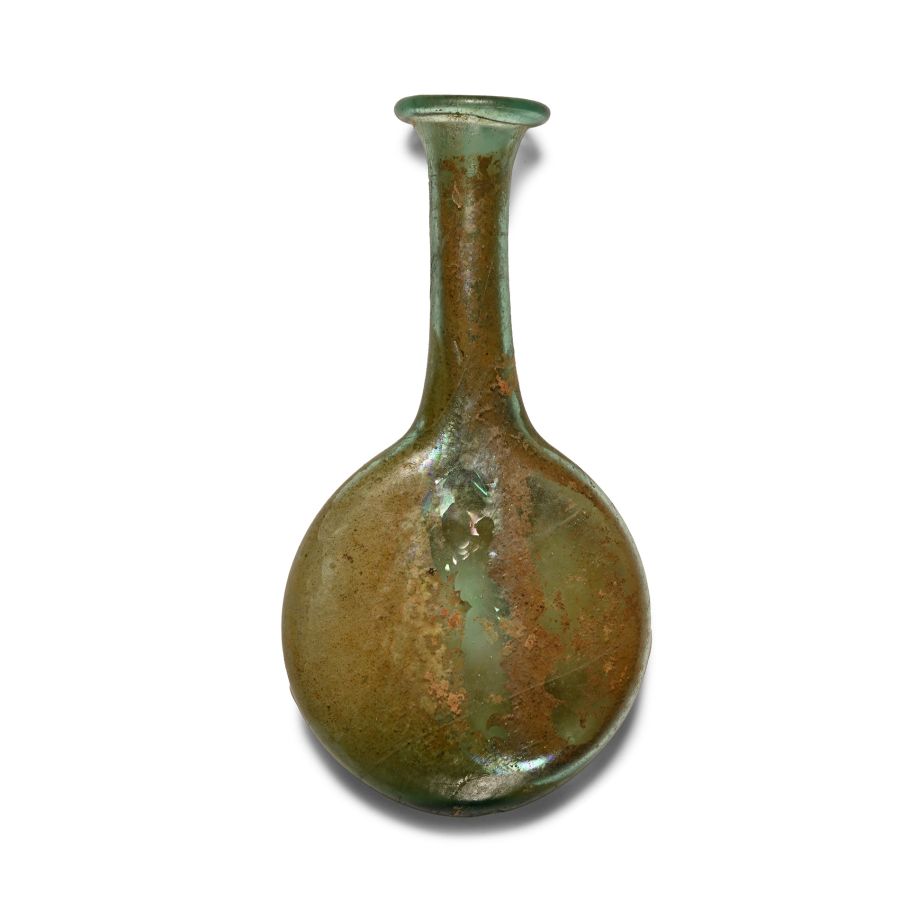
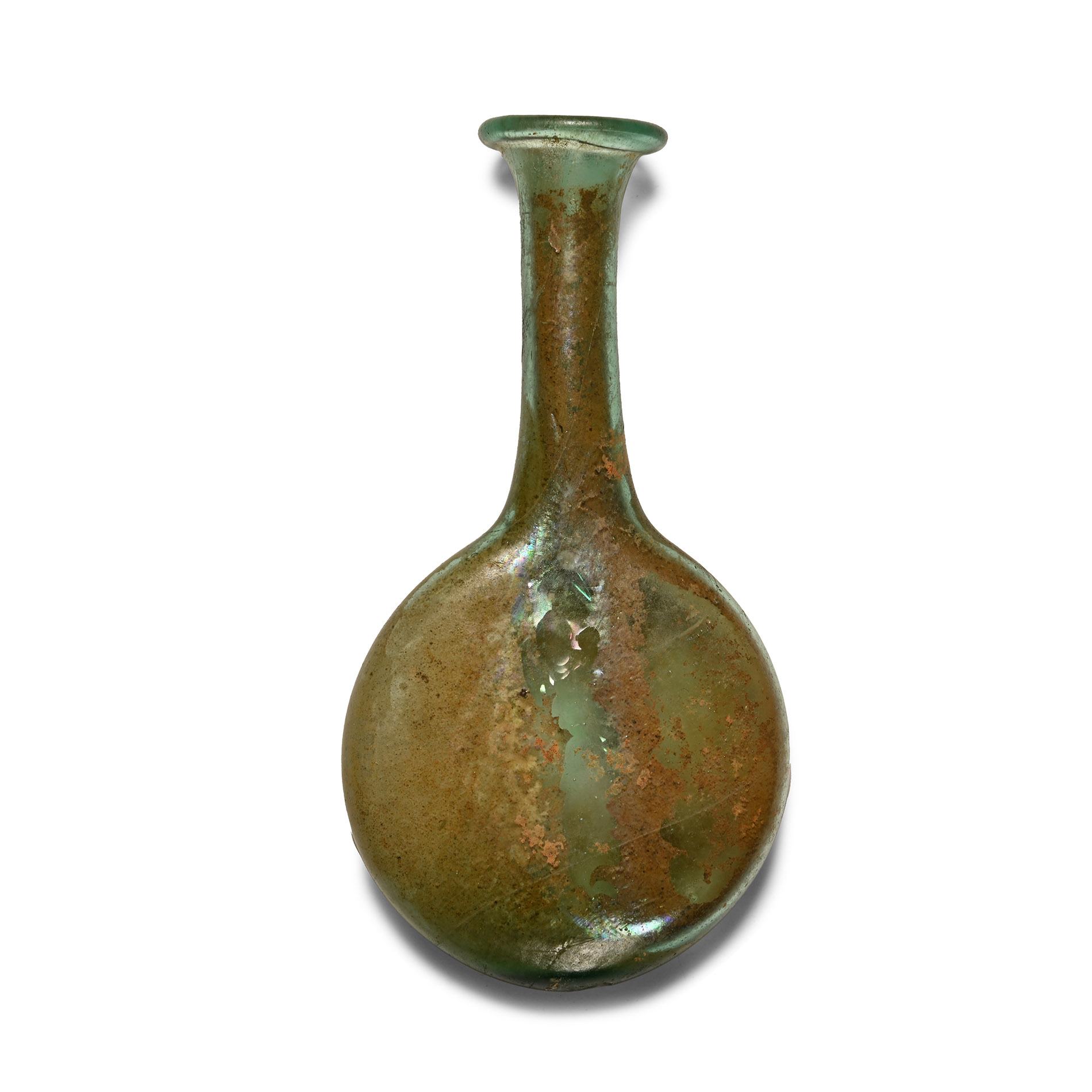
Roman Glass Vessel
1ST-2ND CENTURY A.D.
4 1/8 in. (20.5 grams, 10.6 cm).
With flattened discoid body and tall neck with flared mouth, applied rim.
ProvenanceFrom a London, UK, collection, 1990s.
This lot is accompanied by an illustrated lot declaration signed by the Head of the Antiquities Department, Dr Raffaele D’Amato.
TimeLine Auctions follows a vetting process to ensure the authenticity and legality of all items, reinforcing our commitment to integrity and responsible trading. Each antiquity, antique, and coin lot undergoes thorough examination by a vetting committee of at least ten external specialists, professional trade association members, scientists, and archaeologists: Our Vetting Process
AUCTIONS:
TimeLine is a leading auction house specialising in antiquities, ancient art, collectables, natural history, coins, medals, and books. Our auctions offer museums, collectors, historians, and enthusiasts the opportunity to acquire unique and historically significant pieces.
LOT 0901
Roman Glass Vessel
Estimate £100 - 140€120 - 160 (for guidance only)$140 - 190 (for guidance only)
-
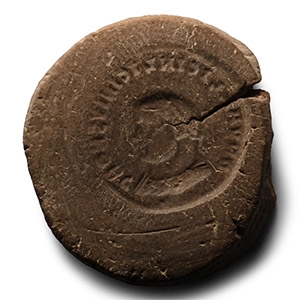
Roman Bifacial Terracotta Forger's Coin Mould
4th century A.D.Sold for (Inc. bp): £124
Discoid in plan, the obverse with a diademed profile bust of Constantine I, legend surrounding; the reverse with Jupiter holding Victory on globe and a sceptre on his other hand, eagle at his feet. 3.6 grams, 28 mm
From the collection of a gentleman, acquired on the London art market in the 1990s. This lot is accompanied by an illustrated lot declaration signed by the Head of the Antiquities Department, Dr Raffaele D’Amato. -
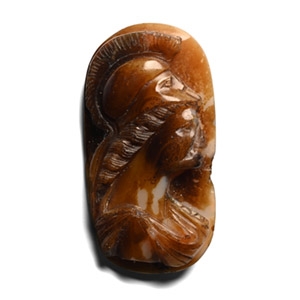
Roman Cameo of Minerva
2nd-3rd century A.D.Estimate: £1,800 - 2,400 (+bp*)
Opening Bid: £1,000
Ellipsoid agate plaque with bust of Minerva in the half-round wearing a Corinthian helmet tilted back on her head, braided hair, peplos dress. 4.91 grams, 31 mm
Acquired on the UK art market. Private collection, London, UK. This lot has been checked against the Interpol Database of stolen works of art and is accompanied by a search certificate number no.12521-231989. This lot has been cleared against the Art Loss Register database, and is accompanied by an illustrated lot declaration signed by the Head of the Antiquities Department, Dr Raffaele D’Amato. -
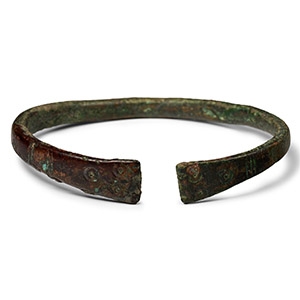
Roman Decorated Bronze Bracelet
1st-4th century A.D.Sold for (Inc. bp): £91
D-shaped in section splaying to triangular finials with ribbing and ring-and-dot ornament. 16.5 grams, 55 mm
Acquired from Ancient & Orient, 1980s-1990s. Ian Wilkinson collection, Nottinghamshire, UK, formed since 1985. This lot is accompanied by an illustrated lot declaration signed by the Head of the Antiquities Department, Dr Raffaele D’Amato.
