
Loading, please wait...



LOT 0665
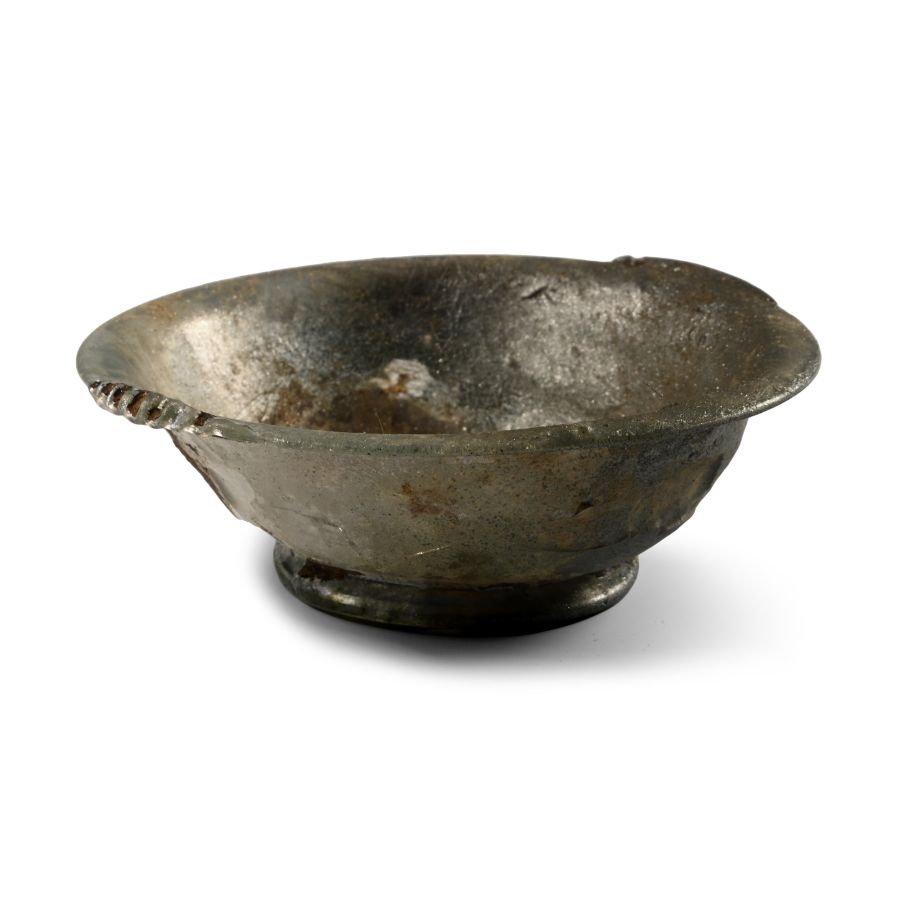
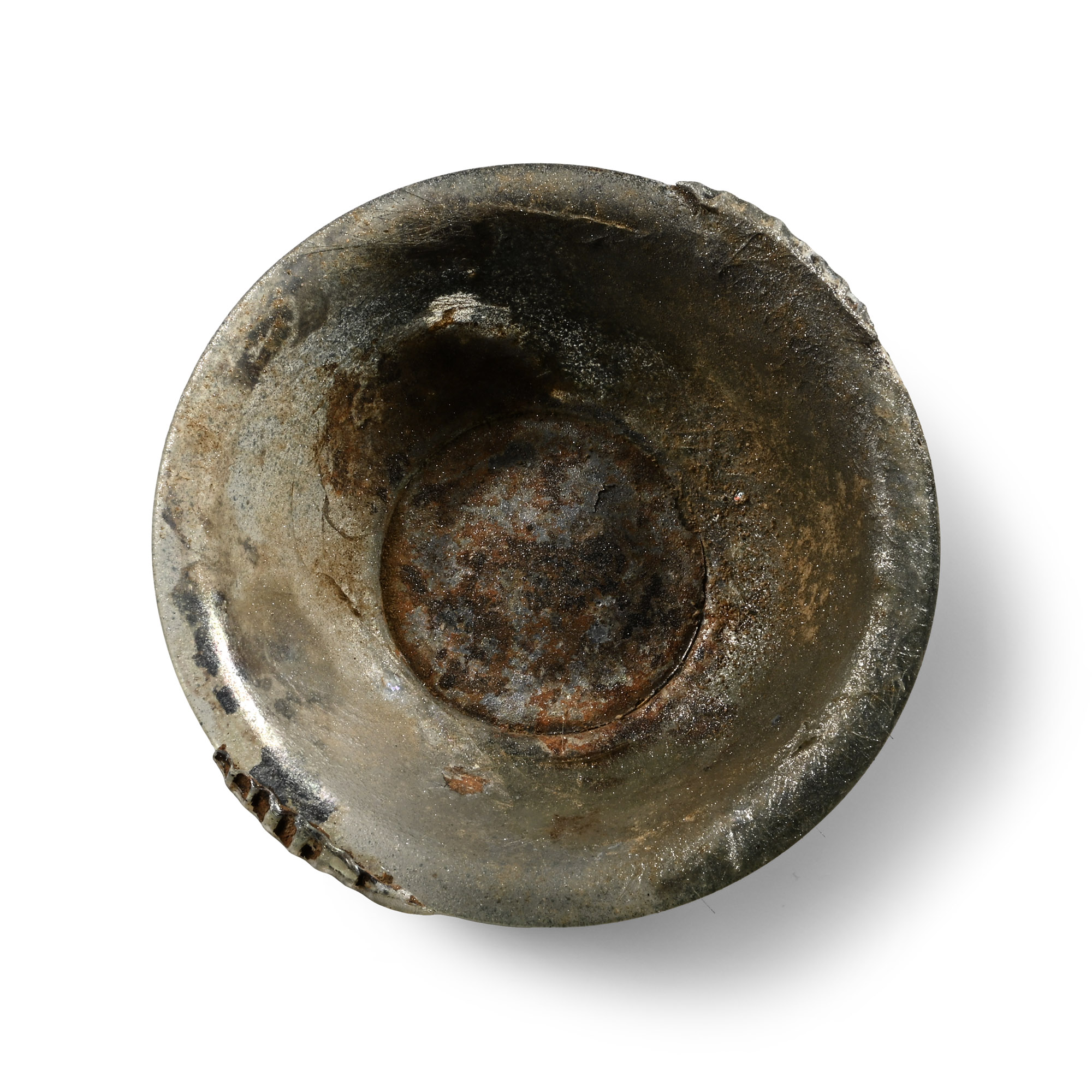
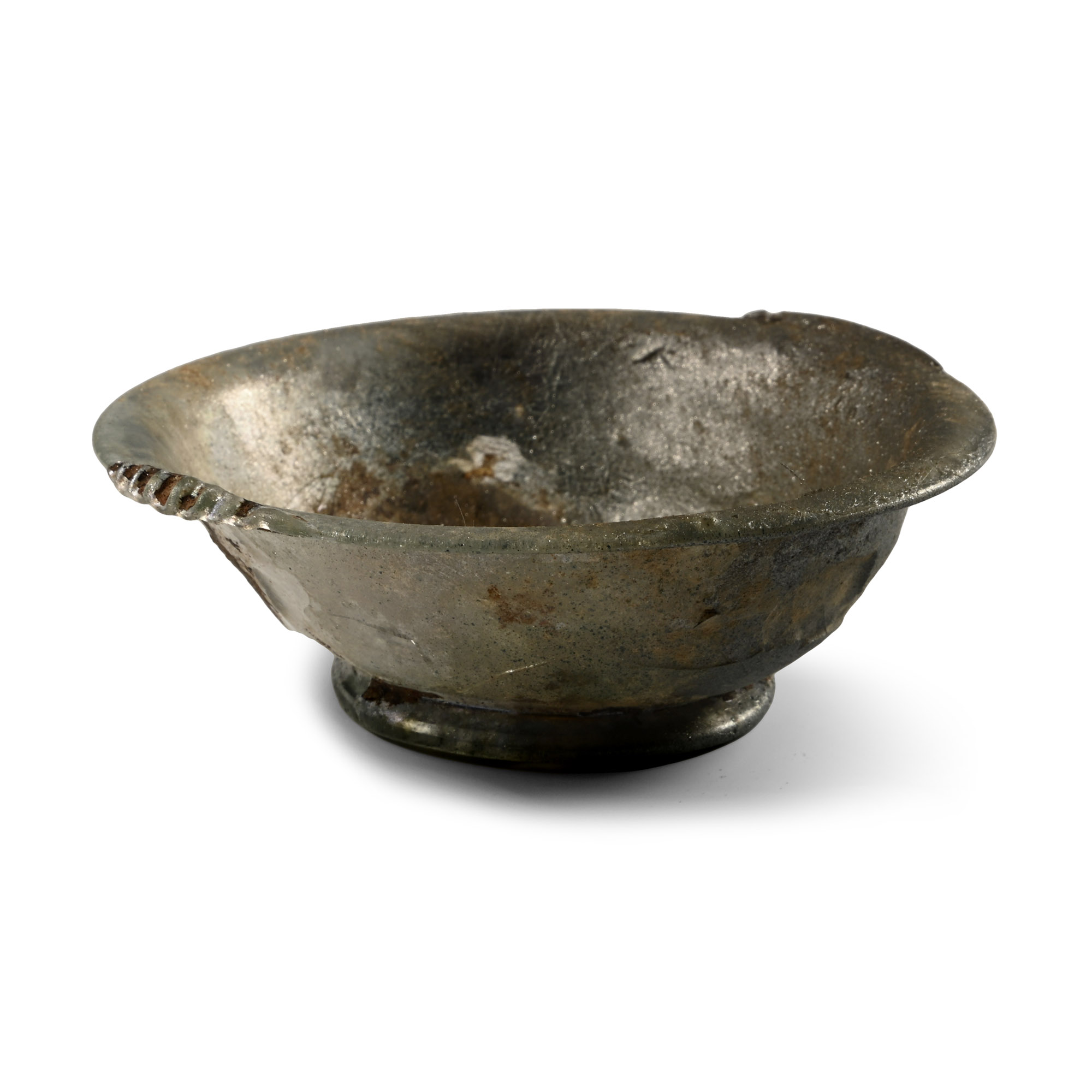
Roman Glass Vessel
1ST CENTURY A.D.
3 7/8 in. (27.6 grams, 99 mm).
Translucent glass with applied trail foot, applied handles with pinched detailing, iridescent surface; restored. [No Reserve]
ProvenanceEx London art market 1990s.
From a London, UK, collection.
This lot is accompanied by an illustrated lot declaration signed by the Head of the Antiquities Department, Dr Raffaele D’Amato.
Cf. The Corning Museum of Glass, accession number 300-399, for general type; Auth, H., Ancient Glass at the Newark Museum, Newark, 1976, p.47, for similar.
FootnotesThis bowl represents one of the two variants of the glassware used under the early Principate. In particular it represents a variant with bright translucent colour. The same shape can be seen on the pottery and in the metal works of the period, and examples like such have been found not only in Italy (Pompeii) but also in the military camps of Noricum, Germania and Britannia.
CONDITIONTimeLine Auctions follows a vetting process to ensure the authenticity and legality of all items, reinforcing our commitment to integrity and responsible trading. Each antiquity, antique, and coin lot undergoes thorough examination by a vetting committee of at least ten external specialists, professional trade association members, scientists, and archaeologists: Our Vetting Process
AUCTIONS:
TimeLine is a leading auction house specialising in antiquities, ancient art, collectables, natural history, coins, medals, and books. Our auctions offer museums, collectors, historians, and enthusiasts the opportunity to acquire unique and historically significant pieces.
-
Large Roman Glass Unguentarium
1st-2nd century A.D.Estimate: £150 - 200 (+bp*)
Opening Bid: £75
With plano-convex body and flat base, tapering neck and everted rim. 42 grams, 14 cm
From a London, UK, collection, 1990s. This lot is accompanied by an illustrated lot declaration signed by the Head of the Antiquities Department, Dr Raffaele D’Amato. -
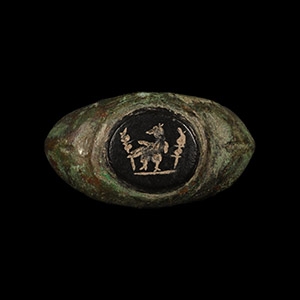
Romano-British Bronze Military Ring with Eagle and Standards Gem
2nd-3rd century A.D.Sold for (Inc. bp): £416
Sturdy hoop, broad plaque with inset glass stud with perching eagle flanked by military standards. 12.83 grams, 26.40 mm overall, 17.20 mm internal diameter (approximate size British F 1/2, USA 3, Europe 4.3, Japan 4)
Found in Britain. Acquired from Ancient & Oriental, UK, in the 1990s. Ian Wilkinson collection, Nottinghamshire, UK, formed since 1985. This lot is accompanied by an illustrated lot declaration signed by the Head of the Antiquities Department, Dr Raffaele D’Amato. -
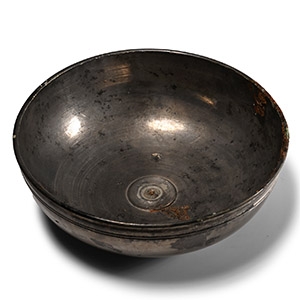
Roman Tinned Bronze Bowl
1st-3rd century A.D.Estimate: £1,500 - 2,000 (‡+bp*)
Opening Bid: £800
Hemispherical in profile with low foot, incised circumferential lines to rim; high-tin surface with silvery appearance. 177 grams, 10.3 cm
Acquired in the mid 1980s-1990s. Private collection, Switzerland, thence by descent. Private collection, since the late 1990s. This lot has been checked against the Interpol Database of stolen works of art and is accompanied by search certificate number no.12234-222176. This lot has been cleared against the Art Loss Register database, and is accompanied by an illustrated lot declaration signed by the Head of the Antiquities Department, Dr Raffaele D’Amato.
