
Loading, please wait...
LOT 0145
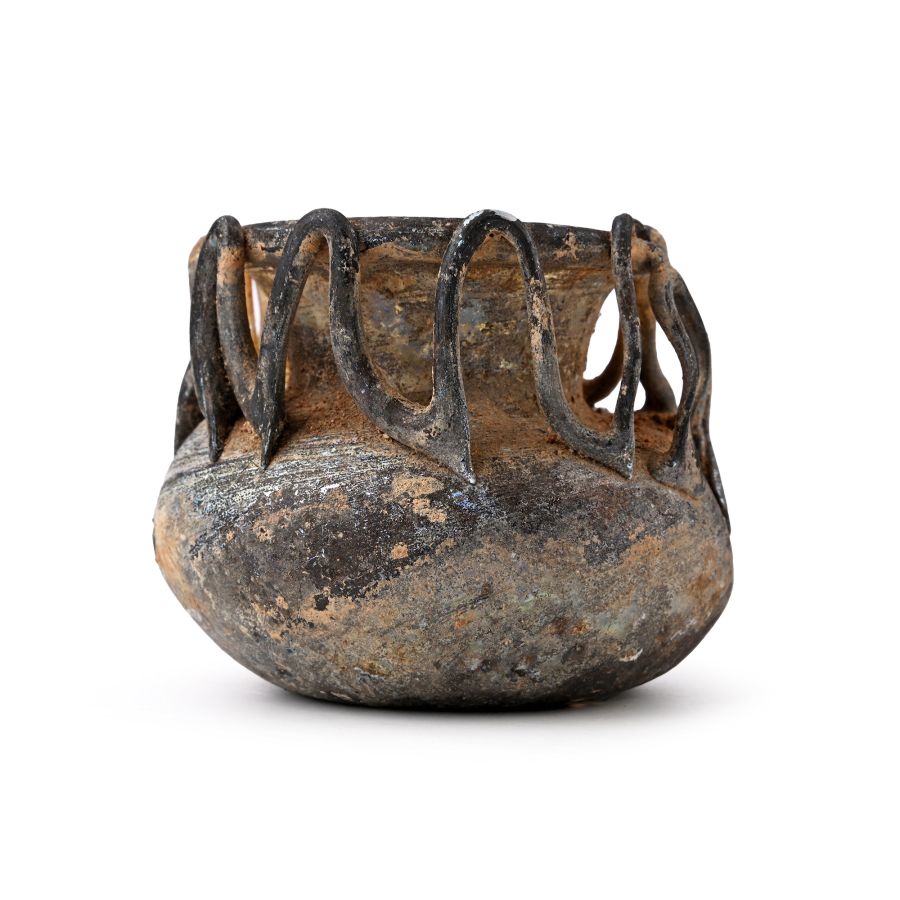
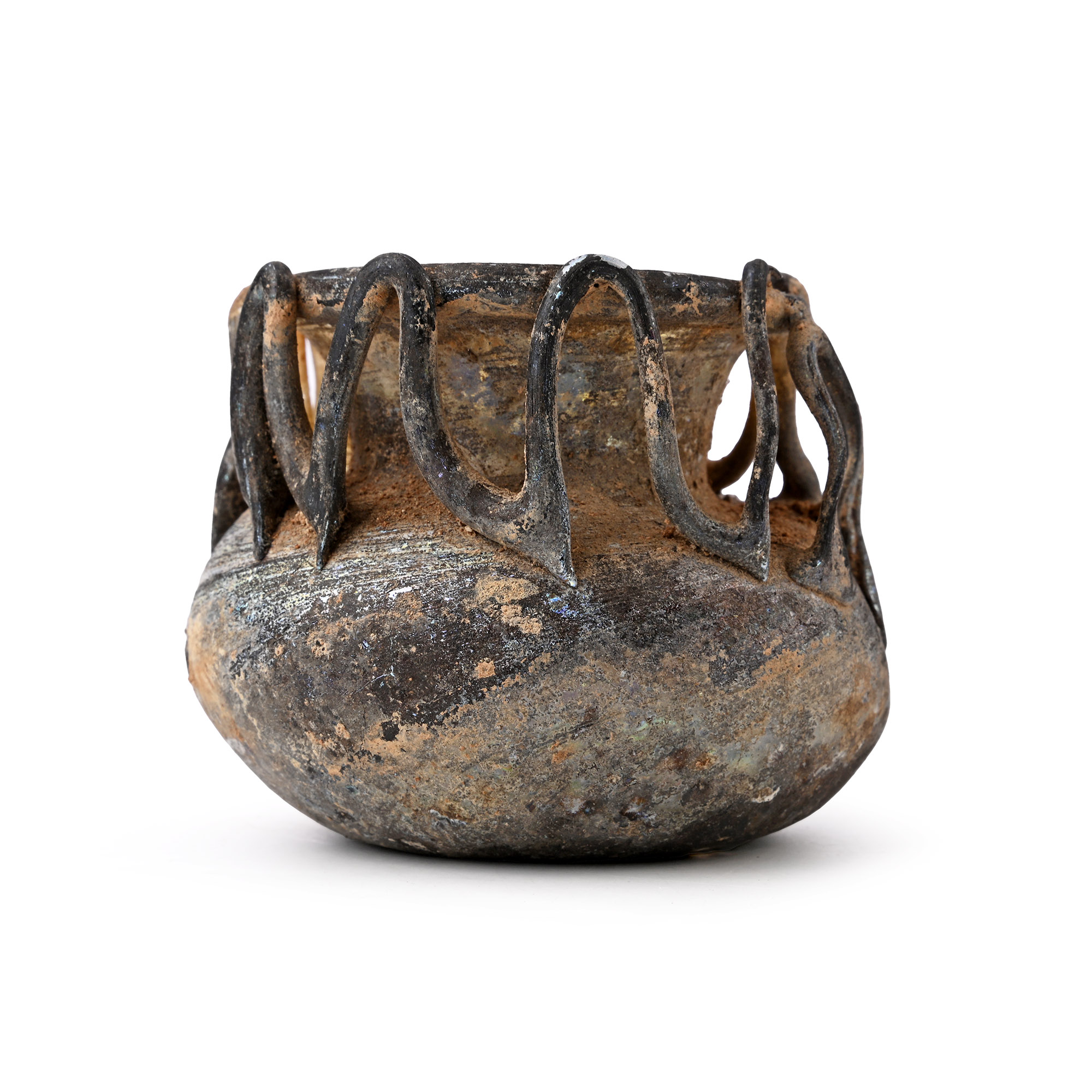
Roman Glass Vessel with Iridescence
4TH-5TH CENTURY A.D.
2 7/8 in. (59.8 grams, 73 mm wide).
Squat body with a short trumpet-shaped neck with rolled rim, applied openwork gallery encircling the neck.
ProvenanceFrom an important London, UK, collection 1980-2020.
LiteratureCf. Lightfoot, C.S., Ancient Glass in National Museums Scotland, Edinburgh, 2007, item 321.
FootnotesSuch jars, with applied trails, are commonly found in the Near East and Egypt. One trail was wound once horizontally around the undercurve of the mouth; another was applied in a large pad to shoulder and then formed into wavy zigzag patterns.
CONDITIONTimeLine Auctions follows a vetting process to ensure the authenticity and legality of all items, reinforcing our commitment to integrity and responsible trading. Each antiquity, antique, and coin lot undergoes thorough examination by a vetting committee of at least ten external specialists, professional trade association members, scientists, and archaeologists: Our Vetting Process
AUCTIONS:
TimeLine is a leading auction house specialising in antiquities, ancient art, collectables, natural history, coins, medals, and books. Our auctions offer museums, collectors, historians, and enthusiasts the opportunity to acquire unique and historically significant pieces.
-
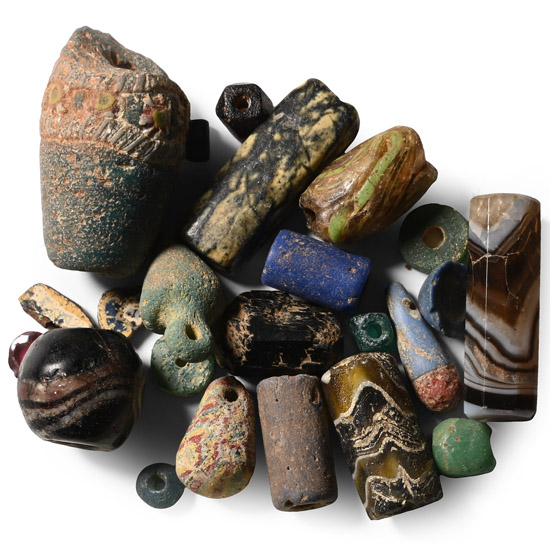
Roman Glass and Stone Bead and Pendant Collection
1st-4th century A.D. and laterSold for (Inc. bp): £208
Mixed group including cylindrical, spherical, teardrop-shaped, conical and other types. 31.2 grams total, 4-26 mm
From the private collection of a European gentleman (1942-2024), formed since the 1970s. -
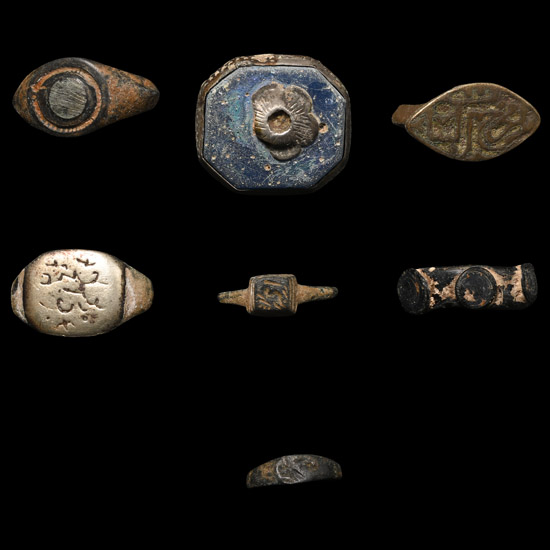
Roman and Later Bronze Ring Group
Circa 1st-4th century A.D.Sold for (Inc. bp): £195
Comprising: a slender ring with a rectangular tiered bezel; a ring with a large bezel with blue glass intaglio with a silver flower; a ring with oval bezel with linear motifs; a ring with a keeled hoop and lentoid bezel; a glass ring with three raised bosses; a small interphalangial ring; a ring with a raised disc on the bezel. 25.4 grams total, 13-29 mm
From the private collection of a European gentleman (1942-2024), formed since the 1970s. -
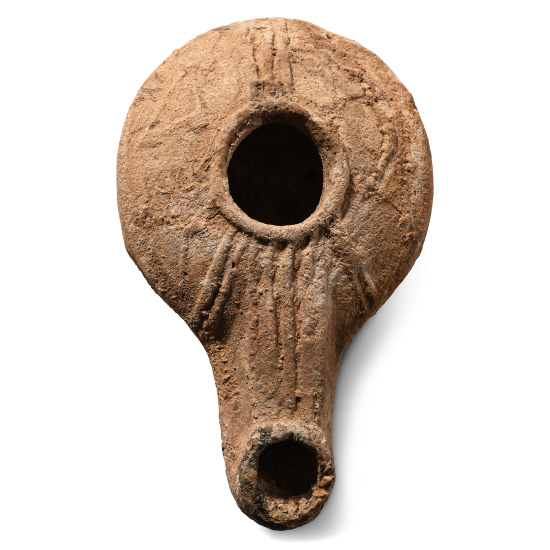
Roman Terracotta Oil Lamp with Extended Nozzle
Holy Land, circa 4th-7th century A.D.Sold for (Inc. bp): £72
Round body with an elongated nozzle, raised ribs extending from the rear of the lamp to the edge of the nozzle. 64.2 grams, 94 mm
Ex Ancient Art Shop, Windsor, UK, 1990s. Ex private West County, UK, collection.
