
Loading, please wait...
LOT 0633
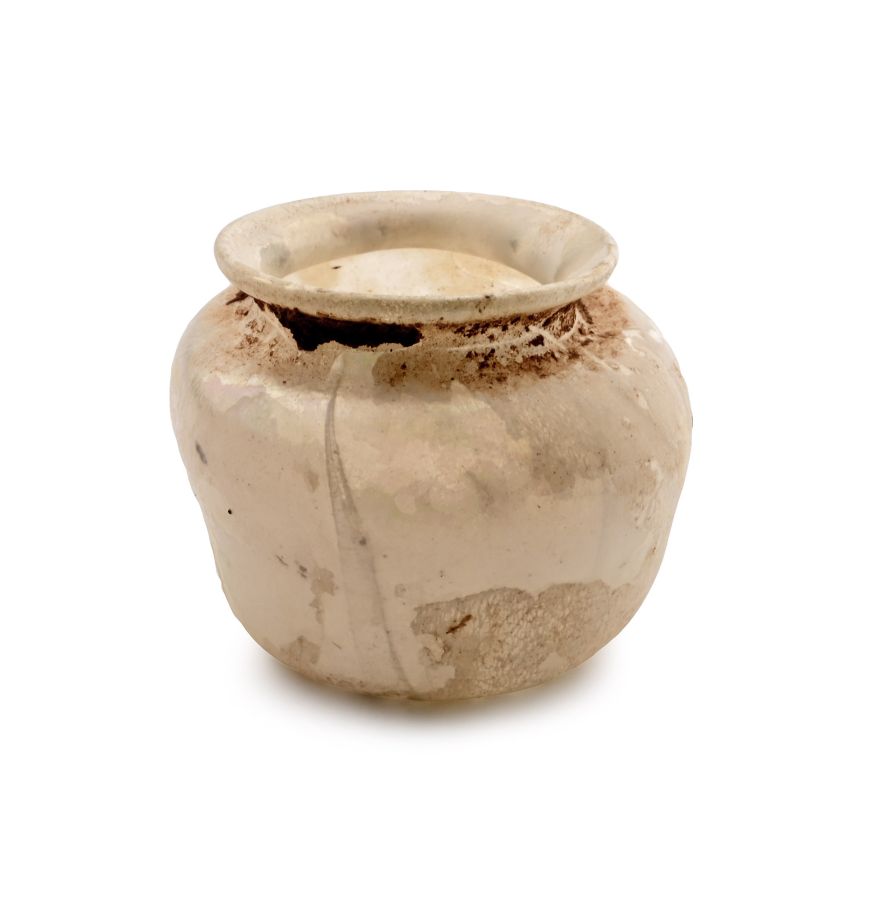
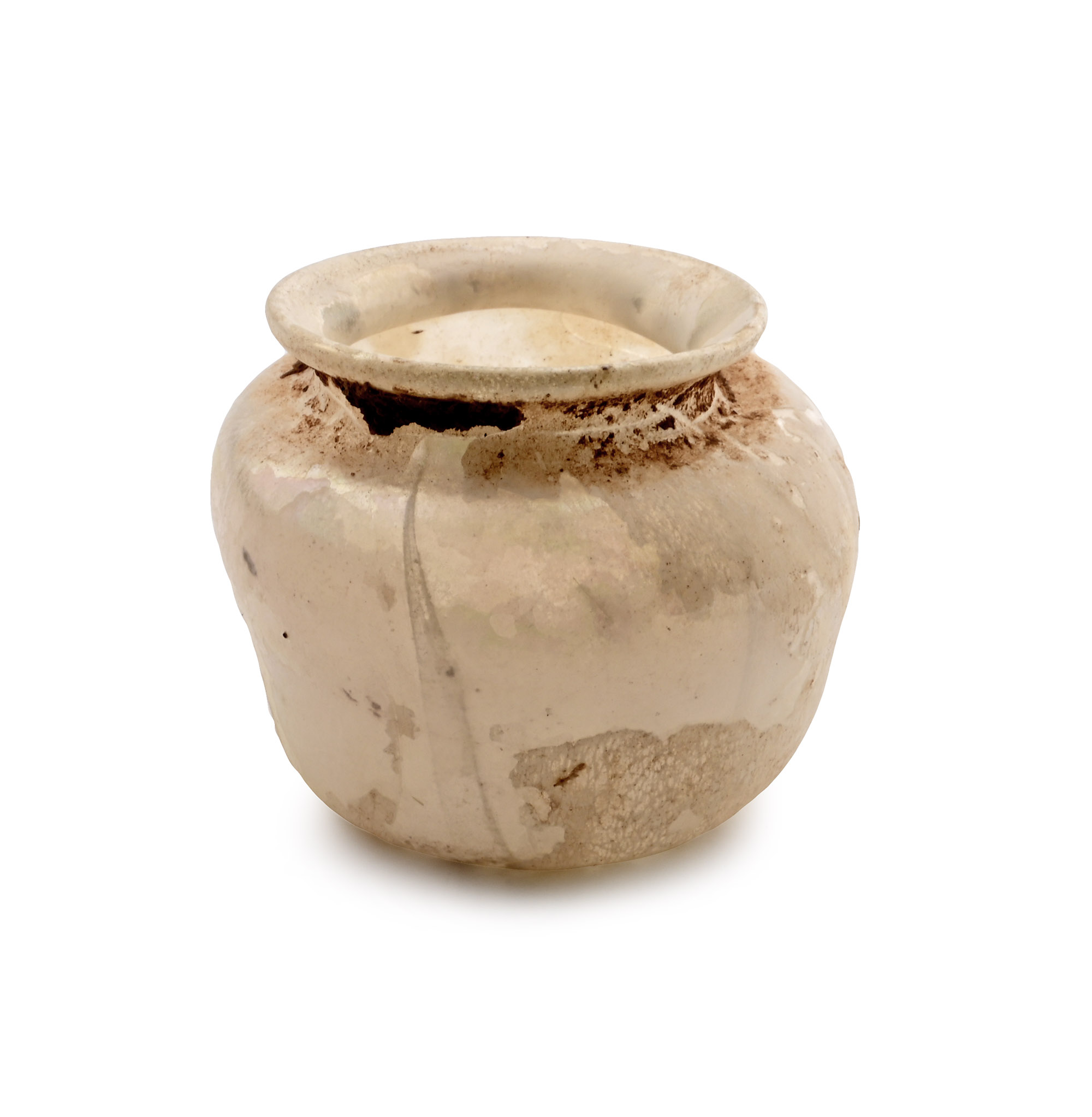
Roman Glass Vase
2ND-4TH CENTURY A.D.
2 in. (13.7 grams, 50 mm).
Squat in profile with sloped shoulder, everted flange rim.
ProvenanceAcquired in the late 1980s.
Private collection, thence by descent.
Private collection, since the late 1990s.
TimeLine Auctions follows a vetting process to ensure the authenticity and legality of all items, reinforcing our commitment to integrity and responsible trading. Each antiquity, antique, and coin lot undergoes thorough examination by a vetting committee of at least ten external specialists, professional trade association members, scientists, and archaeologists: Our Vetting Process
AUCTIONS:
TimeLine is a leading auction house specialising in antiquities, ancient art, collectables, natural history, coins, medals, and books. Our auctions offer museums, collectors, historians, and enthusiasts the opportunity to acquire unique and historically significant pieces.
LOT 0633
Roman Glass Vase
Estimate £120 - 170€140 - 200 (for guidance only)$160 - 230 (for guidance only)
-
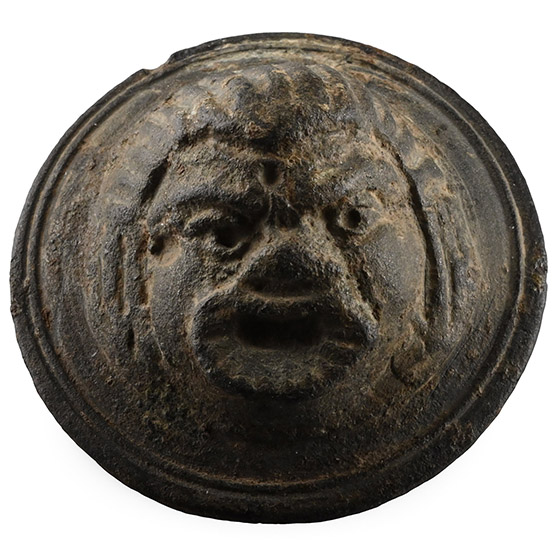
Roman Bronze Applique of Actor's Mask
2nd century A.D.Sold for (Inc. bp): £211
Discoid with flange rim, central high-relief actor's mask with D-shaped mouth. 38.8 grams, 38 mm
Acquired in the 1992. Private collection, Switzerland, thence by descent. Private collection, since the late 1990s. -
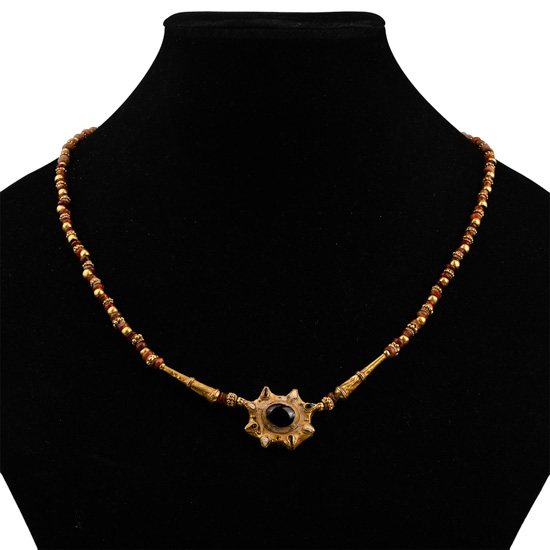
Greek Gold and Carnelian Necklace with Garnet-Set Pendant
5th-4th century B.C.Estimate: £3,000 - 4,000 (+bp*)
Opening Bid: £1,500
A restrung necklace comprising carinated carnelian beads interspersed with sheet-gold beads of plain and granulated types, two tapering round-section beads with collars and domed finials, a central gold polygonal pendant with eight concave sides, polished oval garnet cabochon at the centre, granulated collar around base, raised tear-shaped cell to each corner also with granulated border, alternately set with enamel and garnet cabochons, a single applied bead between each; modern hook-and-eye clasp. 39.16 grams, 53 cm
Acquired in the mid-1980s to early 1990s. Private collection, London, UK. This lot has been checked against the Interpol Database of stolen works of art and is accompanied by search certificate number no.13124-246808. -
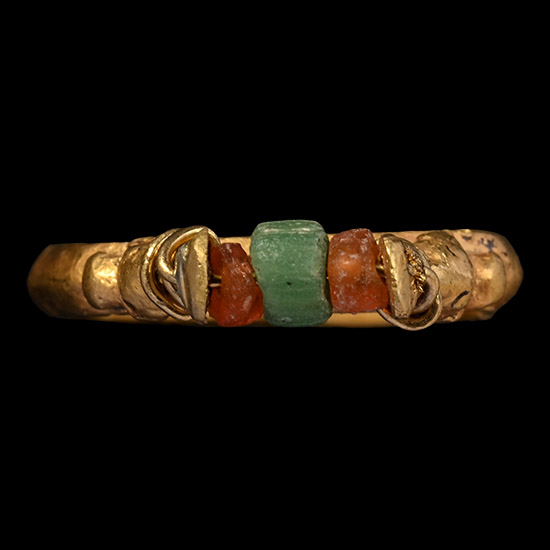
Roman Gold Ring with Dolphins Supporting Beads
1st century A.D.Estimate: £1,000 - 1,400 (+bp*)
Opening Bid: £500
D-section hoop with shoulders formed as addorsed dolphins, the tails pierced to accept a wire with three glass seed beads. 4.24 grams, 26.14 mm overall, 15.47 x 16.96 mm internal diameter (approximate size British J, USA 4 3/4, Europe 8.69, Japan 8)
Ex Cambridgeshire, UK, gentleman's collection, 1980-1990s.
