
Loading, please wait...
LOT 0803
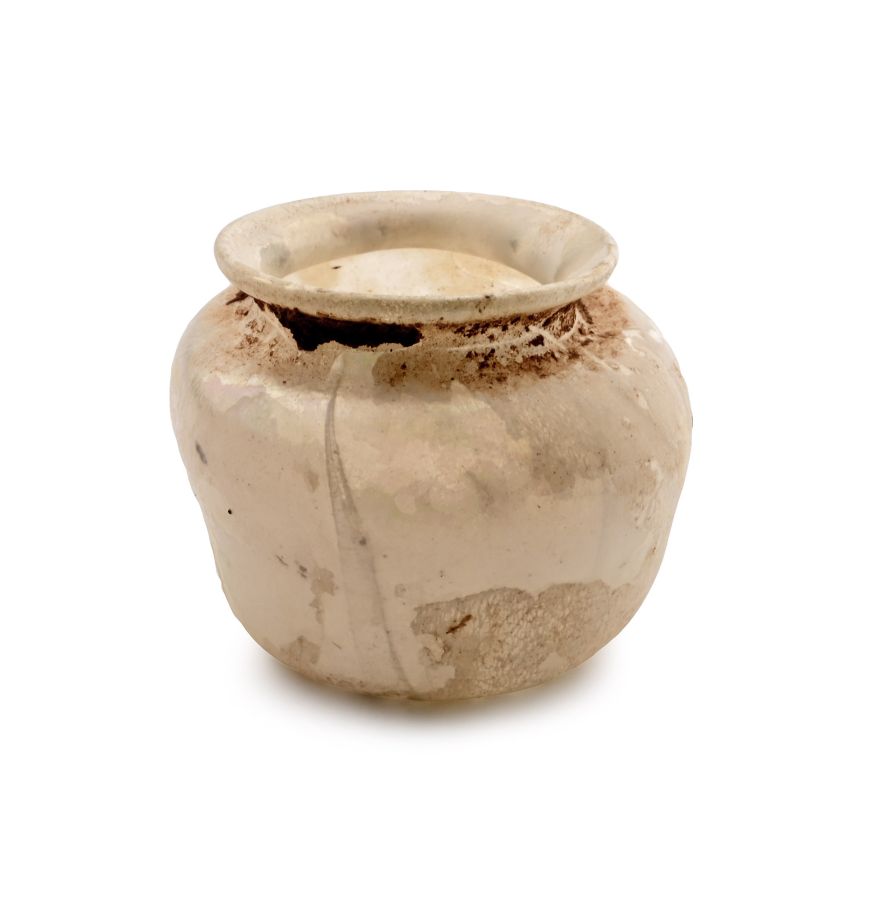
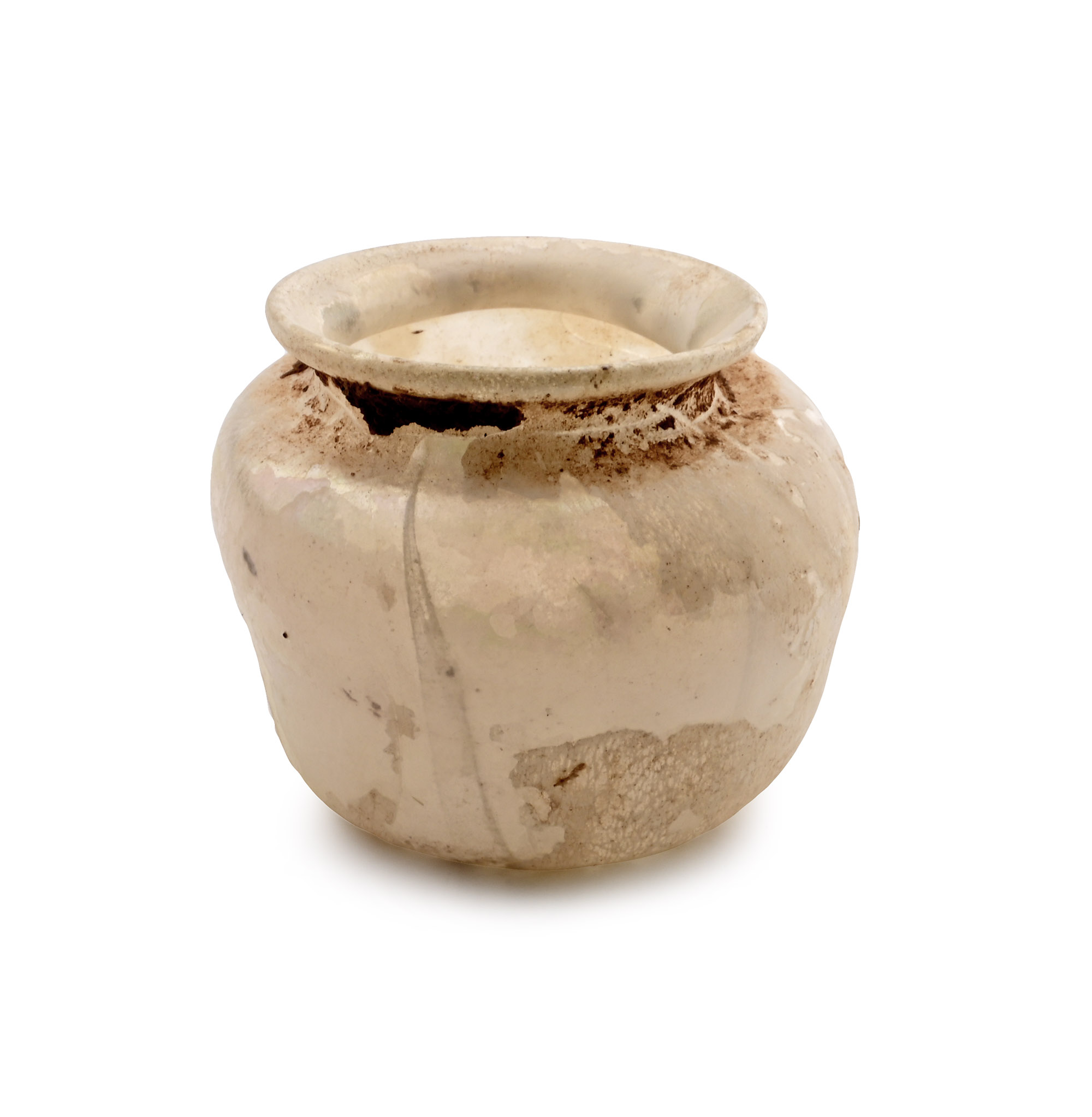
Roman Glass Vase
2ND-4TH CENTURY A.D.
2 in. (13.7 grams, 50 mm).
Squat in profile with sloped shoulder, everted flange rim.
ProvenanceAcquired in the late 1980s.
Private collection, thence by descent.
Private collection, since the late 1990s.
This lot is accompanied by an illustrated lot declaration signed by the Head of the Antiquities Department, Dr Raffaele D'Amato.
TimeLine Auctions follows a vetting process to ensure the authenticity and legality of all items, reinforcing our commitment to integrity and responsible trading. Each antiquity, antique, and coin lot undergoes thorough examination by a vetting committee of at least ten external specialists, professional trade association members, scientists, and archaeologists: Our Vetting Process
AUCTIONS:
TimeLine is a leading auction house specialising in antiquities, ancient art, collectables, natural history, coins, medals, and books. Our auctions offer museums, collectors, historians, and enthusiasts the opportunity to acquire unique and historically significant pieces.
LOT 0803
Roman Glass Vase
Estimate £150 - 200€170 - 230 (for guidance only)$200 - 270 (for guidance only)
-
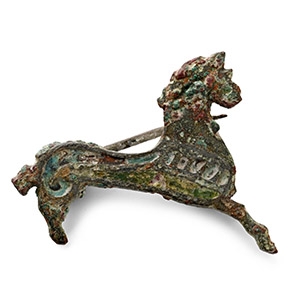
Romano-British Enamelled Bronze Horse Brooch
2nd century A.D.Sold for (Inc. bp): £104
Modelled with erect head and slender legs, recessed cells on the body to accept enamel with some blue enamel remaining; pin and remains of catchplate on the reverse. 4.28 grams, 32 mm
Found East Anglia, UK. This lot is accompanied by an illustrated lot declaration signed by the Head of the Antiquities Department, Dr Raffaele D'Amato. -
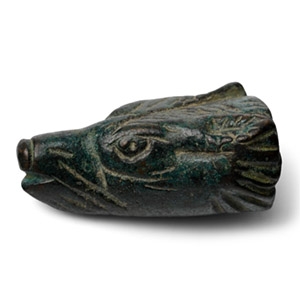
Roman Bronze Wolf's Head Terminal
1st-2nd century A.D.Sold for (Inc. bp): £98
A terminal depicting a wolf's head with fierce expression, fur detailing to the neck and snout, possibly a knife pommel. 17.4 grams, 27 mm
Fine condition.
Property of a North West London gallery; formerly in a 1980s collection. From the private collection of John Meredith, acquired since the 1990s; thence by descent. This lot is accompanied by an illustrated lot declaration signed by the Head of the Antiquities Department, Dr Raffaele D'Amato. -
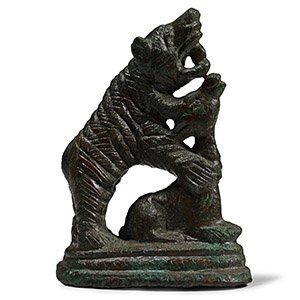
Roman Bronze Statue of a Bear Killing a Deer
1st-2nd century A.D.Estimate: £1,000 - 1,700 (+bp*)
Opening Bid: £500
On a stepped triangular base, bear with head raised, forepaws round the neck of a deer with legs folded beneath the body. 398 grams, 10 cm
Nicolas Koutoulakis (1910-1996). Private collection of Mr K.A. This lot is accompanied by an illustrated lot declaration signed by the Head of the Antiquities Department, Dr Raffaele D'Amato.
Combat between large animals was a popular theme in Roman art. The staging of such fights in the Flavian Amphitheatre in the heart of Rome is evidenced. Furthermore, the 3rd-4th century A.D. mosaic floor unearthed at Lod, Israel, in 1996 shows several scenes with ferocious wild animal - a lion and lioness, an elephant, a giraffe, a rhinoceros, a tiger, and a wild bull - all arranging themselves for a colossal fight to the death. The mosaic was lifted intact and is on display in the Metropolitan Museum of Art, New York.
