
Loading, please wait...
LOT 0811
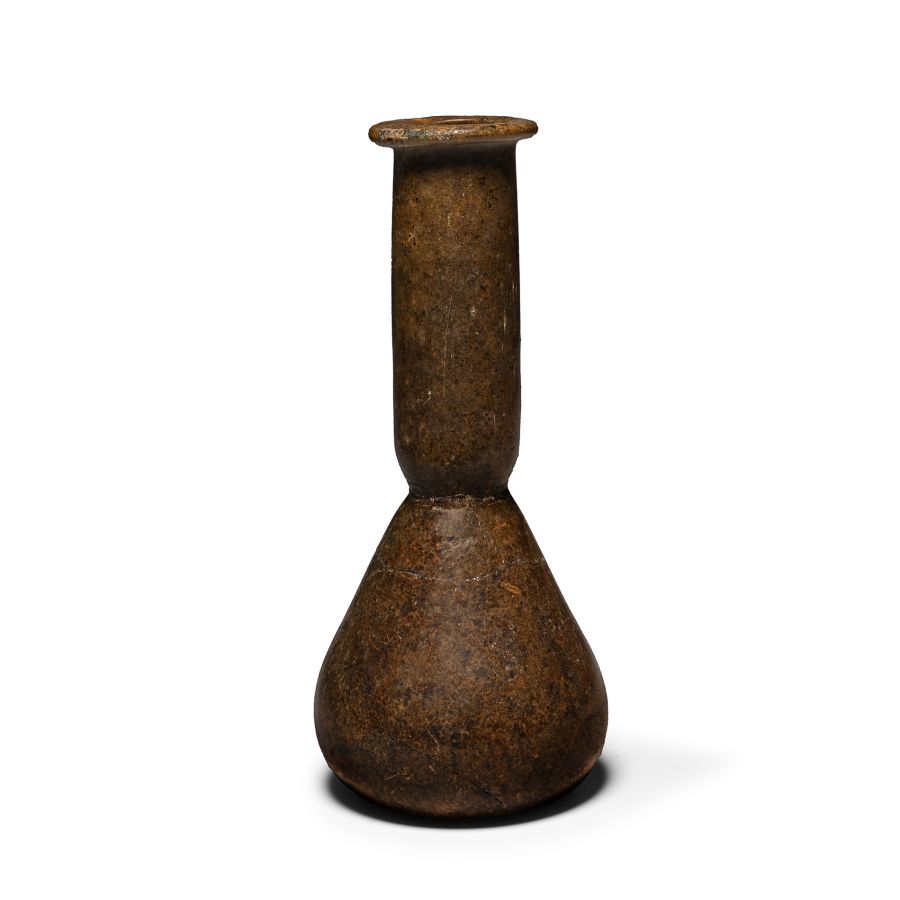
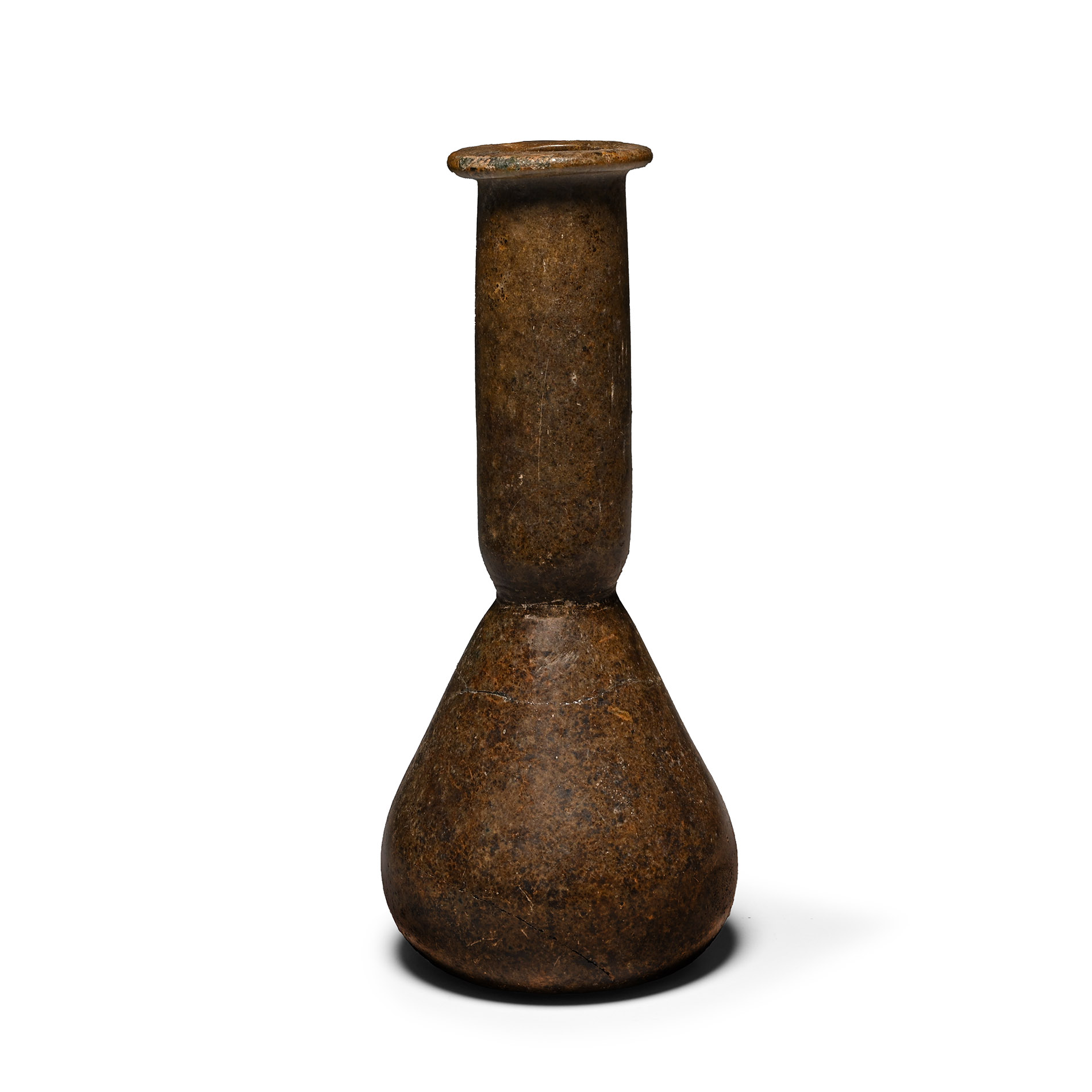
Roman Glass Unguentarium
2ND-4TH CENTURY A.D.
6 1/8 in. (97 grams, 15.5 cm).
With piriform body and flat base, tall neck with waisted joint to body, mouth with everted rim; old collector's labels to underside 'L-15439' and '2970'. [No Reserve]
Provenancewith H.A.C., Basel, prior 1999.
This lot is accompanied by an illustrated lot declaration signed by the Head of the Antiquities Department, Dr Raffaele D’Amato.
Cf. Whitehouse, D., Roman Glass in the Corning Museum of Glass, vol.2, New York, 2001, item 772, for type.
CONDITIONTimeLine Auctions follows a vetting process to ensure the authenticity and legality of all items, reinforcing our commitment to integrity and responsible trading. Each antiquity, antique, and coin lot undergoes thorough examination by a vetting committee of at least ten external specialists, professional trade association members, scientists, and archaeologists: Our Vetting Process
AUCTIONS:
TimeLine is a leading auction house specialising in antiquities, ancient art, collectables, natural history, coins, medals, and books. Our auctions offer museums, collectors, historians, and enthusiasts the opportunity to acquire unique and historically significant pieces.
-
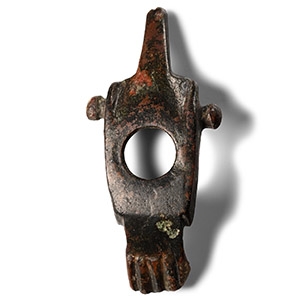
Roman Bronze Phallic Knife Guard
1st-4th century A.D.Sold for (Inc. bp): £39
Formed with a stylised erect phallus to one side, fist held in the fica gesture to the other, rectangular plate with raised sides and circular piercing to the bottom face. 10.7 grams, 50 mm
Acquired on the London art market in the late 1980s-1990s. From the family collection of an East London, UK, gentleman. This lot is accompanied by an illustrated lot declaration signed by the Head of the Antiquities Department, Dr Raffaele D’Amato. -
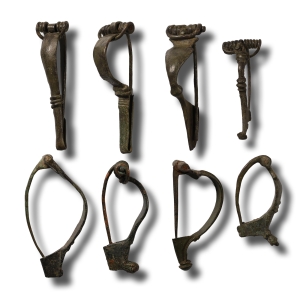
Roman Bronze Bow Brooch Collection
1st century-3rd century A.D.Sold for (Inc. bp): £182
Including P-Shaped, Kraftig Profilierte and other types. 86 grams total, 45-65 mm
From an English collection formed before 2000. This lot is accompanied by an illustrated lot declaration signed by the Head of the Antiquities Department, Dr Raffaele D’Amato. -
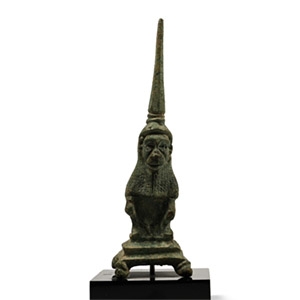
Roman Bronze Pricket Candlestick
2nd-4th century A.D.Sold for (Inc. bp): £1,300
Pricket formed as a baboon crouching on a tiered base with bun feet; the animal wearing a pounced hood with tall octagonal-section spike above; mounted on a custom-made stand. 95.7 grams total, 99 mm including stand
From a Cambridgeshire, UK, collection, 1990s. This lot is accompanied by an illustrated lot declaration signed by the Head of the Antiquities Department, Dr Raffaele D’Amato.
