
Loading, please wait...
LOT 0722
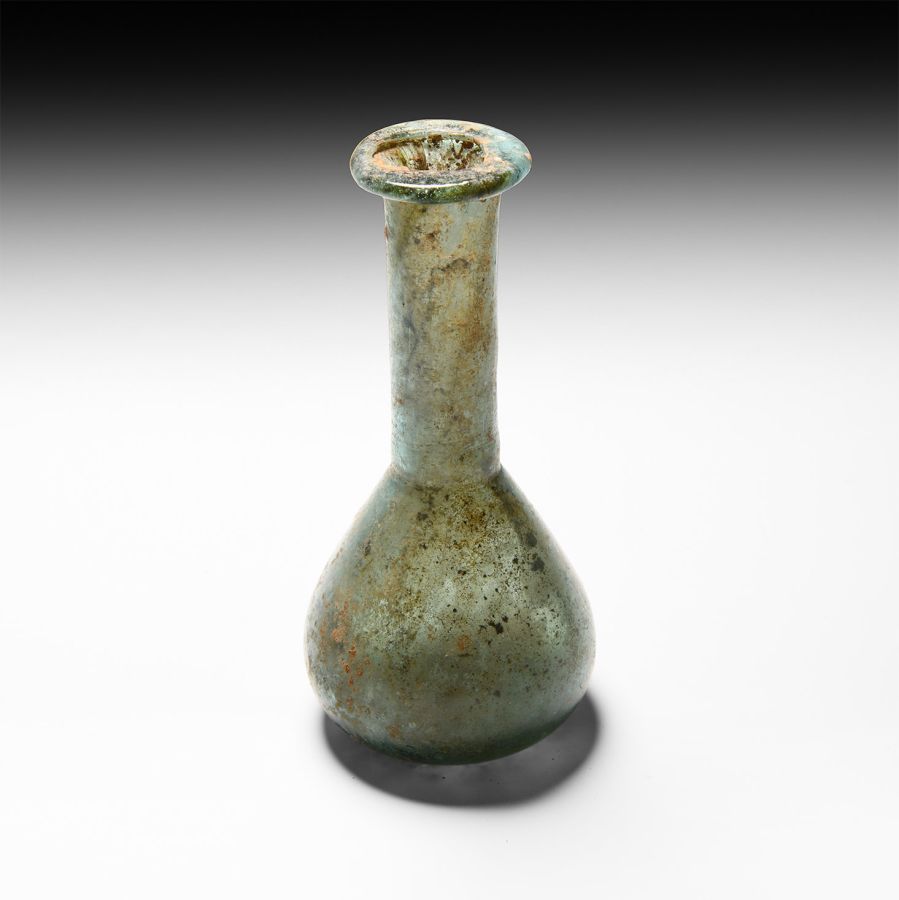
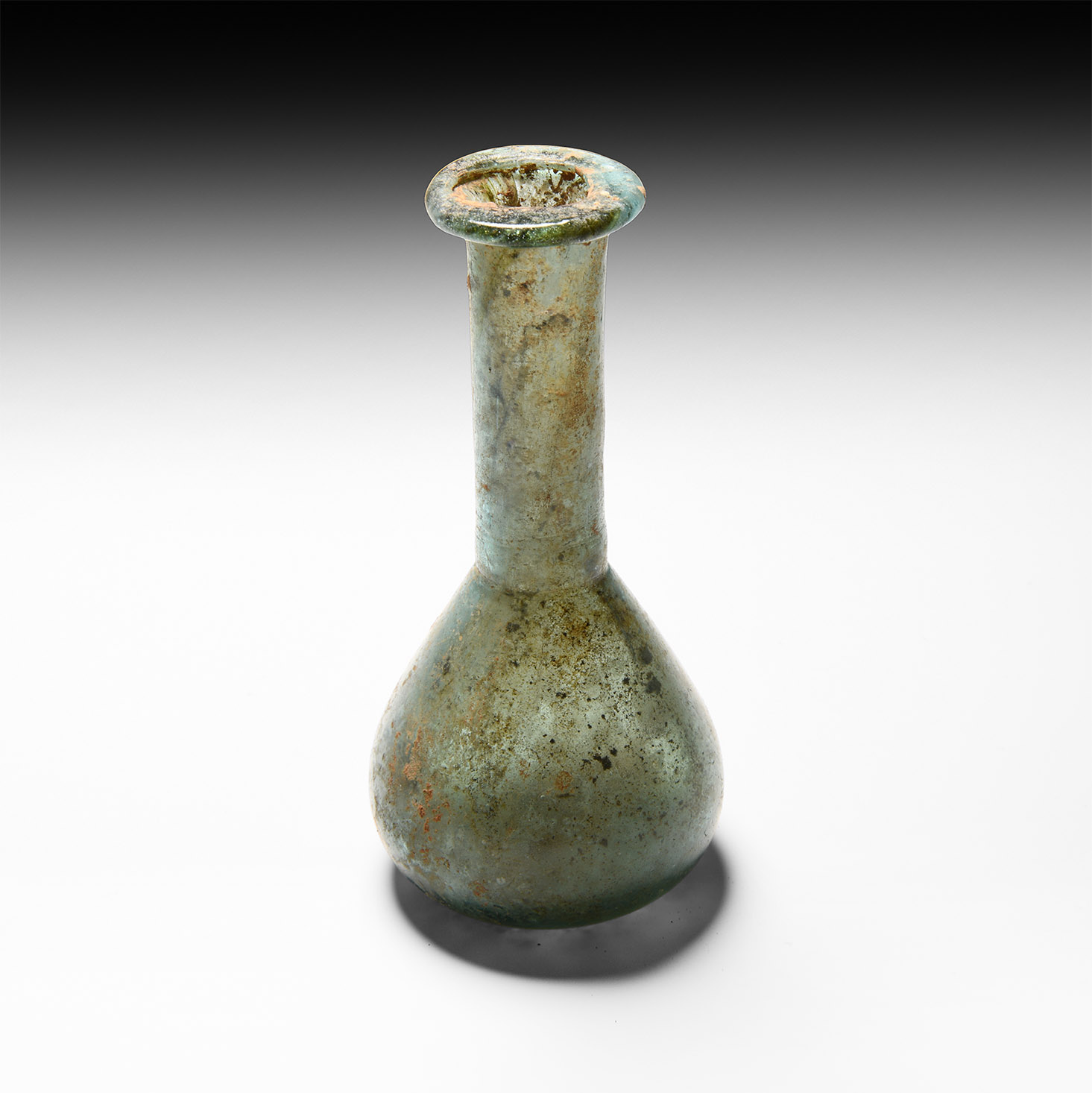
Roman Glass Unguentarium
2ND CENTURY A.D.
4 3/4 in. (71.8 grams, 12 cm).
A blue glass unguentarium with a piriform body and long tubular neck with flanged rim; some iridescence to surfaces.
ProvenanceAcquired 1980-2015.
Ex Abelita family collection.
TimeLine Auctions follows a vetting process to ensure the authenticity and legality of all items, reinforcing our commitment to integrity and responsible trading. Each antiquity, antique, and coin lot undergoes thorough examination by a vetting committee of at least ten external specialists, professional trade association members, scientists, and archaeologists: Our Vetting Process
AUCTIONS:
TimeLine is a leading auction house specialising in antiquities, ancient art, collectables, natural history, coins, medals, and books. Our auctions offer museums, collectors, historians, and enthusiasts the opportunity to acquire unique and historically significant pieces.
-
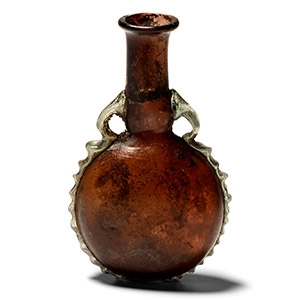
Roman Miniature Glass Flask
1st-3rd century A.D.Sold for (Inc. bp): £585
An aubergine-coloured glass flask with tubular neck and rolled rim, applied clear glass handles and wavy trail to circumference; iridescent surfaces; repaired. 30 grams, 97 mm high
French collection, 1960s-early 2000s. From an important Paris gallery, France. -
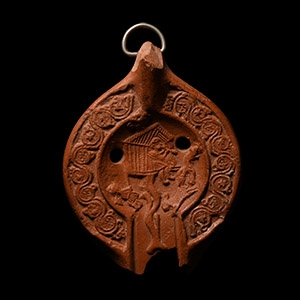
Roman Redware Lamp Fragment with Bucolic Scene
1st-4th century A.D.Sold for (Inc. bp): £85
A fragment of a redware oil lamp comprising the discus and shoulder, part of the nozzle and part of the handle; the shoulder with finely moulded running vine scroll ornament; the discus pierced in two places with a scene involving a tree with a roofed structure in the branches, and a child seated with legs dangling over the edge of the platform, playing a wind instrument, a bird perched above the roof, a hare and pursuing hound to the right and a second child on the left descending from the platform on a rope; modern mounting fixed to the reverse, repaired. 81 grams, 12 cm
Acquired 1960s-1990s. From the late Alison Barker collection, a retired London barrister. -
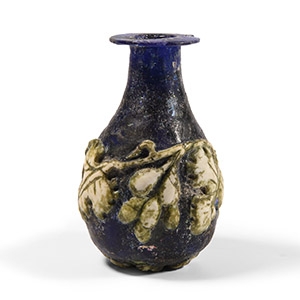
Roman Blue Glass Vessel with Vine Leaf Design
Early 1st century A.D. and laterEstimate: £800 - 1,000 (+bp*)
Opening Bid: £400
A blue glass bottle of piriform shape with iridescent surfaces, decorated with later applied fruiting vines in high-relief, a stylised leaf to the vessel base; restored; rim chipped. 189 grams, 12 cm high
Acquired in the 1970s. English private collection.
