
Loading, please wait...
LOT 0162
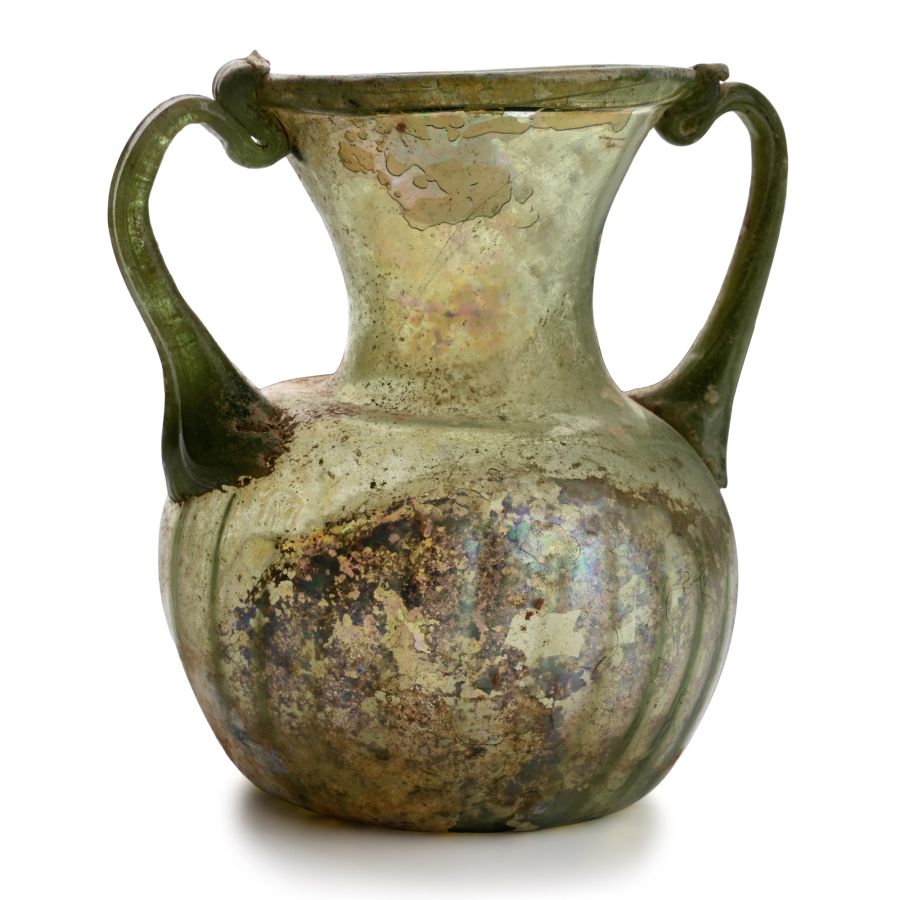
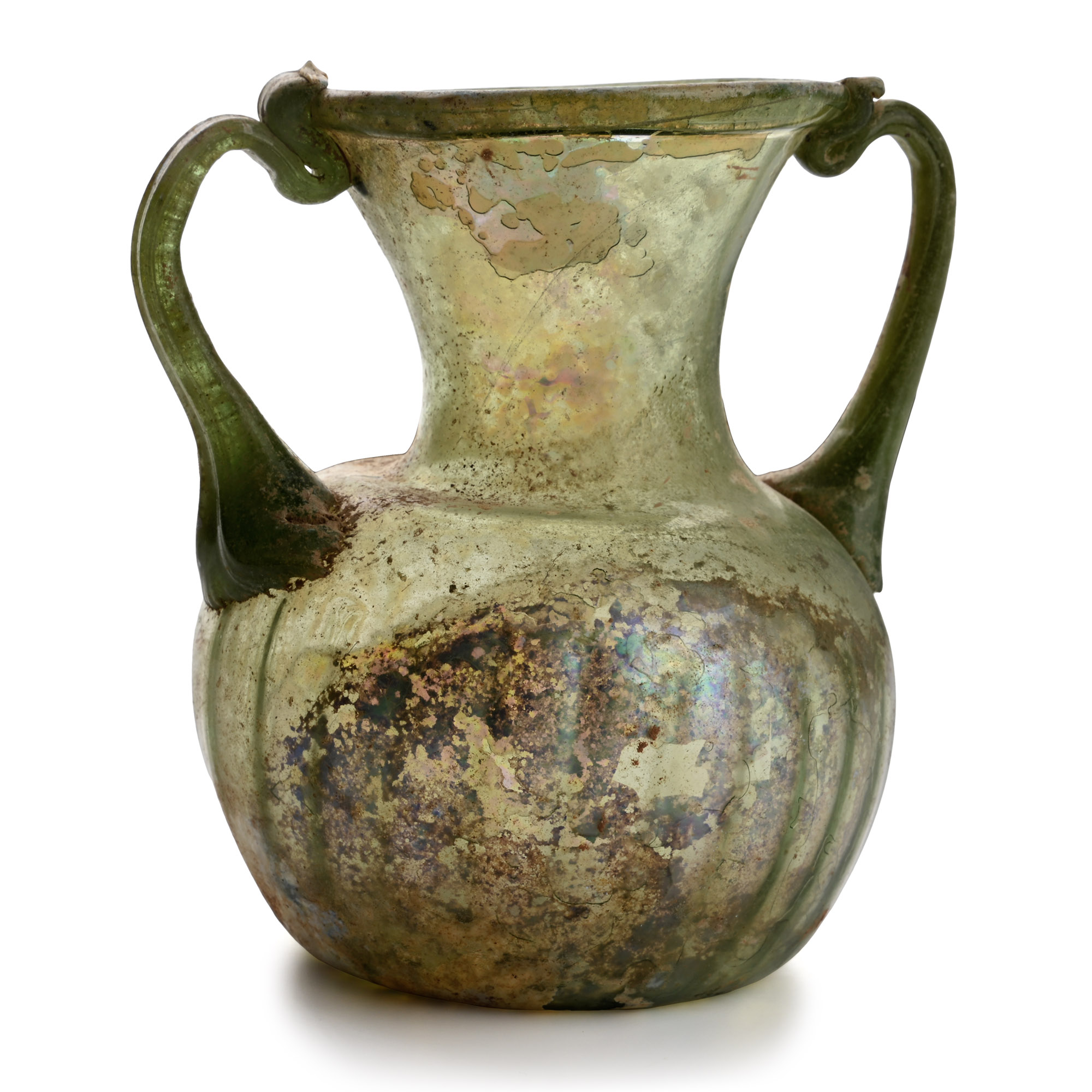
Roman Glass Two-Handled Jar
1ST-4TH CENTURY A.D.
4 3/4 in. (132 grams, 12.2 cm high).
Comprising a bulbous body with dimple base, bell-shaped neck with rolled rim, two applied strap handles.
ProvenanceEx Mayfair, London, UK, gallery, 1990s-2000s.
From an important collection of glass, the property of a London gentleman.
This lot is accompanied by an illustrated lot declaration signed by the Head of the Antiquities Department, Dr Raffaele D'Amato.
See Whitehouse, D., Roman Glass in the Corning Museum of Glass, vol.1, New York, 1997, item 333, for type.
CONDITIONTimeLine Auctions follows a vetting process to ensure the authenticity and legality of all items, reinforcing our commitment to integrity and responsible trading. Each antiquity, antique, and coin lot undergoes thorough examination by a vetting committee of at least ten external specialists, professional trade association members, scientists, and archaeologists: Our Vetting Process
AUCTIONS:
TimeLine is a leading auction house specialising in antiquities, ancient art, collectables, natural history, coins, medals, and books. Our auctions offer museums, collectors, historians, and enthusiasts the opportunity to acquire unique and historically significant pieces.
LOT 0162
Roman Glass Two-Handled Jar
Estimate £500 - 700€580 - 810 (for guidance only)$680 - 950 (for guidance only)
-
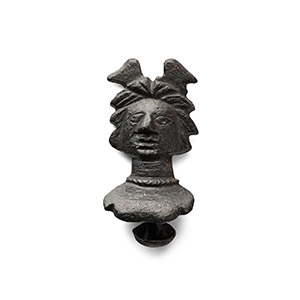
Roman Bronze Mercury Mount
1st-4th century A.D.Sold for (Inc. bp): £143
Bust of Mercury on stud with beaded band to the throat, winged diadem. 10.5 grams, 34 mm
Ex German art market, 2000s. Acquired from an EU collector living in London. From the collection of a Surrey, UK, gentleman. This lot is accompanied by an illustrated lot declaration signed by the Head of the Antiquities Department, Dr Raffaele D'Amato. -
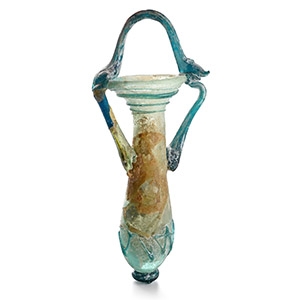
Roman Pale-Blue Glass Handled Unguentarium with Trail
3rd-5th century A.D.Estimate: £400 - 600 (+bp*)
Opening Bid: £200
Comprising a piriform body and flared mouth with applied trails; strap handle above extending to two lateral loops; applied zigzag to lower body and applied foot. 67 grams, 15.5 cm
Acquired on the European art market in the early 2000s. with Galerie Rhéa, Zurich, Switzerland. This lot is accompanied by an illustrated lot declaration signed by the Head of the Antiquities Department, Dr Raffaele D'Amato. -
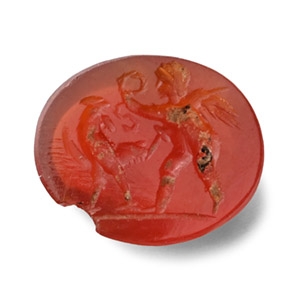
Roman Carnelian Gemstone with Putto
2nd-3rd century A.D.Sold for (Inc. bp): £195
Carnelian plaque with chamfered sidewall, intaglio scene with a putto attempting to put a wreath over the head of a hen. 0.34 grams, 9 mm
From the collection of a gentleman, acquired on the London art market in the 1990s. This lot is accompanied by an illustrated lot declaration signed by the Head of the Antiquities Department, Dr Raffaele D'Amato.
