
Loading, please wait...
LOT 0754
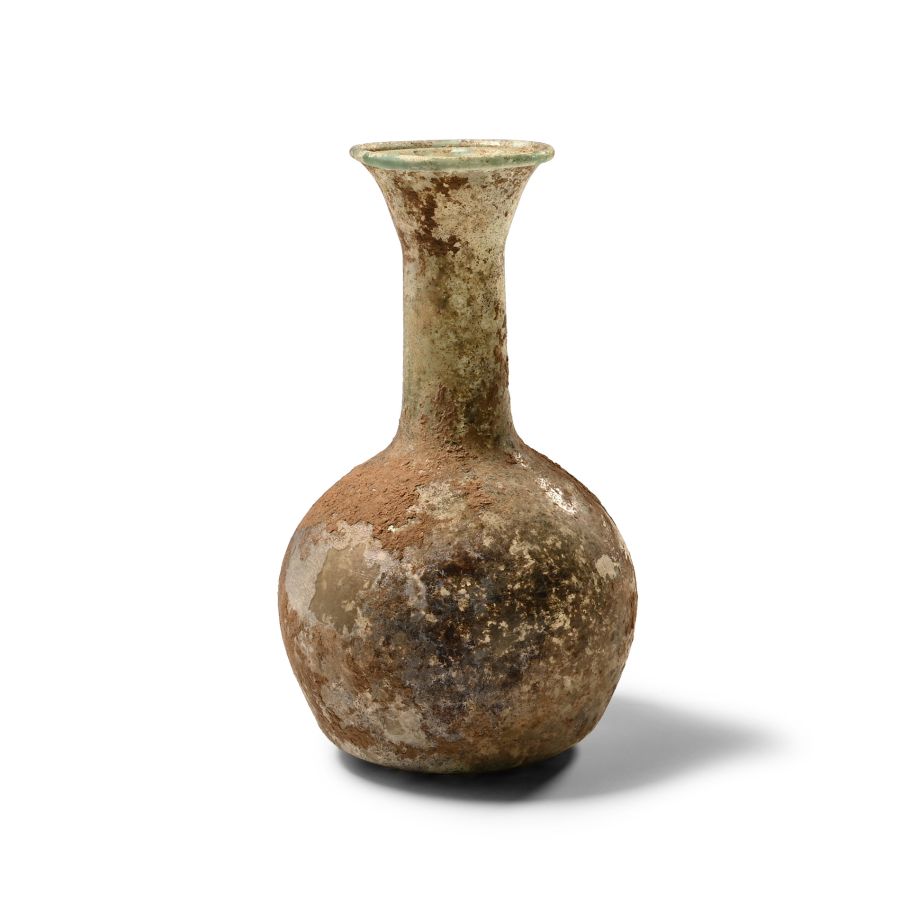
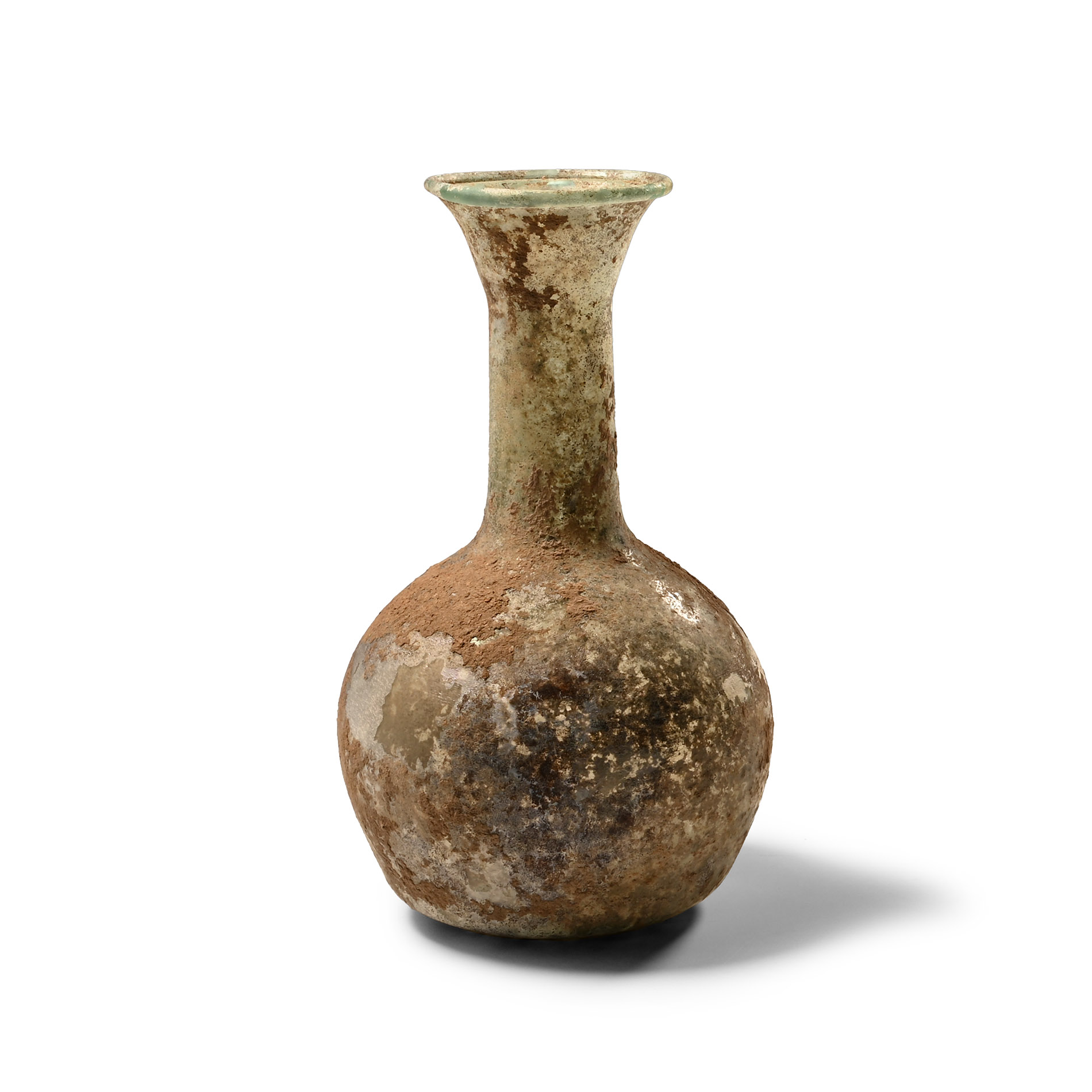
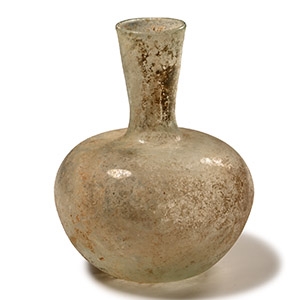
Roman Glass Toilet Bottle
1ST CENTURY B.C.-1ST CENTURY A.D.
5 1/2 in. (61 grams, 14 cm).
With globular body, everted rim, cylindrical neck, rounded shoulder merging with concave wall, rounded base.
ProvenanceEx London, UK, collection, 1980-1990s.
LiteratureCf. Whitehouse, D., Roman Glass in the Corning Museum of Glass, vol.1, New York, 1997, item 194, for the type.
FootnotesThis toilet bottle could be associated with the Isings form 6 and De Tommaso type 7. These small bottles are among the earliest known blown glass. The everted rim seems to distinguish examples made in Italy and the western Mediterranean provinces from those of the Eastern Mediterranean, on which the rim is usually folded in the form of a flange.
CONDITIONTimeLine Auctions follows a vetting process to ensure the authenticity and legality of all items, reinforcing our commitment to integrity and responsible trading. Each antiquity, antique, and coin lot undergoes thorough examination by a vetting committee of at least ten external specialists, professional trade association members, scientists, and archaeologists: Our Vetting Process
AUCTIONS:
TimeLine is a leading auction house specialising in antiquities, ancient art, collectables, natural history, coins, medals, and books. Our auctions offer museums, collectors, historians, and enthusiasts the opportunity to acquire unique and historically significant pieces.
-
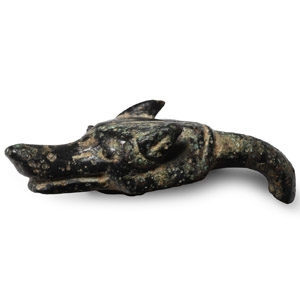
Roman Bronze Dog Finial
1st century B.C.-1st century A.D.Sold for (Inc. bp): £91
Comprising a canine head with raised snout and swept ears; hooked bar to the rear. 7.8 grams, 33 mm
From the collection of a gentleman, acquired on the London art market in the 1990s. -
.jpg)
Roman Bronze Horse Bow Brooch
Circa 3rd century A.D.Sold for (Inc. bp): £78
With pricked ears, arched neck, D-shaped saddle and bobbed tail; the lower hindlegs developing into a headplate similar to a Roman crossbow brooch; the hinge-notch present on the headplate, the pin and catchplate absent. 29.8 grams, 47 mm
Acquired late 1980s-early 1990s. Ex private collection, Nottinghamshire, UK. Property of a Kent lady collector. -
Roman Glass Bottle with Tapering Neck
4th century A.D.Sold for (Inc. bp): £111
Flask with squat bulbous body and broad shoulder, slender cylindrical neck with flared rim, dimpled base; iridescent surfaces. 44 grams, 11.2 cm
From a family collection mostly formed in the 1940s-1950s, thence by descent.
