
Loading, please wait...
LOT 0145
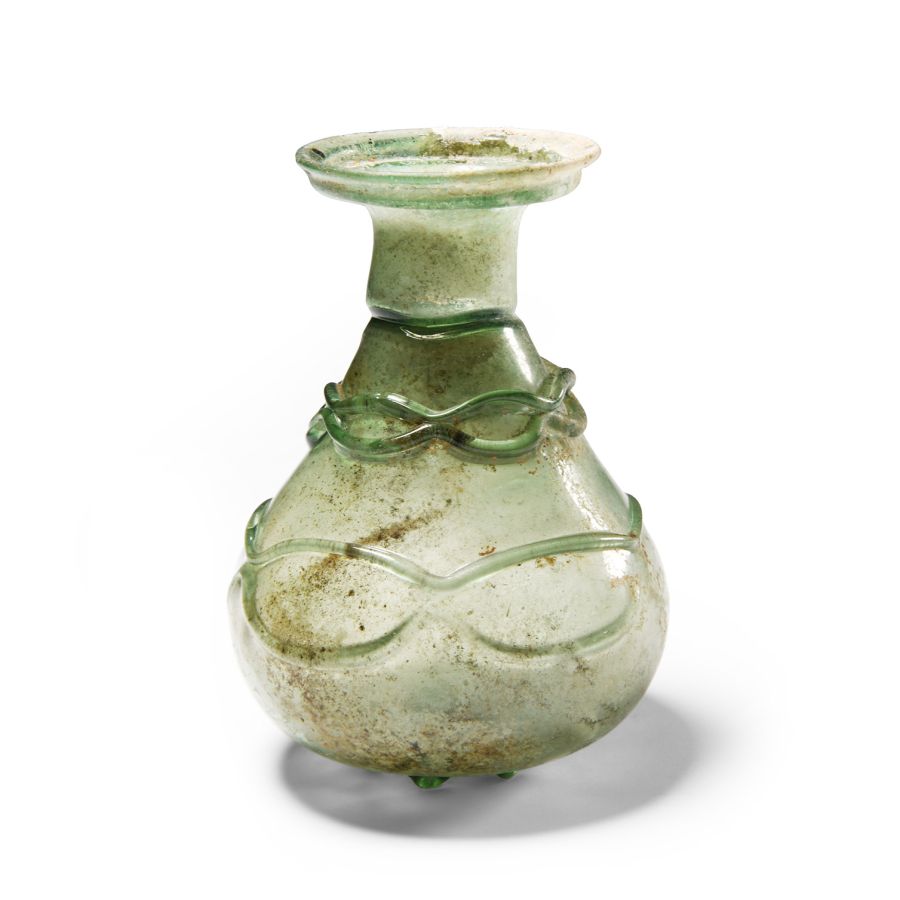
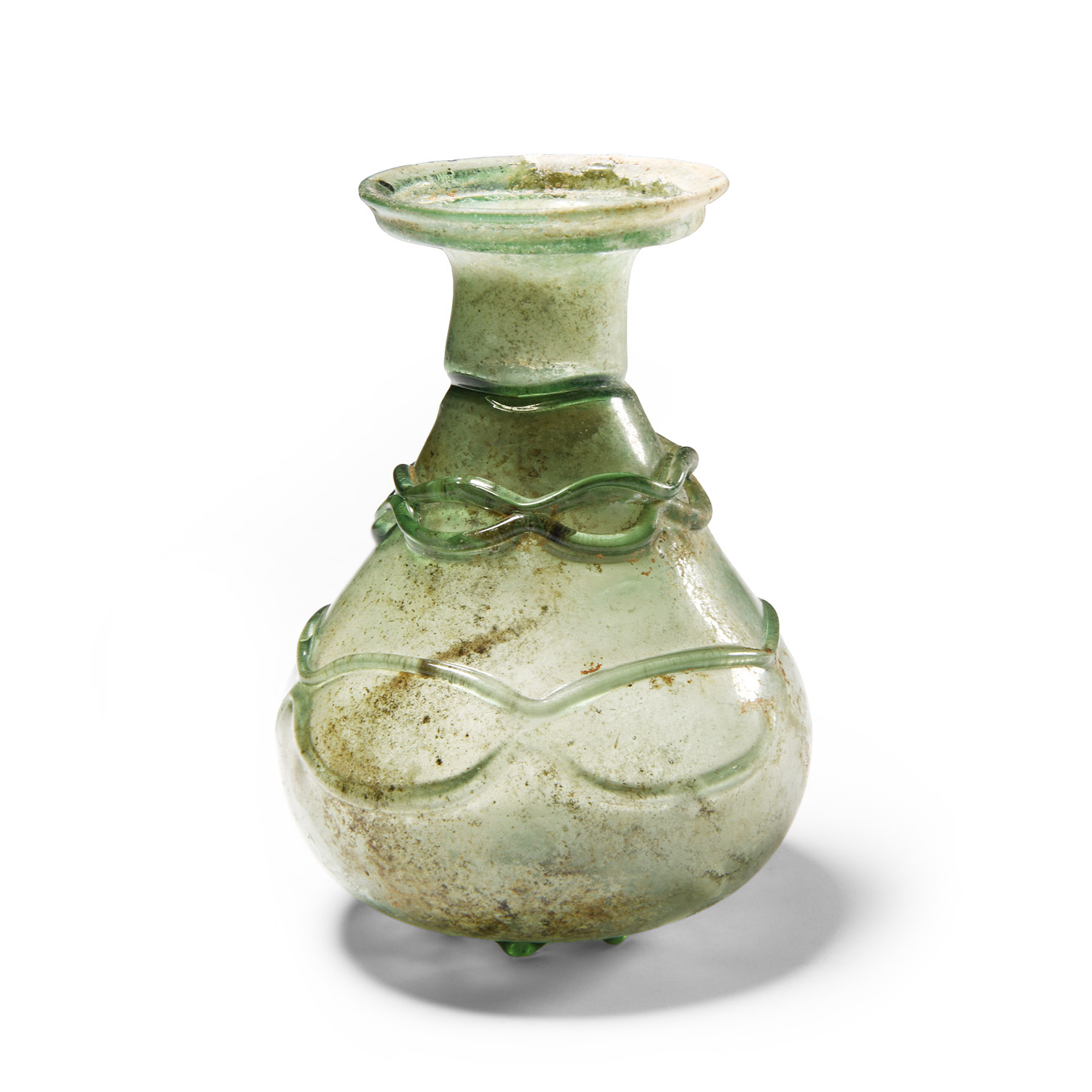
Roman Glass Sprinkler Vessel
2ND-3RD CENTURY A.D.
4 in. (77 grams, 10 cm high).
Piriform green jar raised on five small feet to the base, collar to the conical neck and chamfered rim; to the lower neck a disc with narrow central opening; to the outer face of the body, double wavey trail to the upper and lower body.
ProvenanceAcquired 1980-2015.
Ex Abelita family collection.
TimeLine Auctions follows a vetting process to ensure the authenticity and legality of all items, reinforcing our commitment to integrity and responsible trading. Each antiquity, antique, and coin lot undergoes thorough examination by a vetting committee of at least ten external specialists, professional trade association members, scientists, and archaeologists: Our Vetting Process
AUCTIONS:
TimeLine is a leading auction house specialising in antiquities, ancient art, collectables, natural history, coins, medals, and books. Our auctions offer museums, collectors, historians, and enthusiasts the opportunity to acquire unique and historically significant pieces.
-
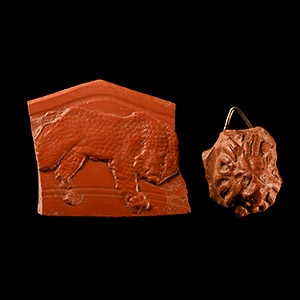
Roman Redware Sherd Group with Lions
4th-5th century A.D.Sold for (Inc. bp): £85
The larger fragment with stepped neck and rim, bearing a leaping lion right in raised relief; the smaller fragment with leonine protome; both in terra sigillata africana; modern suspension loop to reverse. 54 grams total, 35-60 mm
Acquired 1960s-1990s. From the late Alison Barker collection, a retired London barrister.
The most ancient production of red African ware began in the Flavian Age. Towards the second half of the 3rd century A.D. – but most probably before – the production reached its zenith and African redware pottery was imported from all the Imperial provinces. -
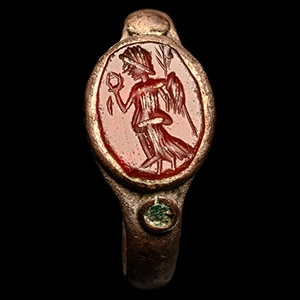
Eastern Roman Silver Ring with Victory Holding Wreath and Palm Branch Gemstone
2nd-3rd century A.D.Estimate: £500 - 700 (+bp*)
Opening Bid: £278
With circular hoop expanding at the shoulders, oval bezel flanked by two bosses; the bezel set with a carnelian gemstone engraved with the winged goddess Victory, dressed in a chiton with overfold, walking on tiptoes to the left and holding a laurel wreath in her right hand and a palm branch in her left. 3.20 grams, 19.78 mm overall, 16.22 mm internal diameter (approximate size British K, USA 5 1/4, Europe 9.95, Japan 9)
Acquired in the late 1980s-early 1990s. Important North West London collection.
This type derives from a statue by Lysippos and appears on statues, reliefs, coins, and gems for purposes of political propaganda. In some variants on gems, Victory has her foot up on a globe, is seated and wears a helmet, an Erote gives her a palm, or the shield is propped against a trophy, a column or a palm tree. -
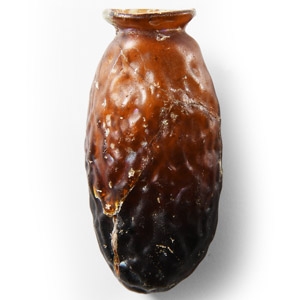
Roman Amber Glass Date Vessel
2nd-3rd century A.D.Sold for (Inc. bp): £169
Mould-blown with elliptical body, short neck and thick everted rim in amber-tinted glass, the body with modelled wrinkles to resemble a date. 30.3 grams, 64 mm high
Acquired 1970s-1996. Property of a North American collector. London collection, 2016.
