
Loading, please wait...

LOT 0141
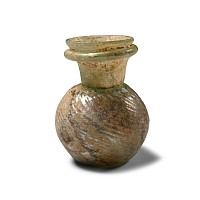
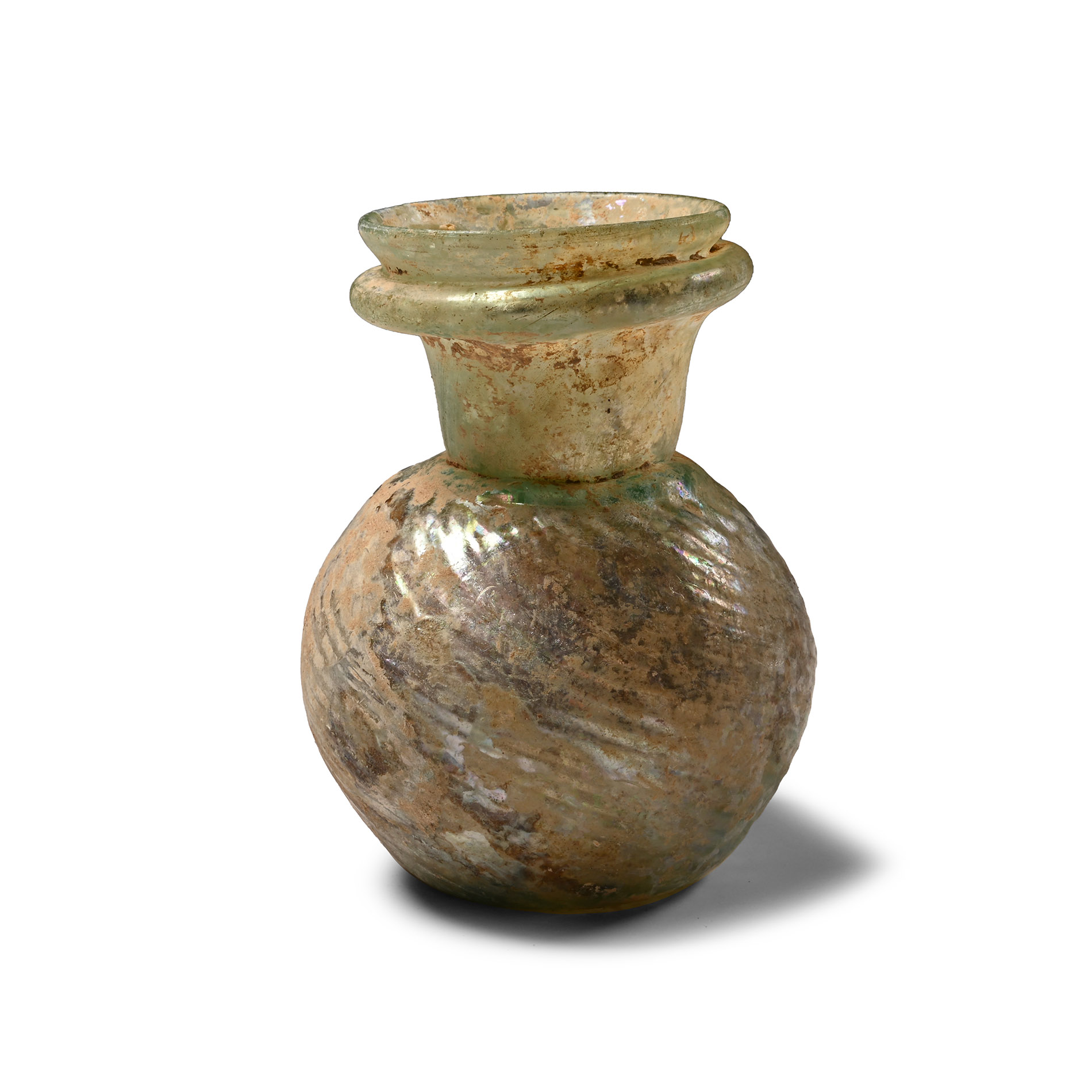
Roman Glass Sprinkler Flask with Iridescence
1ST-3RD CENTURY A.D.
3 1/2 in. (75.6 grams, 91 mm).
With rounded body, swirl detailing and rolled lip at the shoulder, cylindrical neck and deep, tiered rim; internal shelf at shoulder level with small central opening; iridescence to surfaces; pontil base.
ProvenanceAcquired on the German art market, 1989-1995.
with The Museum Gallery, 19 Bury Place, London, WC1, UK, 1998-2003.
Property of a London based academic, 2003-present.
TimeLine Auctions follows a vetting process to ensure the authenticity and legality of all items, reinforcing our commitment to integrity and responsible trading. Each antiquity, antique, and coin lot undergoes thorough examination by a vetting committee of at least ten external specialists, professional trade association members, scientists, and archaeologists: Our Vetting Process
AUCTIONS:
TimeLine is a leading auction house specialising in antiquities, ancient art, collectables, natural history, coins, medals, and books. Our auctions offer museums, collectors, historians, and enthusiasts the opportunity to acquire unique and historically significant pieces.
LOT 0141
Roman Glass Sprinkler Flask with Iridescence
Estimate £400 - 600€460 - 700 (for guidance only)$540 - 810 (for guidance only)
-
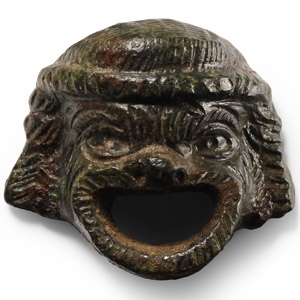
Roman Bronze Comic Actor's Mask
2nd century A.D.Sold for (Inc. bp): £221
Mount formed as a comic actor's mask with braided wig, exaggerated scooped mouth and grotesque features, hollow to the reverse. 32.1 grams, 33 mm
From the private collection of Mr K.A., acquired in the 1990s-early 2000s. -
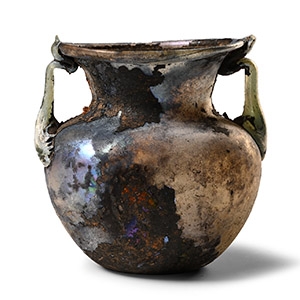
Roman Glass Double-Handled Iridescent Flask
4th century A.D.Estimate: £650 - 750 (+bp*)
Opening Bid: £350
With squat bulbous body, dimple base, flared trumpet neck; applied trails to the shoulder, applied strap handles to the shoulders. 47 grams, 72 mm
From an important London, UK, collection, 1970-1990s. -
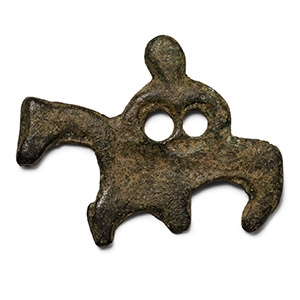
Roman Bronze Horse and Rider Mount
2nd-3rd century A.D.Sold for (Inc. bp): £20
Appliqué horse with elongated neck and rider with voids to the chest. 4.61 grams, 35 mm
Private collection, Arundel, West Sussex, UK, 1980s-1990s.
