
Loading, please wait...
LOT 0685
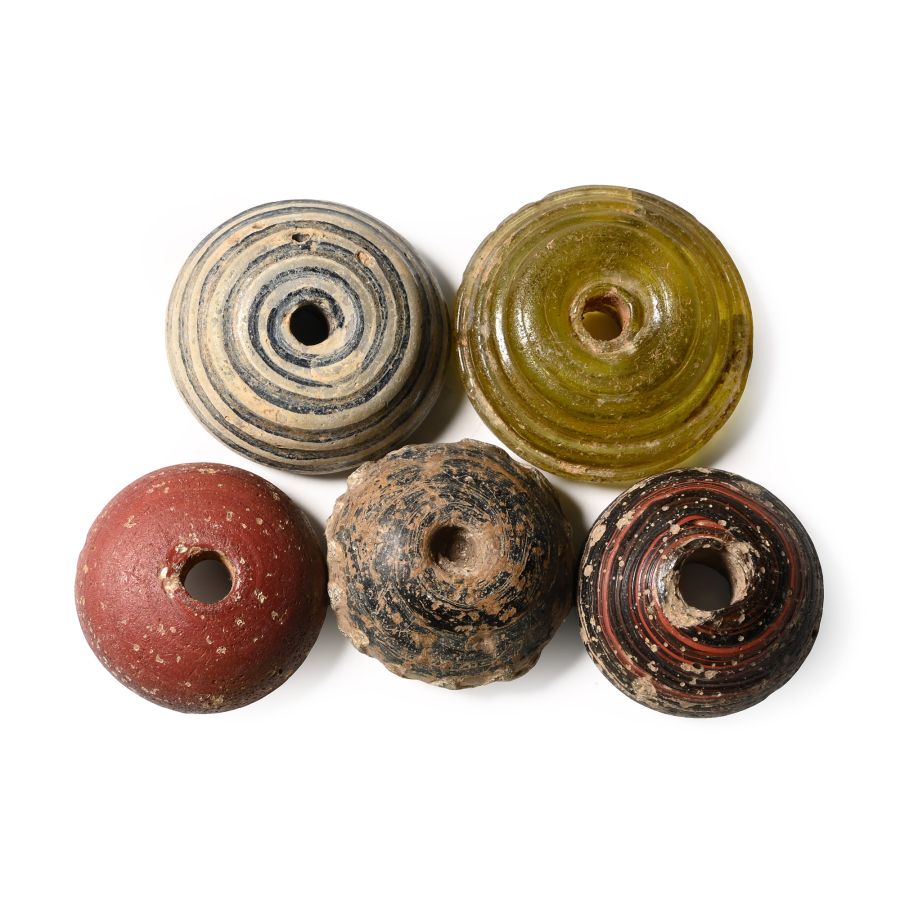
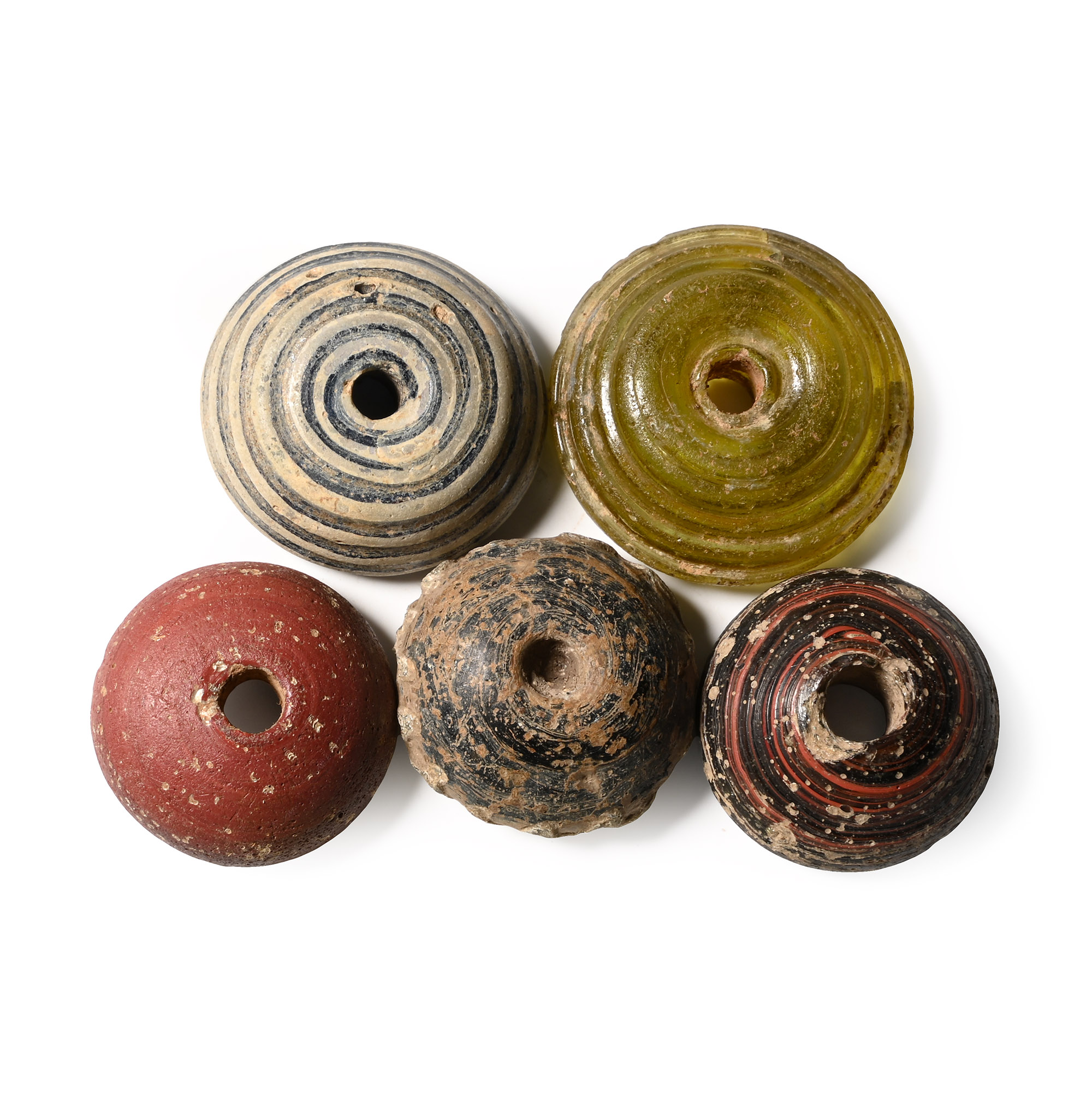
Roman Glass Spindle Whorl Collection
1ST-4TH CENTURY A.D.
7/8 - 1 in. (36.8 grams total, 22-27 mm).
Comprising five domed spindle whorls, three with a spiral decoration. [5, No Reserve]
ProvenanceFrom the private collection of a European gentleman (1942-2024), formed since the 1970s.
LiteratureCf. similar Roman spindle whorls in PAS SUSS-AD9D69, WREX-FCCA1B, WREX-A15196, DOR-6227C5, CPAT-DAD561, WAW-56DO33.
CONDITIONTimeLine Auctions follows a vetting process to ensure the authenticity and legality of all items, reinforcing our commitment to integrity and responsible trading. Each antiquity, antique, and coin lot undergoes thorough examination by a vetting committee of at least ten external specialists, professional trade association members, scientists, and archaeologists: Our Vetting Process
AUCTIONS:
TimeLine is a leading auction house specialising in antiquities, ancient art, collectables, natural history, coins, medals, and books. Our auctions offer museums, collectors, historians, and enthusiasts the opportunity to acquire unique and historically significant pieces.
-
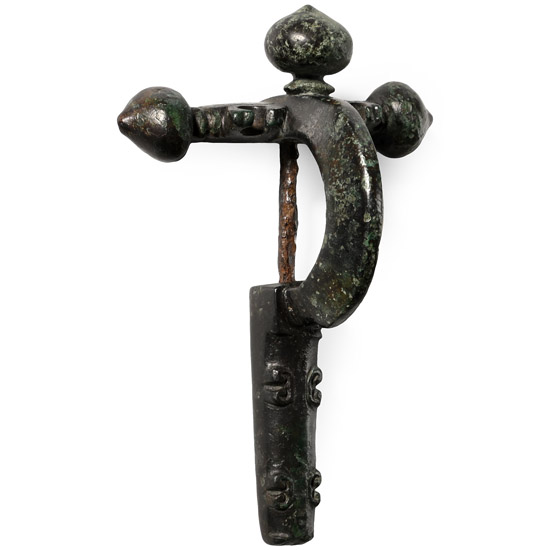
Roman Bronze Crossbow Brooch
4th century A.D.Sold for (Inc. bp): £195
With onion-knop apex finial and knops on either side, claw detailing to the headplate, deep bow, chamfered lateral faces sections to the foot with scroll detailing, hinged pin to the reverse. 78 grams, 85 mm
Ex German art market, 2000s. Acquired from an EU collector living in London. From the collection of a Surrey, UK, gentleman. -
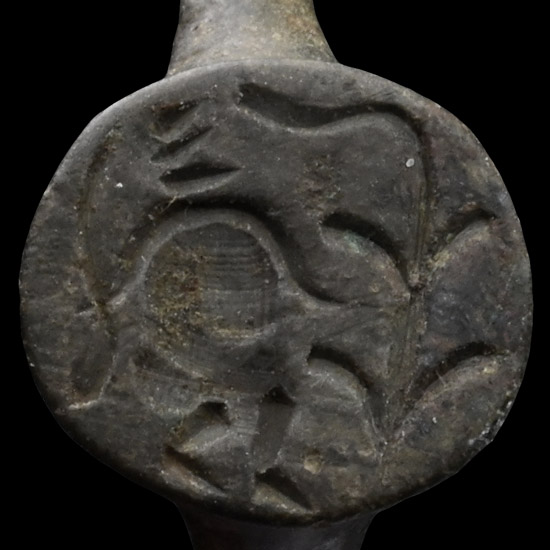
Roman Bronze Ring with Standing Figure and Tree
3rd-4th century A.D.Sold for (Inc. bp): £33
With a slender hoop and a raised circular bezel with a stylised figure beside a tree. 3.12 grams, 22.89 mm overall, 18.65 mm internal diameter (approximate size British Q, USA 8, Europe 17.49, Japan 16)
From a UK collection formed in the 1980s. Property of an Essex, UK, gentleman. -
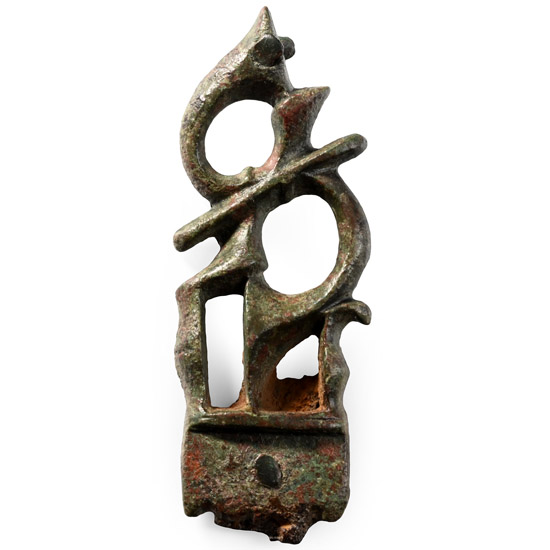
Romano-British Bronze Trumpet-Whorl Knife Handle
1st-2nd century A.D.Sold for (Inc. bp): £52
Openwork handle formed of curving trumpet-whorls, rectangular bar with a single rivet below. 14.8 grams, 58 mm
From the private coin collection of a West London, UK, gentleman, formed since the mid 1980s.
