
Loading, please wait...

LOT 0150
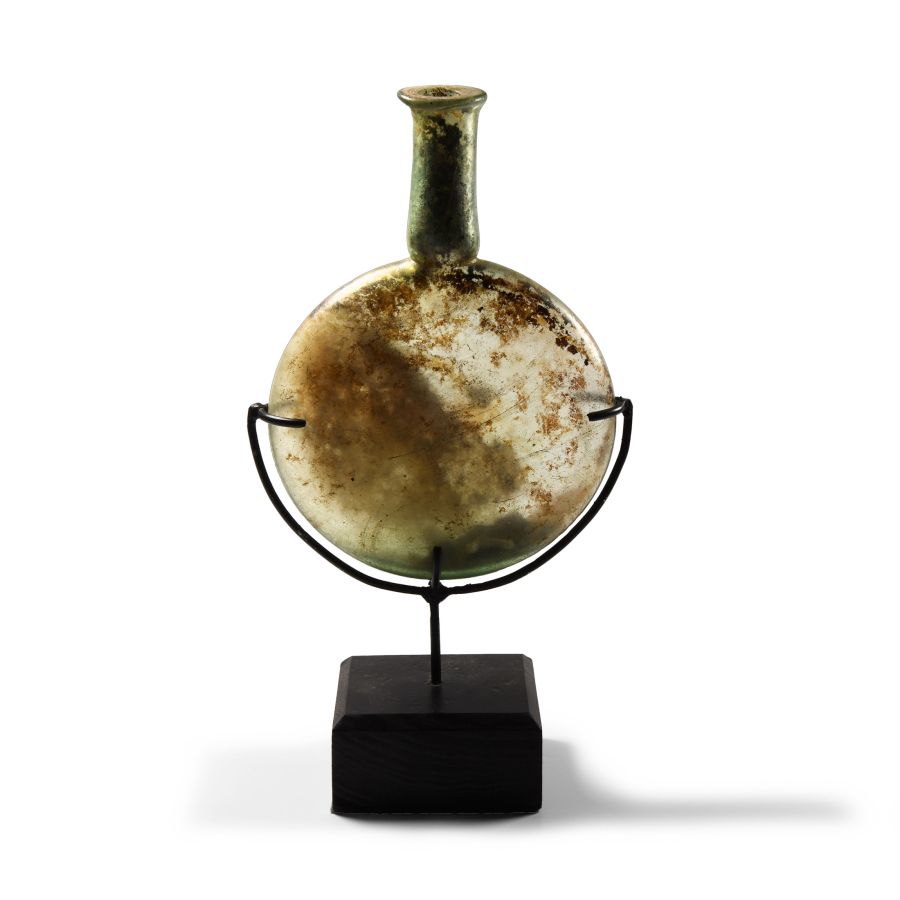
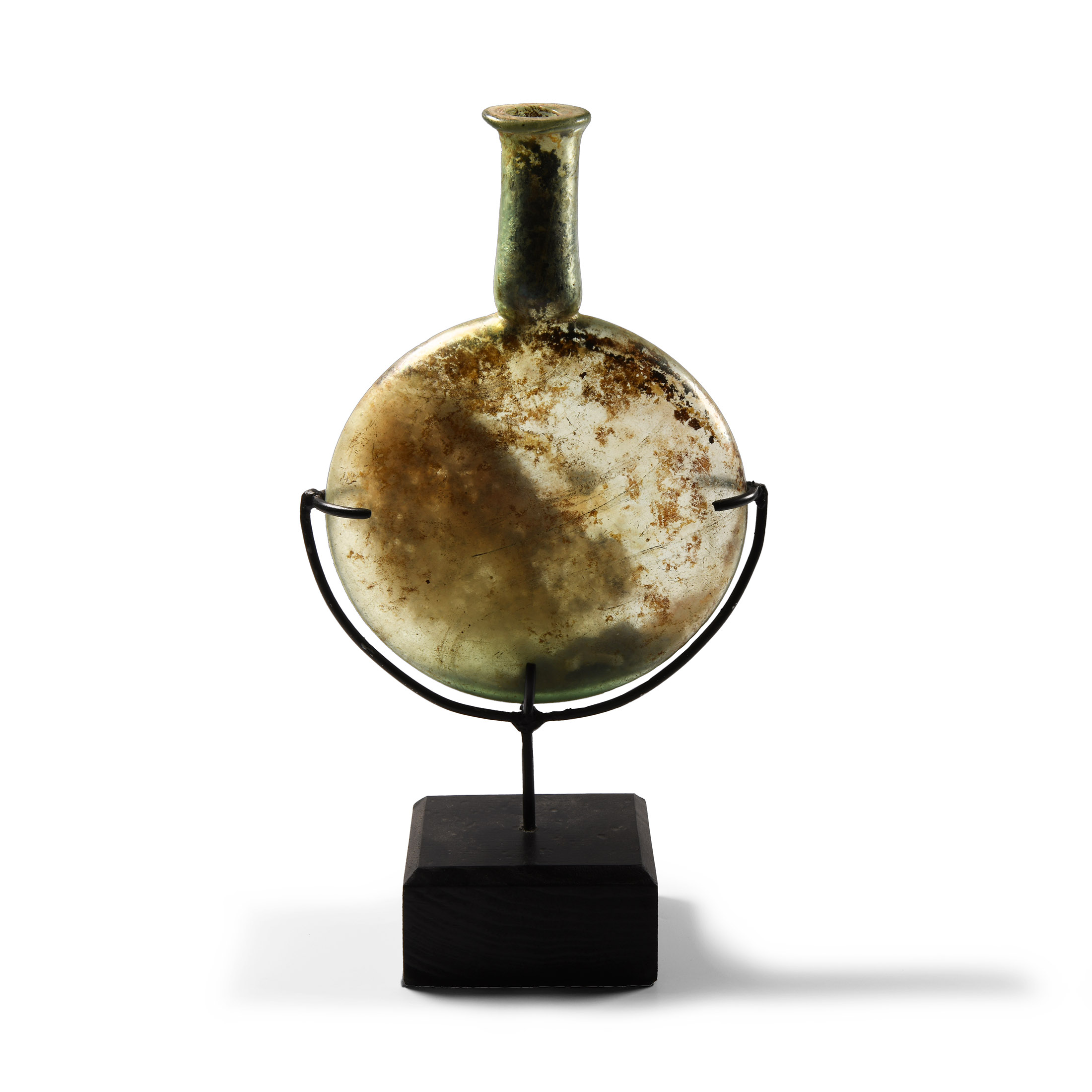
Roman Glass Pilgrim's Flask
CIRCA 4TH CENTURY A.D.
8 5/8 in. (12 3/8 in.) (252 grams, 22 cm high (481 grams total, 31.5 cm high including stand)).
A pale green lentoid glass flask with tubular neck and everted rim; mounted on a custom-made display stand.
ProvenanceFrench collection, 1960s-early 2000s.
From an important Paris gallery, France.
Cf. The Metropolitan Museum, New York, accession numbers 17.194.93 and 81.10.51, for similar.
CONDITIONTimeLine Auctions follows a vetting process to ensure the authenticity and legality of all items, reinforcing our commitment to integrity and responsible trading. Each antiquity, antique, and coin lot undergoes thorough examination by a vetting committee of at least ten external specialists, professional trade association members, scientists, and archaeologists: Our Vetting Process
AUCTIONS:
TimeLine is a leading auction house specialising in antiquities, ancient art, collectables, natural history, coins, medals, and books. Our auctions offer museums, collectors, historians, and enthusiasts the opportunity to acquire unique and historically significant pieces.
LOT 0150
Roman Glass Pilgrim's Flask
Estimate £1,500 - 2,000€1,740 - 2,320 (for guidance only)$2,030 - 2,700 (for guidance only)
-
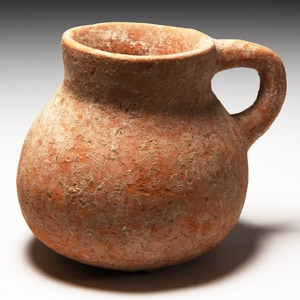
Roman Redware Handled Jug
1st-4th century A.D.Sold for (Inc. bp): £65
A squat coarse terracotta jug with thick rim and loop handle to the shoulder. 464 grams, 15 cm wide
Acquired 1980-2015. Ex Abelita family collection. -
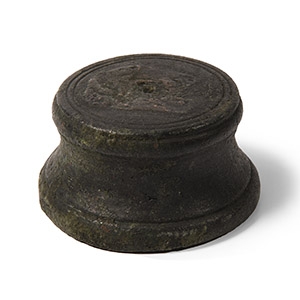
Roman Statuette Base
1st-4th century A.D.Sold for (Inc. bp): £143
A copper-alloy statuette base formed with a waisted edge and circular upper and lower faces, the lower with a greater circumference than the upper. 86 grams, 53 mm
Essex gallery, early 2000s. -
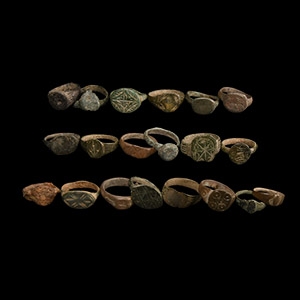
Roman and Later Ring Collection
1st-19th century A.D.Sold for (Inc. bp): £195
A mixed group of copper-alloy finger rings of various types and sizes, including examples with incised geometric motifs, stars, plants, ring-and-dot motifs. 76 grams total, 17-24 mm
Acquired before 2000. From the collection of a European gentleman living in the UK.
