
Loading, please wait...
LOT 0839
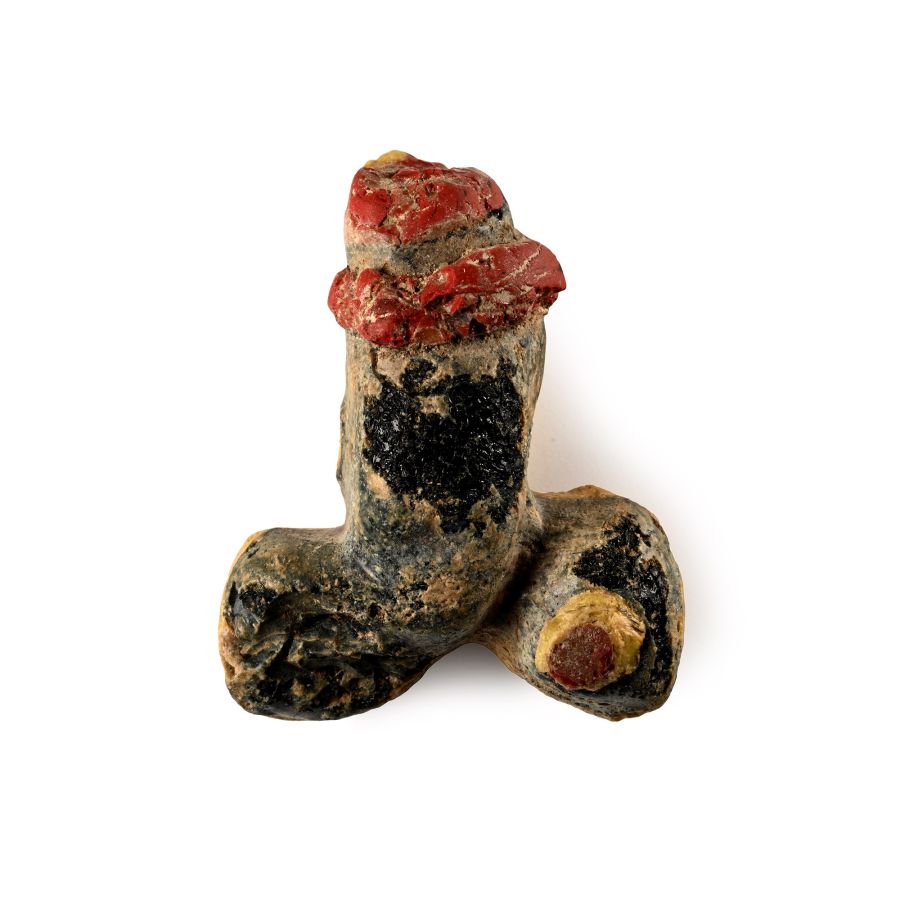
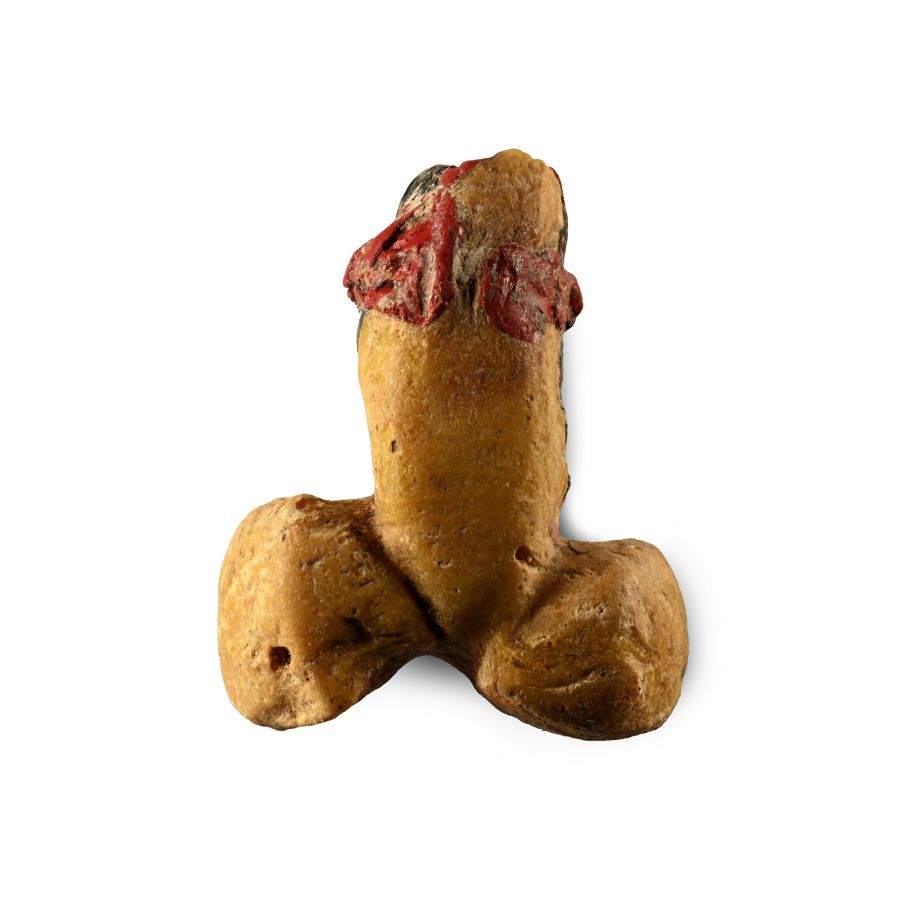
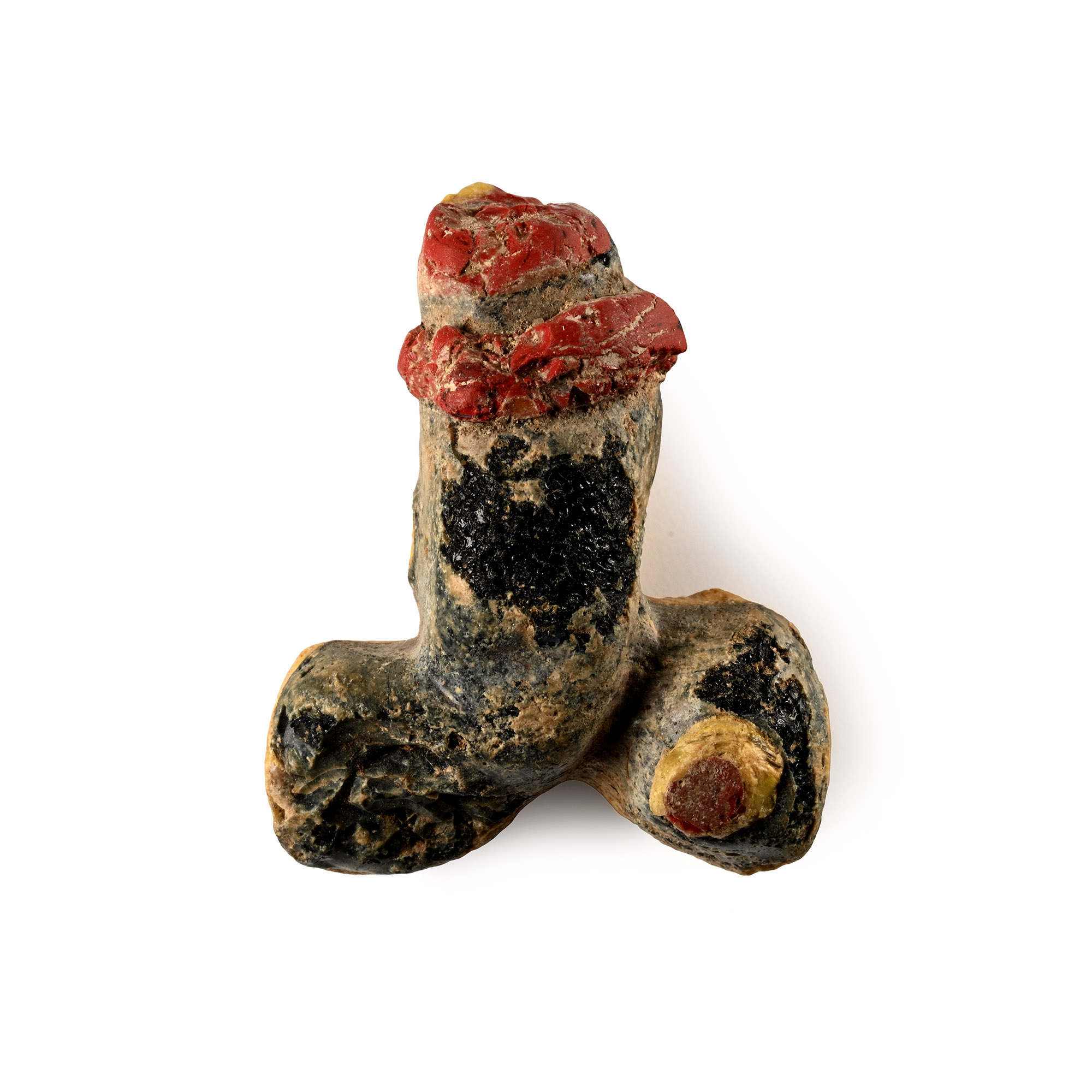
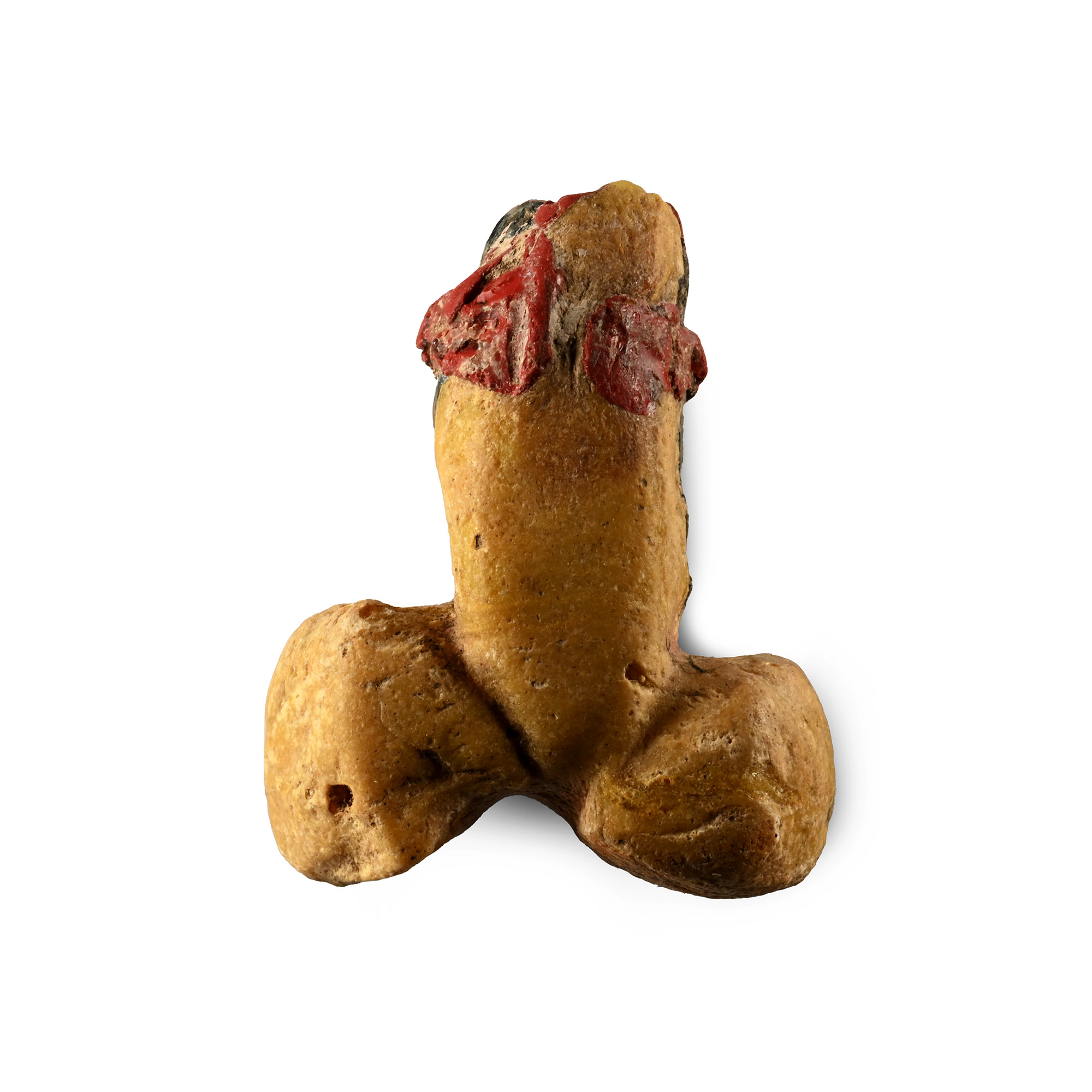
Roman Glass Phallic Amulet
1ST CENTURY B.C.-1ST CENTURY A.D.
1 1/4 in. (11.4 grams, 32 mm).
Modelled in the round with applied red-glass collar, pierced through the shaft for suspension.
ProvenanceAcquired in the mid 1980s-1990s.
Private collection, Switzerland, thence by descent.
Private collection, since the late 1990s.
See Rolland, H., Bronzes Antiques de Haute Provence, Paris, 1965, item 425, for type, but in bronze; for a similar ceramic phallus-amulet see Devlova, P., Manova, R., Rangelov, B., Avdeev, G., ‘Interdisciplinary Studies of a phallus-shaped jewellery from Apollonia Pontica, Bulgaria,’ in Acta Musei Tiberiopolitani, vol.5, Strumica, 2024, pp.98-109, fig.2.
FootnotesIn the Roman world, the phallus was a symbol of luck or fertility, and it was believed to have apotropaic functions. Pendants, amulets and small objects were worn by all sorts of people as symbols of protection, especially by young children, according to Varro and Pliny the Elder. The phallus is also commonly found on reliefs, frescoes and lamps from the Graeco-Roman world.
CONDITIONTimeLine Auctions follows a vetting process to ensure the authenticity and legality of all items, reinforcing our commitment to integrity and responsible trading. Each antiquity, antique, and coin lot undergoes thorough examination by a vetting committee of at least ten external specialists, professional trade association members, scientists, and archaeologists: Our Vetting Process
AUCTIONS:
TimeLine is a leading auction house specialising in antiquities, ancient art, collectables, natural history, coins, medals, and books. Our auctions offer museums, collectors, historians, and enthusiasts the opportunity to acquire unique and historically significant pieces.
-
.jpg)
Roman Garnet Cameo of Eros the Greek God of Love
1st century A.D. or laterSold for (Inc. bp): £780
Discoid in plan with a high-relief plastic head of Cupid (Greek Eros). 0.42 grams, 8 mm
Private English collection, formed between the late 1970s and early 1990s. Private collection, London, UK.
The finely engraved head on the cameo represents a young child, probably intended as Eros (Cupid). Such depictions were produced in numerous variations to illustrate the stages of childhood and the capacity of children to undertake meaningful or symbolic actions. The high relief type appears to have been especially popular and was probably derived from metalwork, like the plaster medallion from Begram, Afghanistan. -
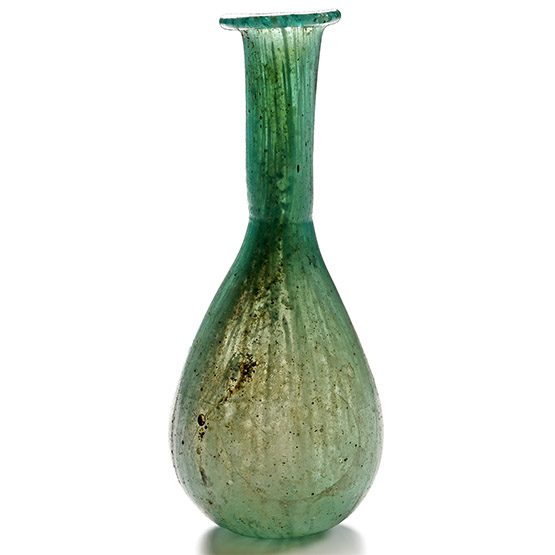
Roman Marbled Turquoise Glass Bottle
1st-3rd century A.D.Sold for (Inc. bp): £780
Comprising an iridescent piriform body, tapering tubular neck with pinched and everted rolled rim. 9.44 grams, 84 mm
Acquired on the European art market in 2001.
Indented toilet bottles with long necks are rather common. In Western provinces of the Roman Empire, they occur most frequently in and around the Rhineland. In the Eastern part of the Empire, find places include Crete, Cyprus, Anatolia, Syria and Egypt. -
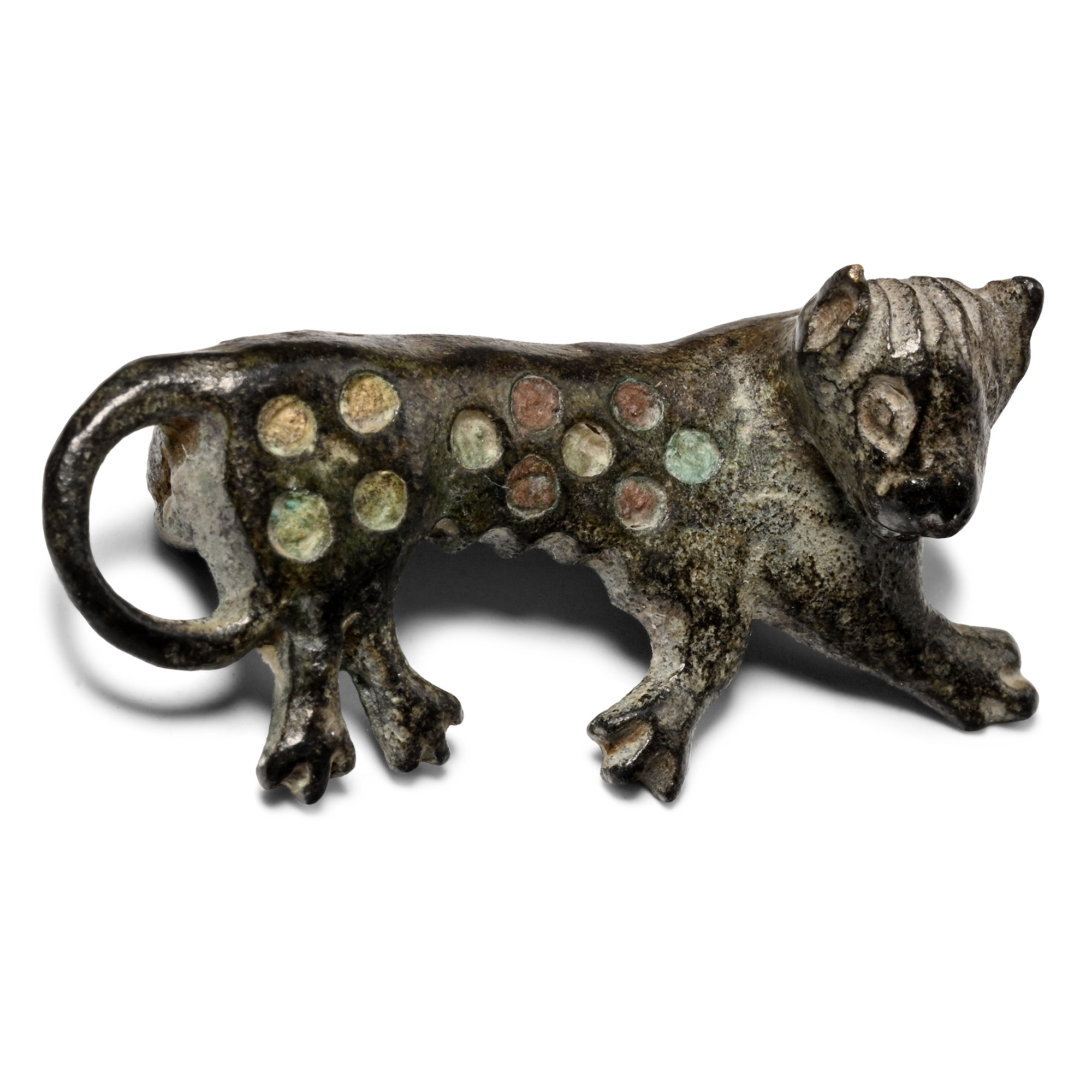
Roman Bronze Panther Plate Brooch
2nd century A.D.Sold for (Inc. bp): £390
Formed as a reclining panther with legs extended and tail recuved to the rump, head raised and modelled in the round; enamelled roundel cells to the flanks; hinged pin and catch to the reverse. 10.36 grams, 36 mm
Acquired on the UK art market. Property of a Lancashire, UK, collector. Accompanied by a certificate of authenticity from Clare Morris, dated 26 February 2012.
