
Loading, please wait...


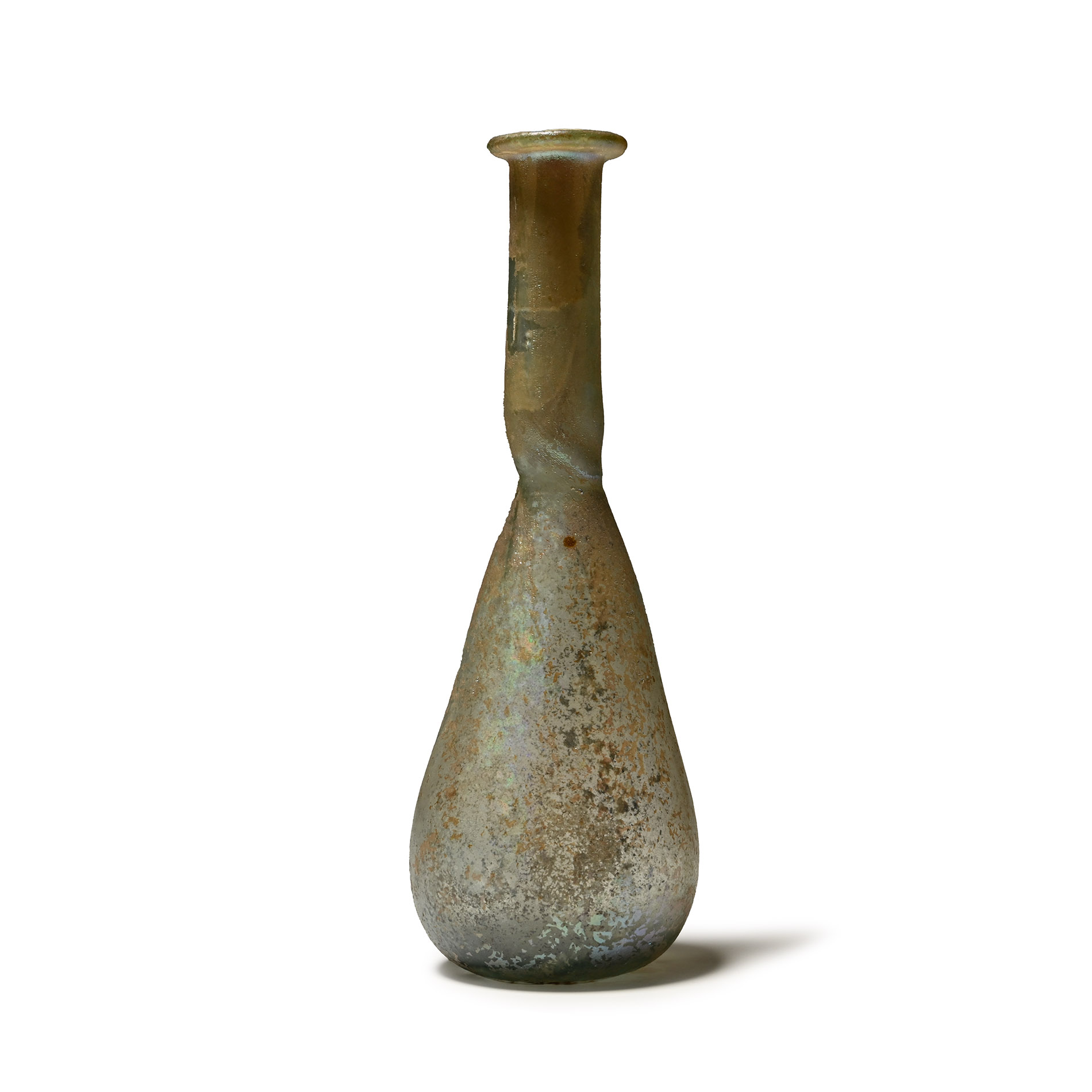
LOT 0796
Roman Glass Perfume Bottle
1ST CENTURY A.D.
4 3/8 in. (17 grams, 11 cm).
Piriform body with flattened base, long, slender neck constricted at the base; inturned rim to mouth, iridescent surface. [No Reserve]
ProvenanceEx Viviane Alioth.
This lot is accompanied by an illustrated lot declaration signed by the Head of the Antiquities Department, Dr Raffaele D’Amato.
Cf. The British Museum, accession number 1901,0413.3009, for type; Fleming, S.J., Roman Glass, Reflexions of Everyday Life, Philadelphia, 1997, p.4, lett.a, for shape and date; p.17, pl.24, for similar type.
CONDITIONTimeLine Auctions follows a vetting process to ensure the authenticity and legality of all items, reinforcing our commitment to integrity and responsible trading. Each antiquity, antique, and coin lot undergoes thorough examination by a vetting committee of at least ten external specialists, professional trade association members, scientists, and archaeologists: Our Vetting Process
AUCTIONS:
TimeLine is a leading auction house specialising in antiquities, ancient art, collectables, natural history, coins, medals, and books. Our auctions offer museums, collectors, historians, and enthusiasts the opportunity to acquire unique and historically significant pieces.
-
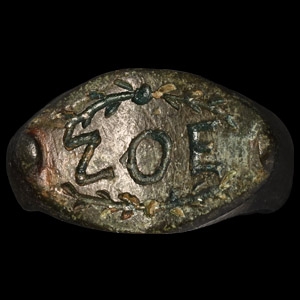
Roman Bronze Ring with ZOE
1st-4th century A.D.Sold for (Inc. bp): £975
Ellipsoid bezel with spur at each narrow end, incuse wreath and 'ZOE' (life) legend. 8.12 grams, 23.77 mm overall, 17.32 mm internal diameter (approximate size British N 1/2, USA 6 3/4, Europe 14.35, Japan 13)
Ex German art market, 2000s. Acquired from an EU collector living in London. From the collection of Surrey, UK, gentleman. This lot is accompanied by an illustrated lot declaration signed by the Head of the Antiquities Department, Dr Raffaele D’Amato. -
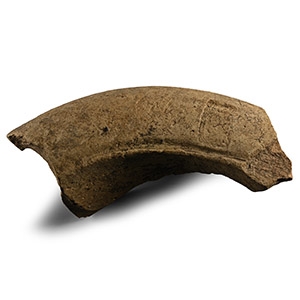
Roman Ceramic Mortarium Fragment with Maker's Stamp
4th century A.D.Sold for (Inc. bp): £7
Fragment of the curved rim of a mortarium with rectangular impressed stamp with legend 'E[.]S[.]'; old collector's legend to underside 'Mortarium / Oman / 4th century. 88'. 440 grams, 20 cm
From a London, UK, gentleman's collection of ancient pottery and artefacts, 1990s. This lot is accompanied by an illustrated lot declaration signed by the Head of the Antiquities Department, Dr Raffaele D’Amato. -
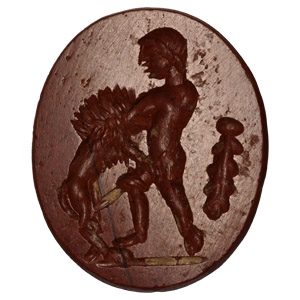
Roman Red Jasper Gemstone with Hercules and Nemean Lion
2nd-3rd century A.D.Sold for (Inc. bp): £364
Ellipsoid in plan with engraved intaglio scene of Hercules advancing on a baseline to grapple with the Nemean lion, club placed to his rear; reverse with legend 'KKK/ЧЧЧ'; supplied with a museum-quality impression. 1.26 grams, 18 mm
From the Fadel family collection, London, UK, 1970s. This lot is accompanied by an illustrated lot declaration signed by the Head of the Antiquities Department, Dr Raffaele D’Amato.
