
Loading, please wait...
LOT 0145
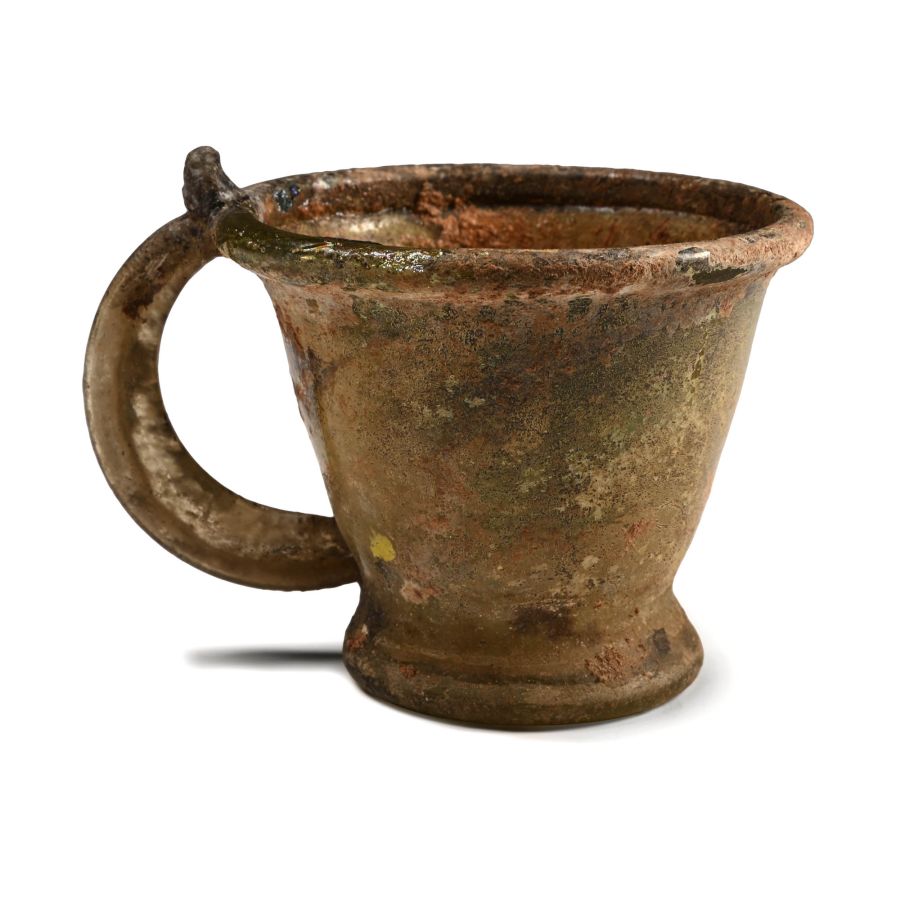
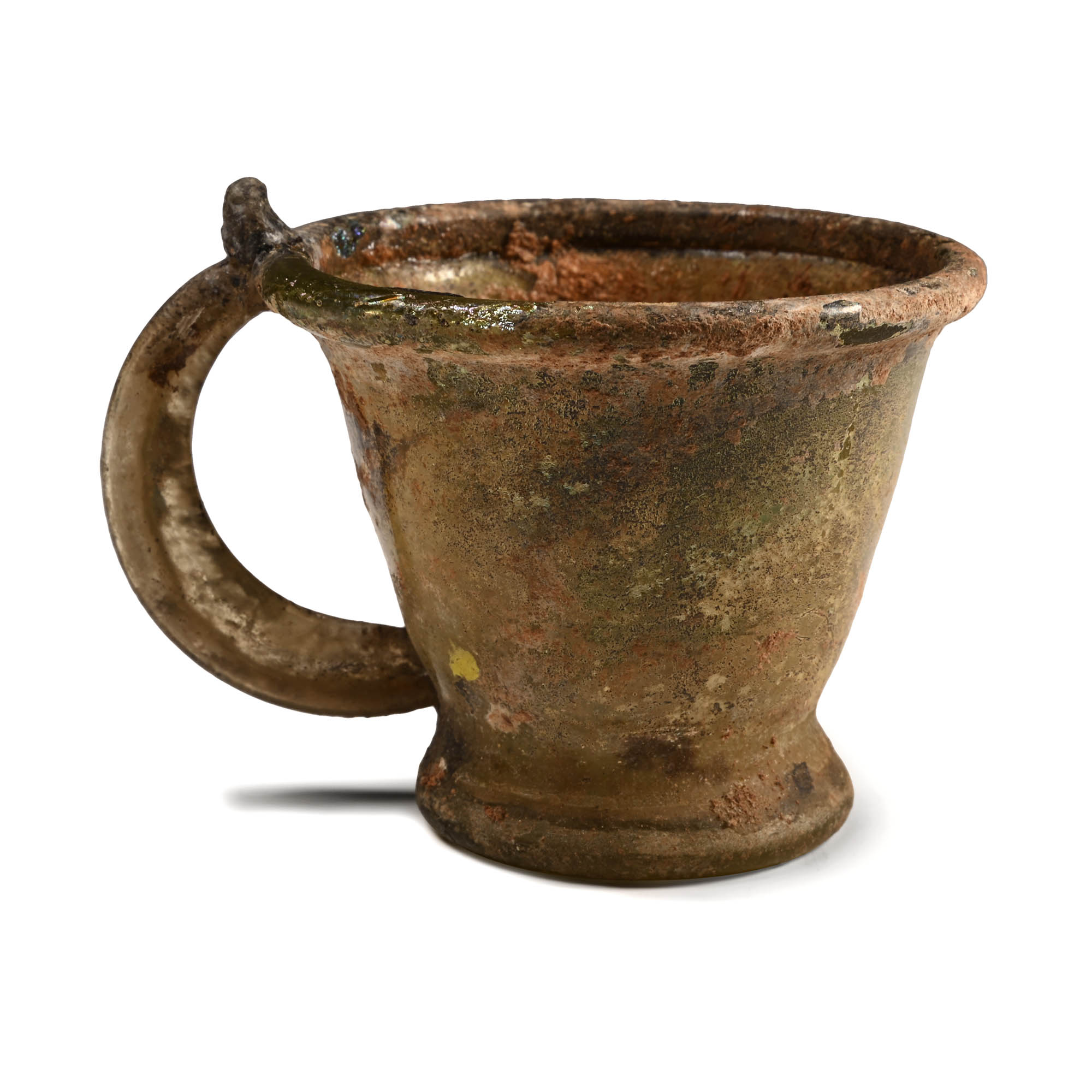
Roman Glass Modiolus
1ST-2ND CENTURY A.D.
3 in. (39 grams, 76 mm).
Bell-shaped glass vessel with turned rim to base, rolled rim, applied crescent handle with knop; rare type.
ProvenanceEx private London, UK, collection, 1990s.
LiteratureCf. similar but more elaborate vessel in the Metropolitan Museum of Art under accession no.29.100.71.
CONDITIONTimeLine Auctions follows a vetting process to ensure the authenticity and legality of all items, reinforcing our commitment to integrity and responsible trading. Each antiquity, antique, and coin lot undergoes thorough examination by a vetting committee of at least ten external specialists, professional trade association members, scientists, and archaeologists: Our Vetting Process
AUCTIONS:
TimeLine is a leading auction house specialising in antiquities, ancient art, collectables, natural history, coins, medals, and books. Our auctions offer museums, collectors, historians, and enthusiasts the opportunity to acquire unique and historically significant pieces.
-
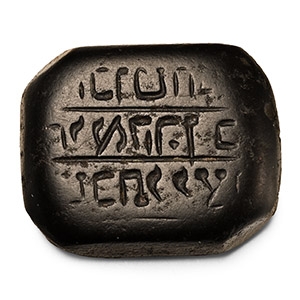
Cabochon with Hebrew Text
Roman, 1st-3rd century A.D. or laterSold for (Inc. bp): £312
Octagonal in plan and plano-convex in profile, glass cabochon with three lines of calligraphic Hebrew text, possibly a personal seal for someone called Aaron. 2.12 grams, 18 mm
Acquired in the 1980s. From the collection of a London antiquarian. -
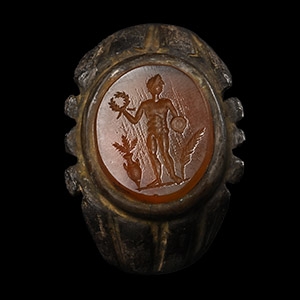
Roman Silver Ring with Later Apollo Gemstone
3rd century A.D. and laterSold for (Inc. bp): £572
With a substantial hoop with fluted shoulders, bezel set with a later orange carnelian intaglio, engraved with an image of standing Apollo holding a wreath and patera, palm frond and an amphora on a baseline. 12.81 grams, 25.23 mm overall, 18.89 mm internal diameter (approximate size British J, USA 4 3/4, Europe 8.69, Japan 8)
Ex German art market, 2000s. Acquired from an EU collector living in London. From the collection of Surrey, UK, gentleman. -
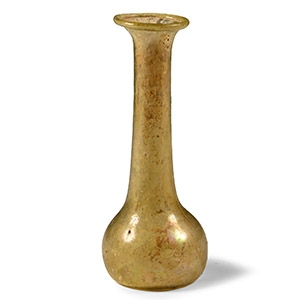
Roman Yellow Glass Bottle
1st-3rd century A.D.Sold for (Inc. bp): £124
With bulbous body and pontil base, tall neck with trumpet-shaped mouth. 18.3 grams, 10 cm
with M. Vodoz, 1970s. Private collection, Europe.
