
Loading, please wait...


LOT 0824
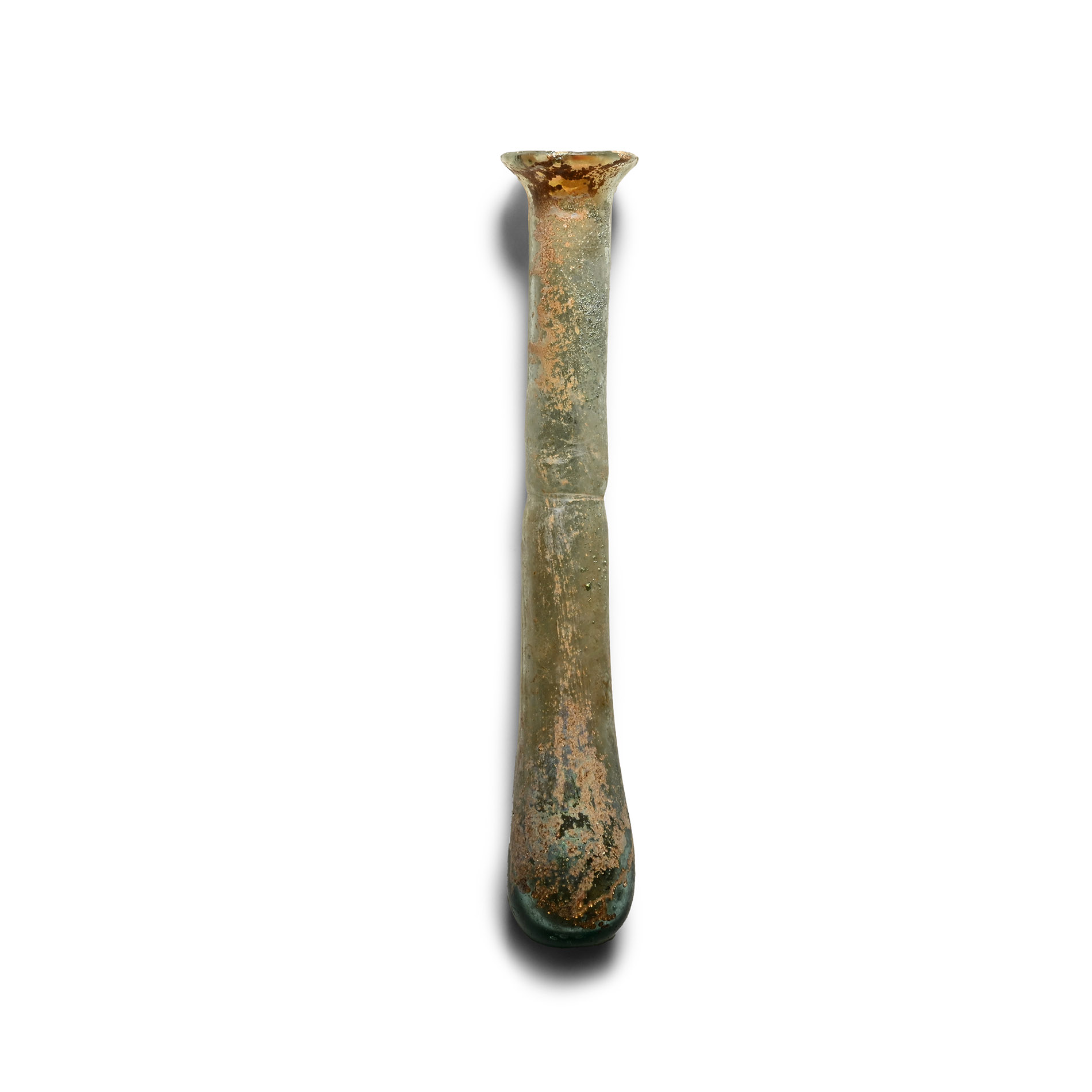
Roman Glass Lachrymatory
1ST-2ND CENTURY A.D.
4 7/8 in. (19 grams, 12.3 cm).
With long, narrow neck separated from the body by a constriction; funicular mouth. [No Reserve]
ProvenanceEx W.Kern, Zurich, 1950s-1970s (d.1980s).
Accompanied by a copy of an Art Loss Register certificate no.S00086748.
This lot is accompanied by an illustrated lot declaration signed by the Head of the Antiquities Department, Dr Raffaele D’Amato.
Cf. Filarska, B., Szkla Starozytne (Ancient Glass) vol.II, Warszawa, 1972, II, cat.197-198, pl.XLII, nos.3-4, for similar unguentaria; Whitehouse, D., Roman Glass in the Corning Museum of Glass, vol.1, New York, 1997, item 259.
FootnotesA lachrymatory (from Latin lacrima, tear) is a type of earthenware or, more commonly, glass container found in Roman and Greek tombs, thought to be bottles into which the relatives of the deceased had dropped their tears. They most likely contained ointments, and the discovery of so many of these containers (unguentaria) in tombs is due to the use of ointments in funeral ceremonies. These lachrymatories are usually shaped like a spindle or flask with a long neck and a bulb-shaped body.
CONDITIONTimeLine Auctions follows a vetting process to ensure the authenticity and legality of all items, reinforcing our commitment to integrity and responsible trading. Each antiquity, antique, and coin lot undergoes thorough examination by a vetting committee of at least ten external specialists, professional trade association members, scientists, and archaeologists: Our Vetting Process
AUCTIONS:
TimeLine is a leading auction house specialising in antiquities, ancient art, collectables, natural history, coins, medals, and books. Our auctions offer museums, collectors, historians, and enthusiasts the opportunity to acquire unique and historically significant pieces.
-
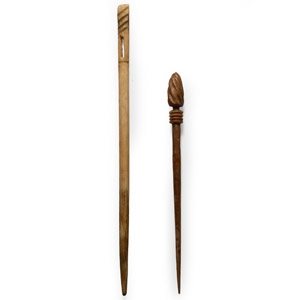
Roman Bone Pin Group
1st-4th century A.D.Sold for (Inc. bp): £117
One with ribbed collar and writhen finial; the other with rectangular eye (possibly a needle). 7.46 grams total, 10.8-14.4 cm
Ex German art market, 2000s. Acquired from an EU collector living in London. From the collection of Surrey, UK, gentleman. This lot is accompanied by an illustrated lot declaration signed by the Head of the Antiquities Department, Dr Raffaele D’Amato. -
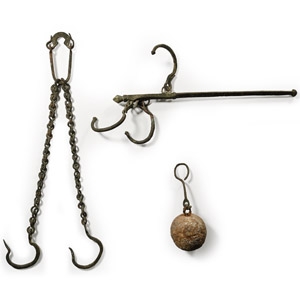
Roman Bronze Steelyard Balance and Lead Weight
4th century A.D.Sold for (Inc. bp): £364
Comprising a square-section arm with lug finial, notches to the upper face, suspension ring, counter weight lead ball, three hooks at the arm, chain with shackle and long hook. 1.3 kg total, 13.9-38 cm
Acquired from Notaras Coins & Antiquities, Suffolk, UK, before 2000. Property of a Bedfordshire, UK, private collector. Accompanied by two illustrated collector's identification tags. This lot is accompanied by an illustrated lot declaration signed by the Head of the Antiquities Department, Dr Raffaele D’Amato. -
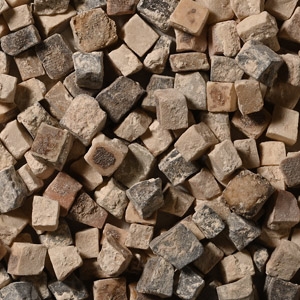
Roman Mosaic Stone Tesserae Group
1st-4th century A.D.Sold for (Inc. bp): £156
A mixed group of two hundred and fifty single tesserae of various colours and sizes, mostly cuboid. 356 grams total, 7-18 mm
From a collection acquired on the UK art market from various auction houses and collections mostly before 2000. From an important Cambridgeshire estate; thence by descent. This lot is accompanied by an illustrated lot declaration signed by the Head of the Antiquities Department, Dr Raffaele D’Amato.
