
Loading, please wait...
LOT 0910
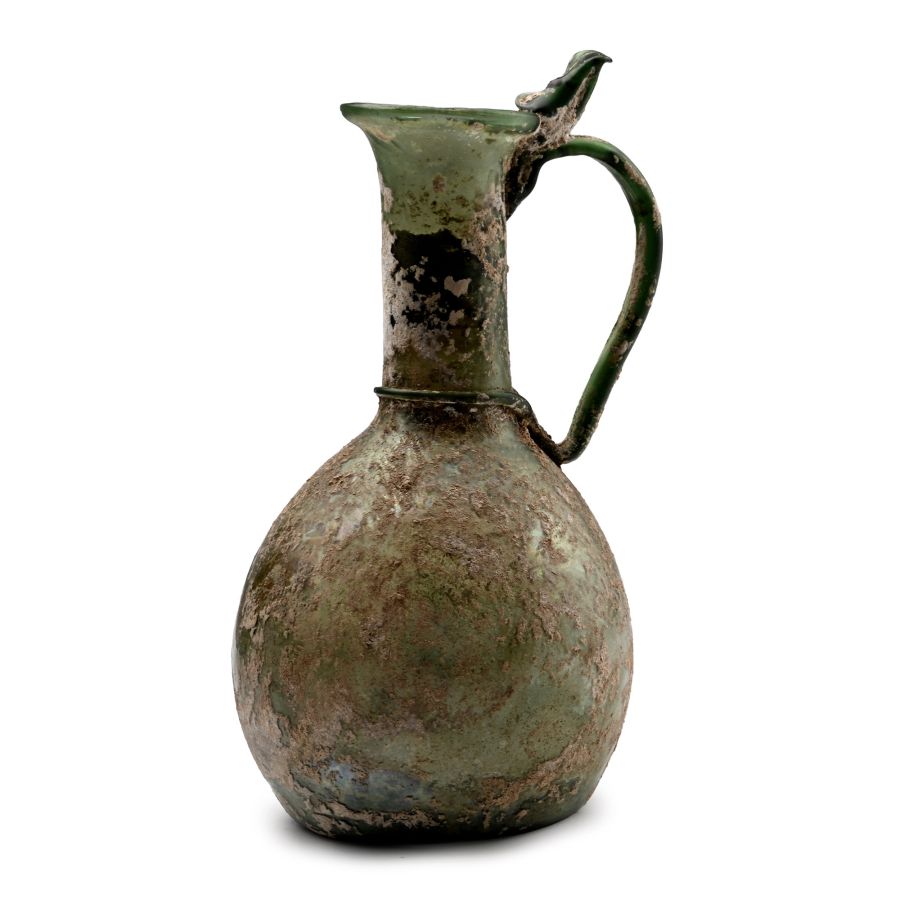
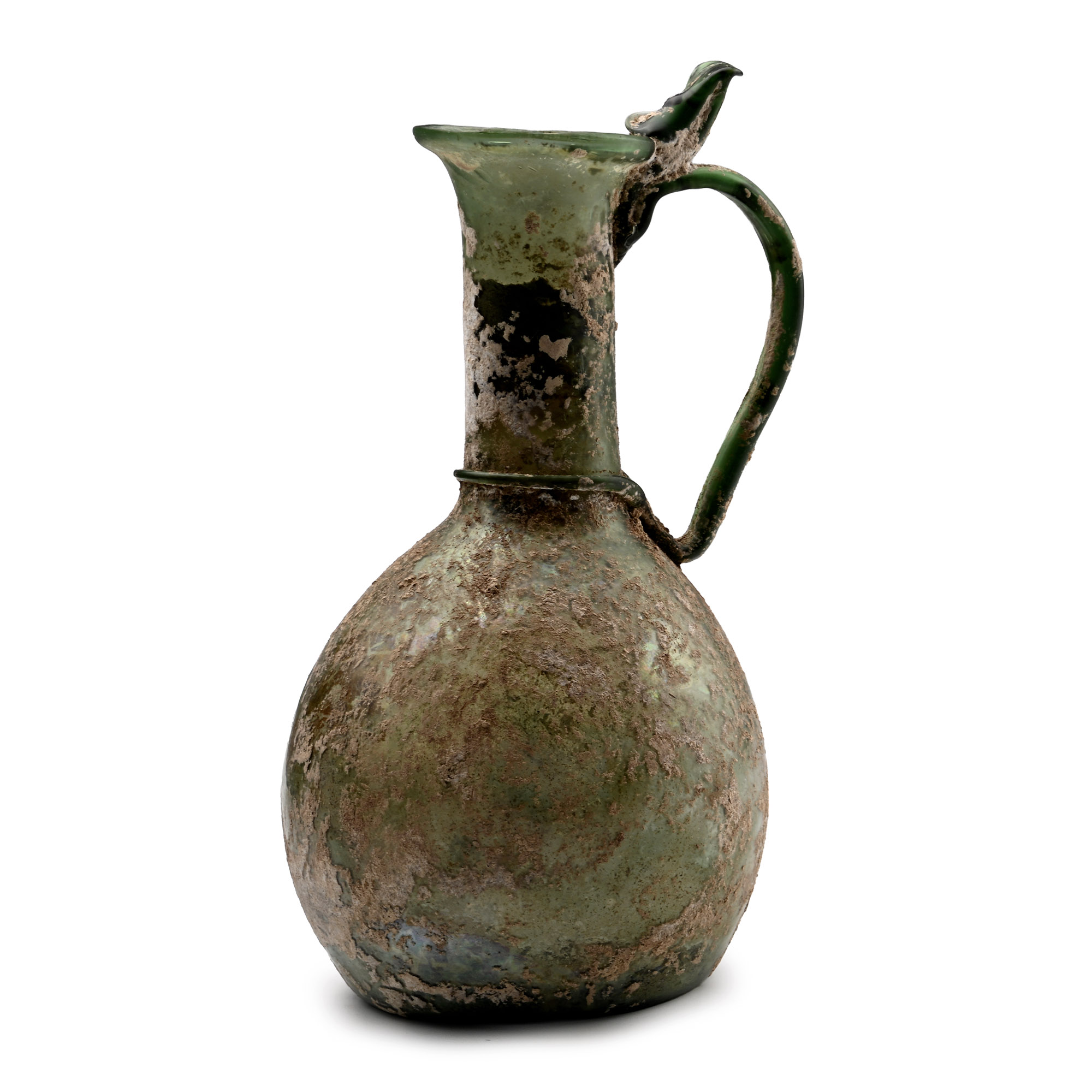
Roman Glass Juglet
1ST-3RD CENTURY A.D.
5 7/8 in. (90 grams, 15 cm).
Oblate body with dimple base; applied trail to the flared mouth and another at the junction of the neck and shoulder; ribbed applied trail handle with spur to the rim.
ProvenanceFrom a London, UK, collection of glass, 1970-2000s.
LiteratureCf. The Corning Museum of Glass, accession number 6.1.4, for a comparable jug.
CONDITIONTimeLine Auctions follows a vetting process to ensure the authenticity and legality of all items, reinforcing our commitment to integrity and responsible trading. Each antiquity, antique, and coin lot undergoes thorough examination by a vetting committee of at least ten external specialists, professional trade association members, scientists, and archaeologists: Our Vetting Process
AUCTIONS:
TimeLine is a leading auction house specialising in antiquities, ancient art, collectables, natural history, coins, medals, and books. Our auctions offer museums, collectors, historians, and enthusiasts the opportunity to acquire unique and historically significant pieces.
-

Roman Terracotta Tessera with Arabian Busts
Circa 1st-2nd century A.D.Sold for (Inc. bp): £59
Plano-convex in section with pointillé border, two profile busts in low relief. 3.46 grams, 22 mm
Ex Abelita family collection, 1980s-2000s. -
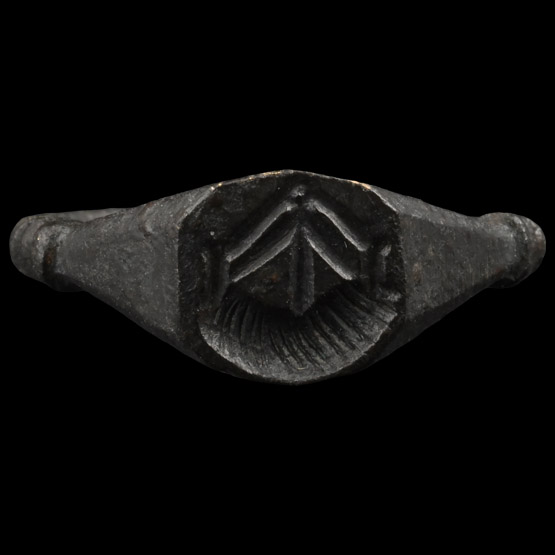
Late Roman Bronze Ring with Galley
5th-6th century A.D.Sold for (Inc. bp): £111
With notched shoulders and conical bezel, incuse image of a galley with oars mounted. 4.50 grams, 24.95 mm overall, 18.53 mm internal diameter (approximate size British Q, USA 8, Europe 17.49, Japan 16)
Ex German art market, 2000s. Acquired from an EU collector living in London. From the collection of a Surrey, UK, gentleman. -
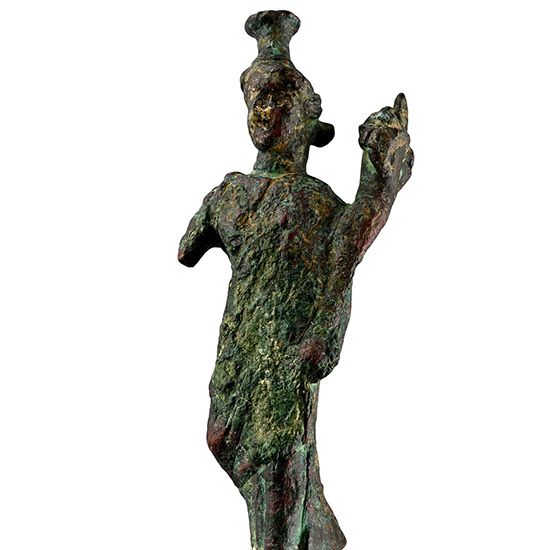
Roman Bronze Statue of Demeter with Cornucopia
1st-3rd century A.D.Estimate: £300 - 400 (+bp*)
Opening Bid: £150
Modelled in the round standing with legs advancing, left arm cradling a cornucopia; hair drawn back in a chignon, surmounted by a modius; attachment loop below feet. 145 grams, 10.5 cm
Acquired before 1990. Ex London gallery, 1990s. Private collection, London, UK.
The Roman Empire was one of the most powerful and influential civilisations of the ancient world, lasting for many centuries. It is known for its impressive cities, roads, engineering, art, and military strength, as well as its system of law and government. At its height, the empire brought together many different cultures, and its ideas and achievements continued to shape Europe and the wider world long after its fall.
