
Loading, please wait...
LOT 0821
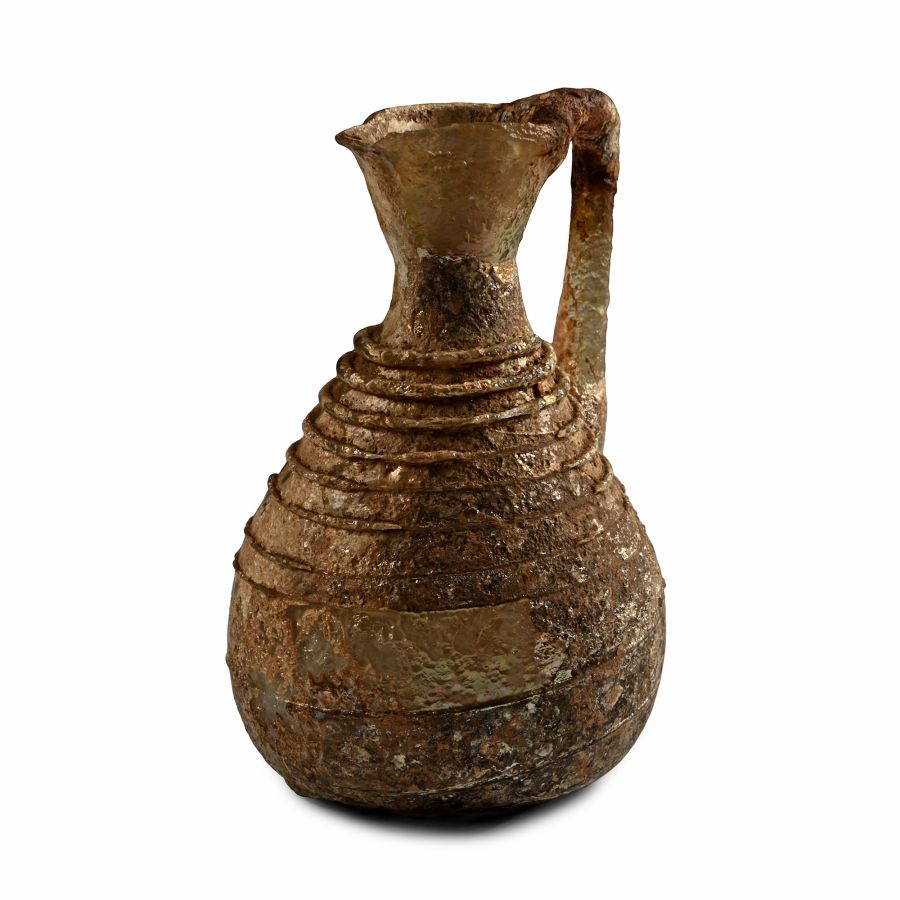
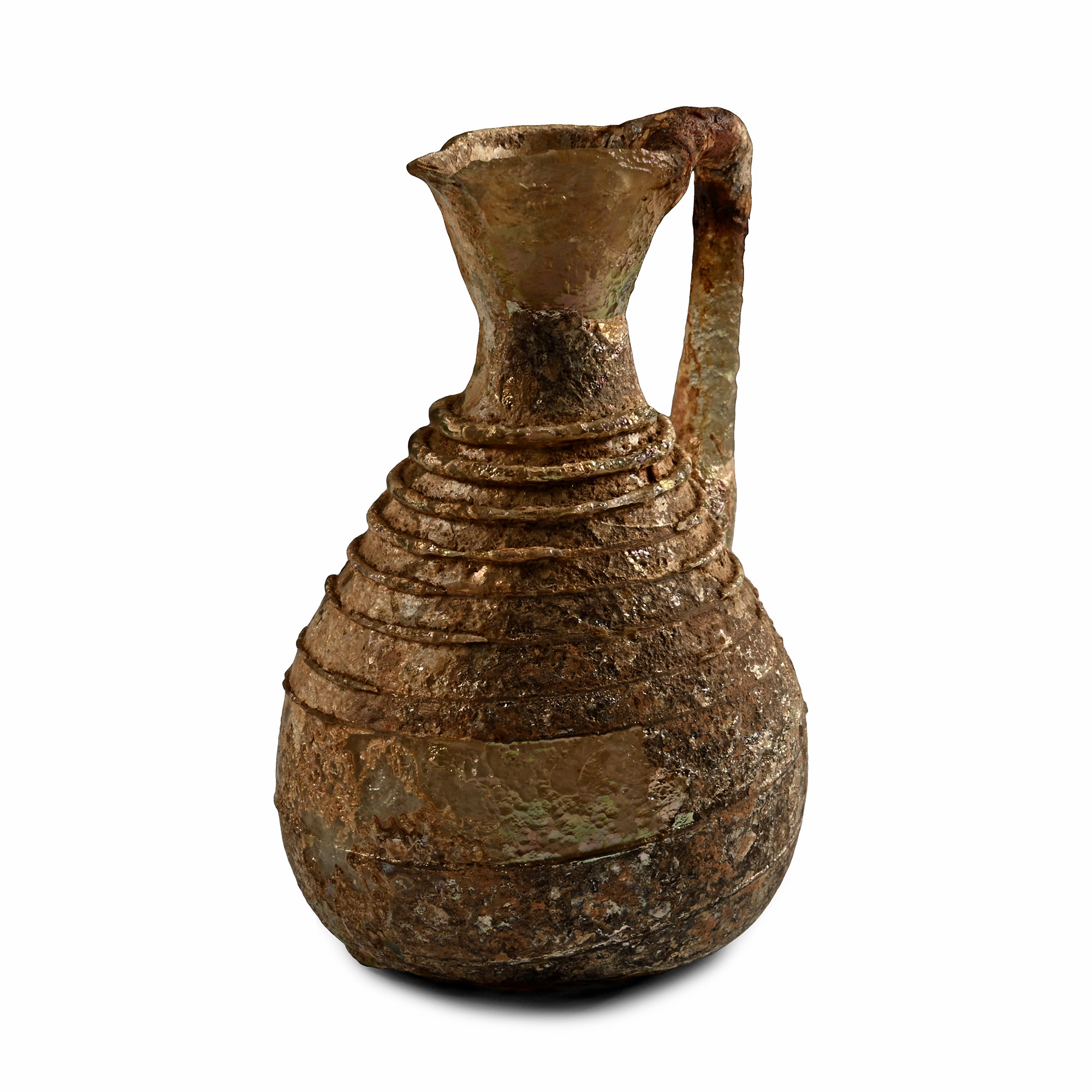
Roman Glass Jug with Trails
4TH-5TH CENTURY A.D.
2 7/8 in. (32 grams, 74 mm).
A small pale yellow collared globular jug with short neck, angular ribbon handle with two narrow prominent ribs, folded upper attachment to the cylindrical neck, several horizontal lines on the globular body, trefoil mouth.
Provenancewith H.A.C., Basel, prior 1999.
LiteratureSee Auth, H., Ancient Glass at the Newark Museum, Newark, 1976, p.109, for the type.
FootnotesThese globular jugs were typical of the Eastern Mediterranean in the late Roman period. The body was often decorated with ornamental threads. The jugs were often used in a manner similar to pilgrim flasks, to collect oil and water from early Christian sanctuaries.
CONDITIONTimeLine Auctions follows a vetting process to ensure the authenticity and legality of all items, reinforcing our commitment to integrity and responsible trading. Each antiquity, antique, and coin lot undergoes thorough examination by a vetting committee of at least ten external specialists, professional trade association members, scientists, and archaeologists: Our Vetting Process
AUCTIONS:
TimeLine is a leading auction house specialising in antiquities, ancient art, collectables, natural history, coins, medals, and books. Our auctions offer museums, collectors, historians, and enthusiasts the opportunity to acquire unique and historically significant pieces.
LOT 0821
Roman Glass Jug with Trails
Estimate £400 - 600€460 - 700 (for guidance only)$540 - 810 (for guidance only)
-
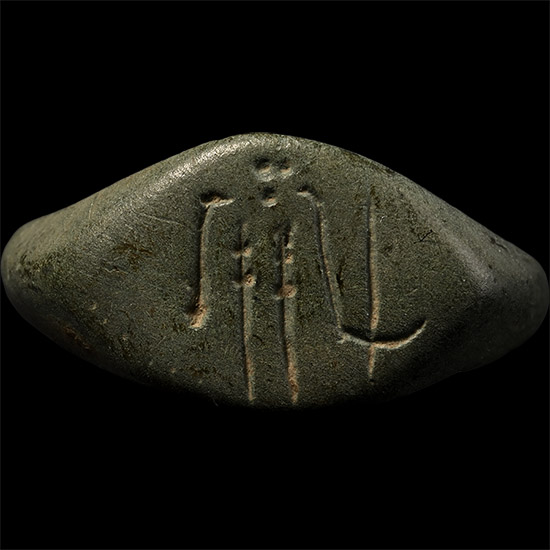
Late Roman Ring with Warrior
3rd century A.D.Sold for (Inc. bp): £338
With a slender D-section hoop and a lentoid bezel with a stylised figure holding a spear. 5.19 grams, 24.17 mm overall, 19.97 mm internal diameter (approximate size British U, USA 10, Europe 22.52, Japan 21)
Acquired on the UK and EU art market before 2000. From the private collection of a Surrey, UK, gentleman.
This ring belongs to a particular category of Late Roman rings which have a thin and flat sectioned shank with variously decorated bezels, in this case, probably a reference to the iconography of the god Mars. -
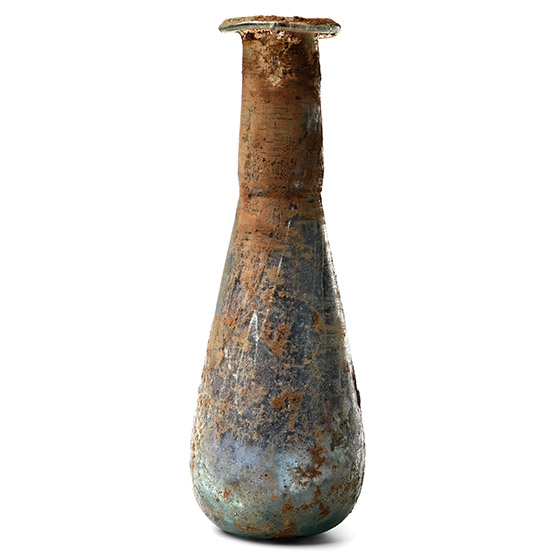
Roman Blue Glass Flask
Circa 1st-4th century A.D.Sold for (Inc. bp): £117
Piriform body with a short tubular neck and rolled rim. 72 grams, 10.9 cm
From a London, UK, collection of glass, 1970-2000s. -
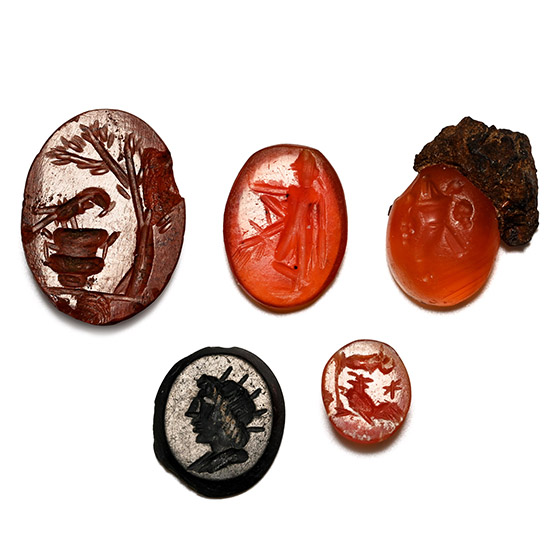
Roman Gemstone Collection
1st-2nd century A.D.Estimate: £380 - 480 (+bp*)
Opening Bid: £210
Mixed group including a standing female, a perching bird and others; each supplied with a museum-quality impression. 2.66 grams total, 7-16 mm
From the collection of a gentleman, acquired on the London art market in the 1990s.
Two of the gemstones in this collection show cockerels. The motif of fighting or individual cockerels was very popular in the classical world, and individual cockerels (the animal often associated with gods, such as Mercury or Sol/Helios) were also often depicted in a standing position. Another gemstone appears to represent a nude figure of Dionysos/Bacchus draped in a long cloak, and another shows Helios with a radiate crown.
