
Loading, please wait...


LOT 0834
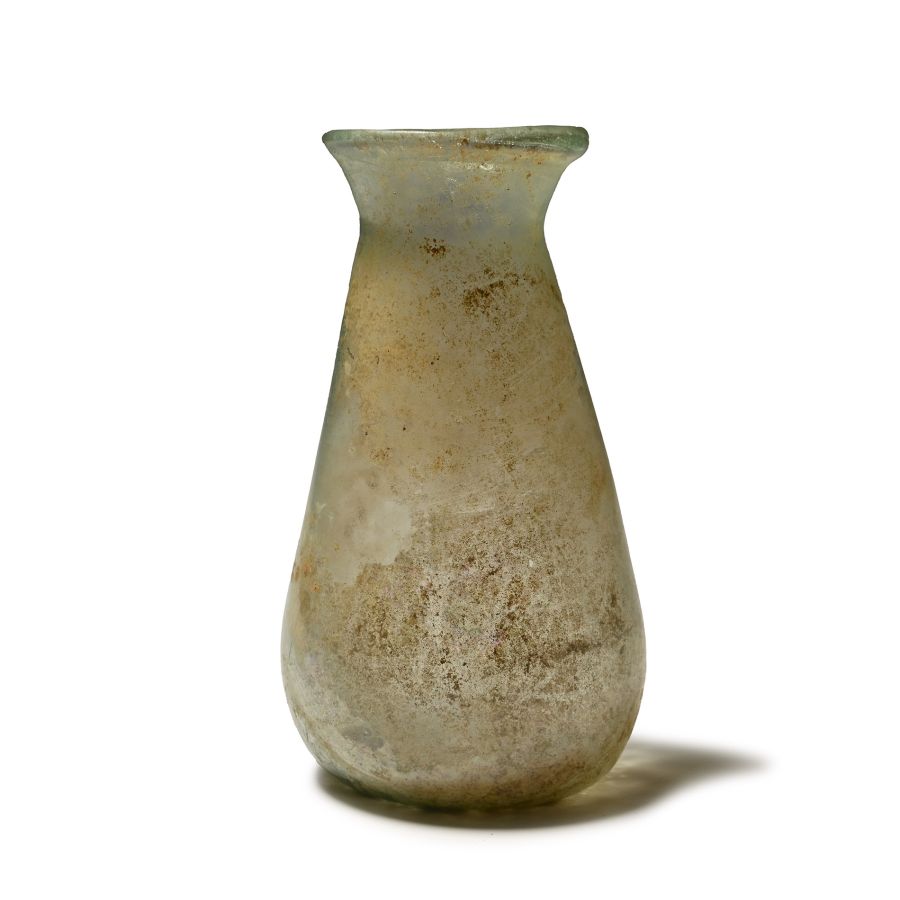
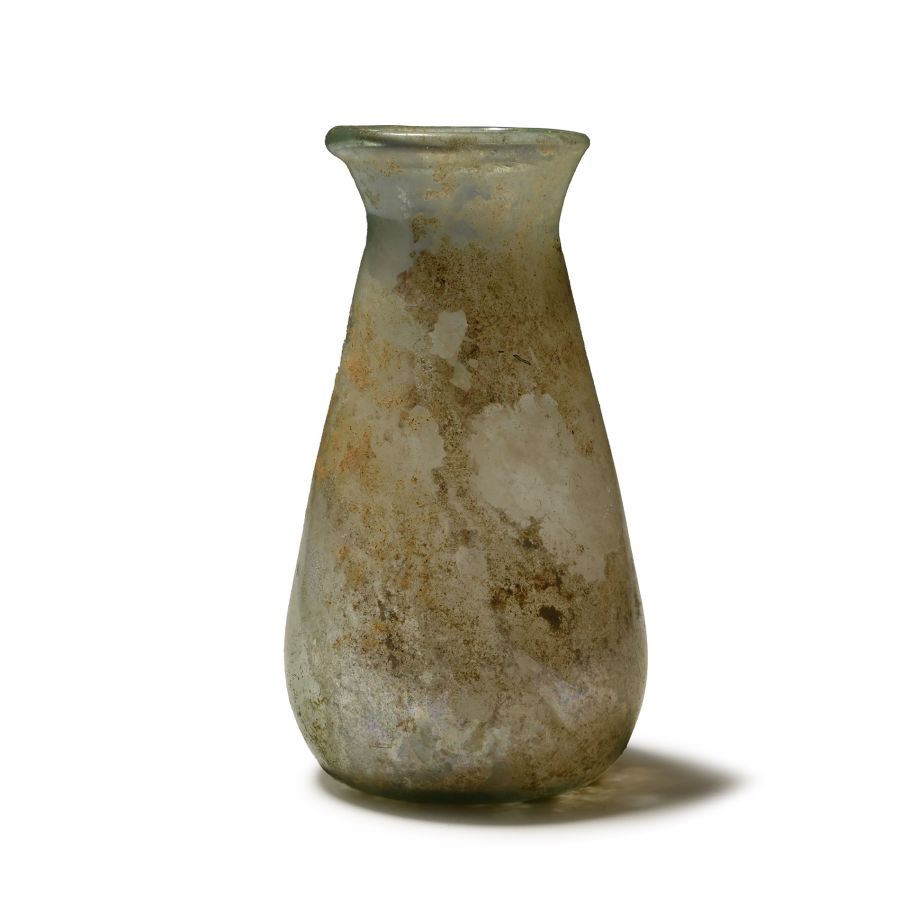
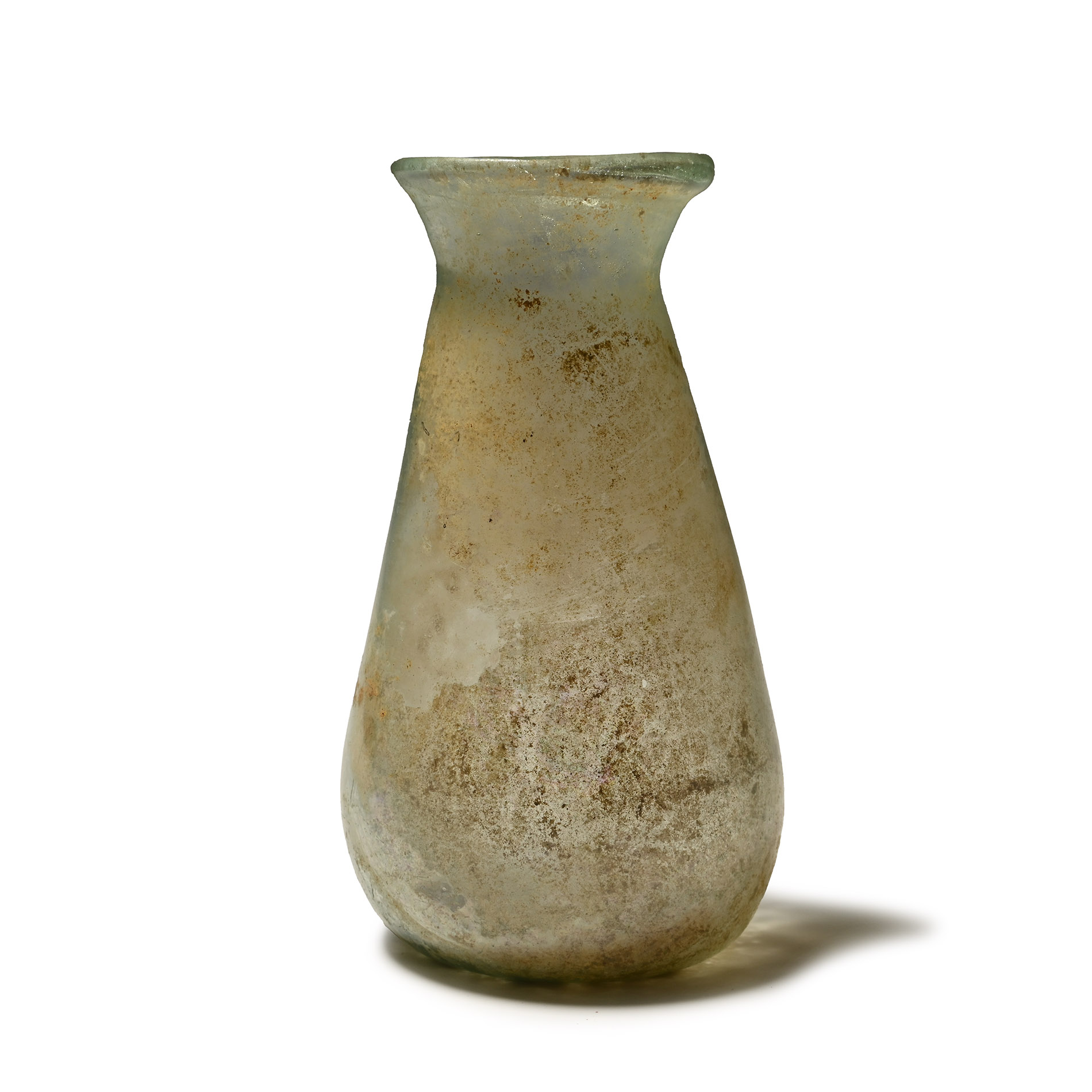
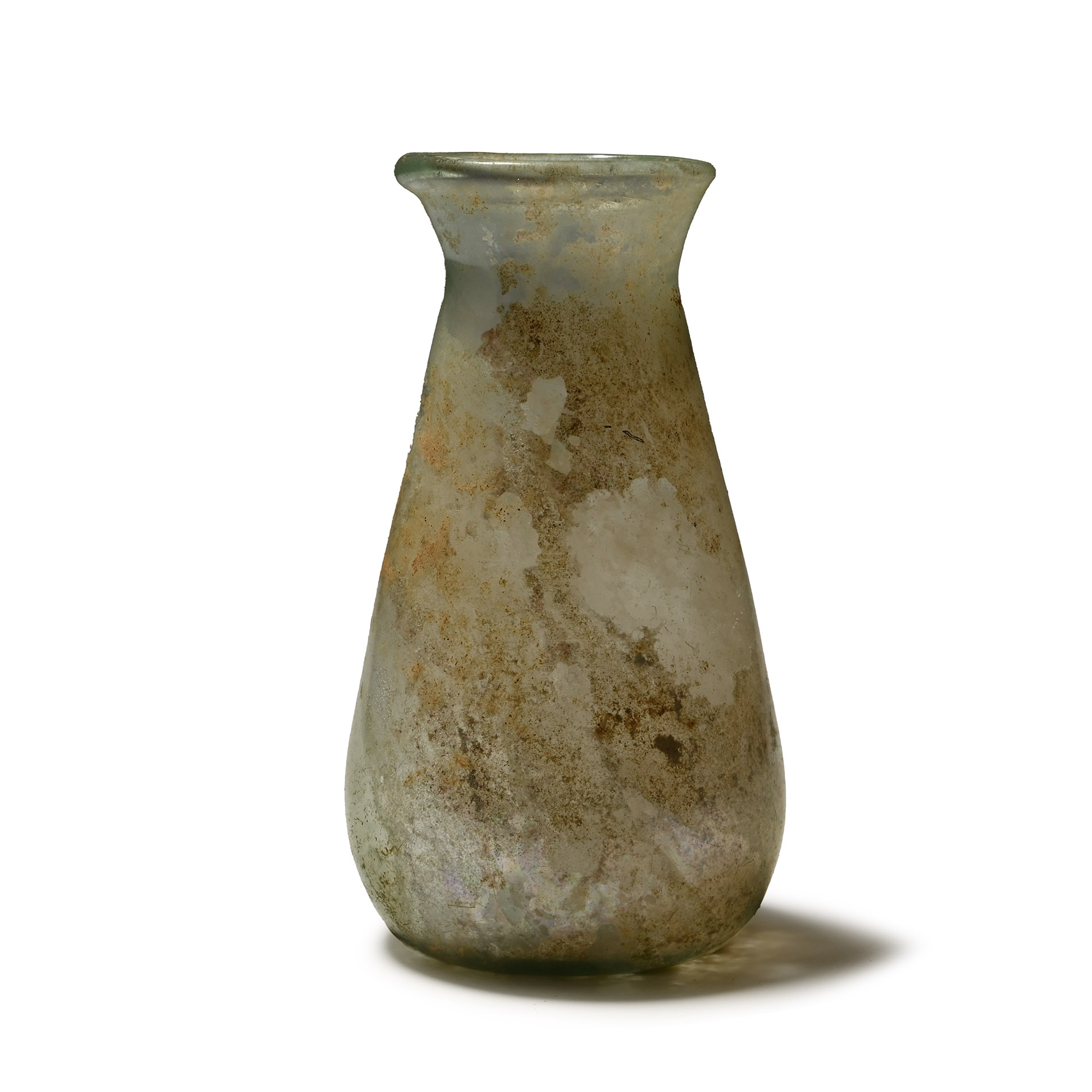
Roman Glass Jar
4TH CENTURY A.D.
4 3/8 in. (36 grams, 11.1 cm).
Piriform in profile with flared neck and rolled rim, dimple base. [No Reserve]
ProvenanceEx Helene Wackernagel-Wenk (1901-1979), Switzerland; thence by descent.
This lot is accompanied by an illustrated lot declaration signed by the Head of the Antiquities Department, Dr Raffaele D’Amato.
Cf. Lightfoot, C.S., Ancient Glass in National Museum Scotland, Edinburgh, 2007, p.121, no.292, for the type.
FootnotesThese small jars were used as storage vessels. Their typology shows similarities with some material from Northern Black Sea region as well as with other glass finds found in Eastern Mediterranean settlements due to the decreasing variety of forms starting from the Late Roman Period, with whom they have similarities in colour, shape and typology.
Helene Wackernagel-Wenk was a distinguished collector of art and antiquities, celebrated for her refined taste and commitment to preserving cultural heritage. Her collection encompassed a wide range of artefacts, reflecting her deep appreciation for the artistic and historical significance of ancient civilizations. Known for her meticulous curation, Wackernagel-Wenk’s legacy endures through the exceptional pieces that once formed part of her esteemed collection. Artefacts associated with her name are highly valued for their provenance and quality.
TimeLine Auctions follows a vetting process to ensure the authenticity and legality of all items, reinforcing our commitment to integrity and responsible trading. Each antiquity, antique, and coin lot undergoes thorough examination by a vetting committee of at least ten external specialists, professional trade association members, scientists, and archaeologists: Our Vetting Process
AUCTIONS:
TimeLine is a leading auction house specialising in antiquities, ancient art, collectables, natural history, coins, medals, and books. Our auctions offer museums, collectors, historians, and enthusiasts the opportunity to acquire unique and historically significant pieces.
-
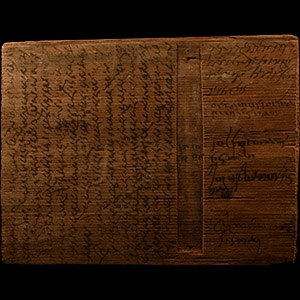
Roman Inked Reused Wooden Wax Tablet For a Contract Negotiated and Agreed at Titiiuni between Maianus and Silvanus
Early 4th century A.D.Sold for (Inc. bp): £12,350
Well preserved rectangular tablet inscribed in Roman cursive script, on the outer face the beginnings of a contract and the signatures of witnesses, the inner side with a recessed panel inscribed with fourteen lines of Roman cursive script, on the outer face right of the sulcus the signatures of five witnesses, to the left the beginning of the contract: 'the pactum et conventum was made between Maianus, son of Dontiquus, and a person called Silvanus; Maianus was born shortly before A.D. 281 and reached an advanced age as he is still attested after AD 360'; the text consists inter alia of typical Roman legal formula like stipulatus est … – spopondidit … - testati sunt …, including the note: Actum Titiiuni, which may be understood as ‘negotiated and agreed at Titiiuni’. 64 grams, 18.2 cm
Acquired by Albert Sfez in the early 1950s. Formerly the property of Monsieur Alain Sfez, a Belgian collector; acquired by gift from his father Albert Sfez, in 1965. Acquired by a London dealer in 1973. From an important London collection since 1975; thence by descent. This lot has been checked against the Interpol Database of stolen works of art and is accompanied by a search certificate number no.12525-230804. This lot has been cleared against the Art Loss Register database, and is accompanied by an illustrated lot declaration signed by the Head of the Antiquities Department, Dr Raffaele D’Amato. -
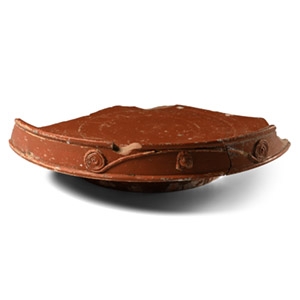
Roman Redware Footed Dish Fragment with Maker's Mark
4th century A.D.Sold for (Inc. bp): £39
Comprising a large portion of a shallow round dish with ring foot, a shoe-shaped maker's mark 'GELLI' to the centre. 220 grams, 17.6 cm
Ex German art market, 2000s. Acquired from an EU collector living in London. From the collection of Surrey, UK, gentleman. This lot is accompanied by an illustrated lot declaration signed by the Head of the Antiquities Department, Dr Raffaele D’Amato. -
.jpg)
Roman Terracotta Oil Lamp Group
Mid 1st century B.C.-5th century A.D.Sold for (Inc. bp): £234
Comprising a low discoid type with trapezoidal nozzle and radiating lines which appears to be from the Herodian period (50 B.C. to 70 A.D.); one with conical nozzle and radiating lines to the shoulder; and one with a long tapering nozzle, lateral spur handle and low-relief rosette to the discus. 150 grams total, 76-83 mm
From a family collection mostly formed in the 1940s-1950s, thence by descent. This lot is accompanied by an illustrated lot declaration signed by the Head of the Antiquities Department, Dr Raffaele D’Amato.
