
Loading, please wait...


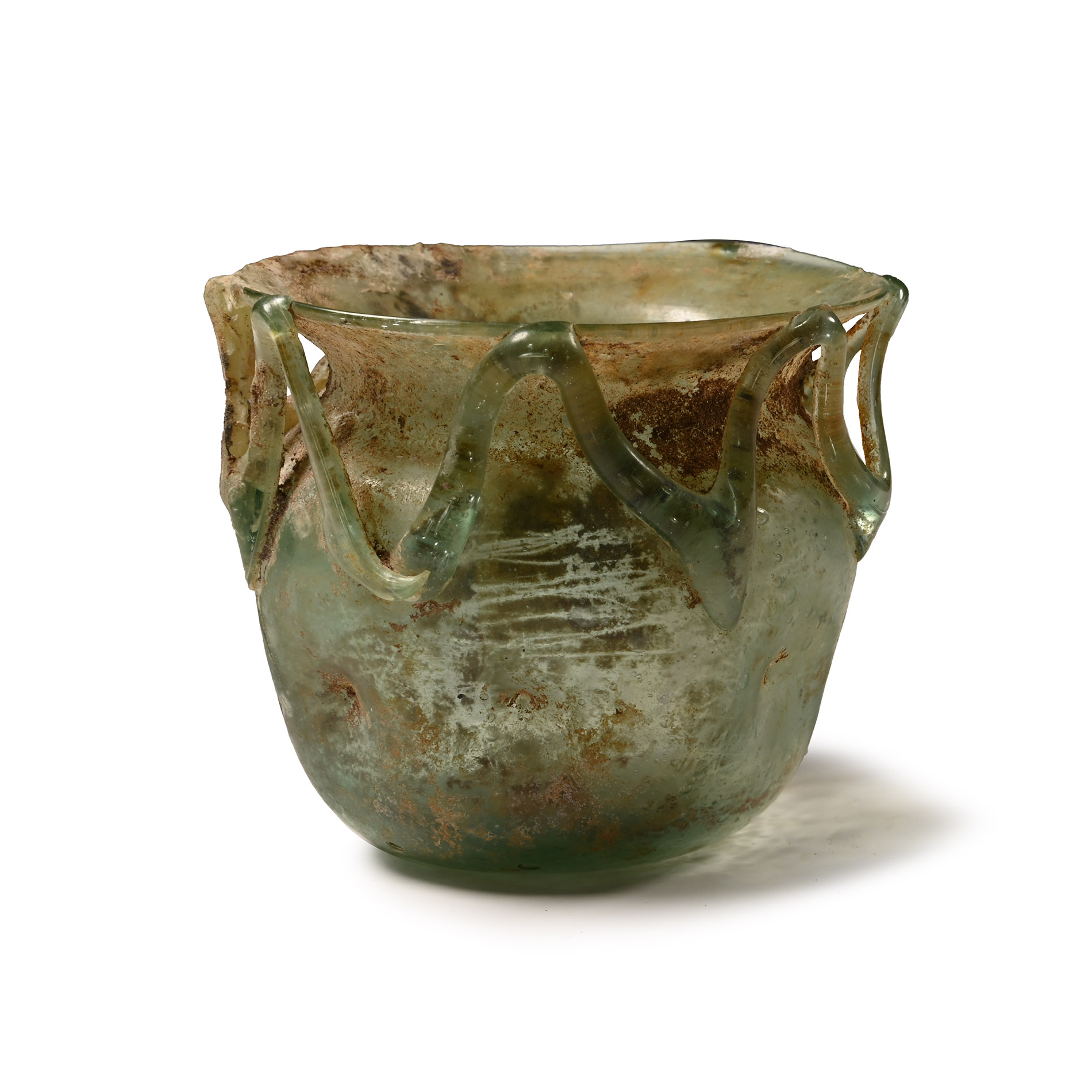
LOT 0157
Roman Glass Jar with Trail
3RD-4TH CENTURY A.D.
2 3/4 in. (70 grams, 69 mm).
With bulbous body, flared rim and applied zigzag trail to neck, dimple base.
ProvenanceFrom a London, UK, collection, 1990s.
This lot is accompanied by an illustrated lot declaration signed by the Head of the Antiquities Department, Dr Raffaele D’Amato.
Cf. The Metropolitan Museum, accession number 74.51.197, for similar.
CONDITIONTimeLine Auctions follows a vetting process to ensure the authenticity and legality of all items, reinforcing our commitment to integrity and responsible trading. Each antiquity, antique, and coin lot undergoes thorough examination by a vetting committee of at least ten external specialists, professional trade association members, scientists, and archaeologists: Our Vetting Process
AUCTIONS:
TimeLine is a leading auction house specialising in antiquities, ancient art, collectables, natural history, coins, medals, and books. Our auctions offer museums, collectors, historians, and enthusiasts the opportunity to acquire unique and historically significant pieces.
LOT 0157
Roman Glass Jar with Trail
Estimate £350 - 450€410 - 520 (for guidance only)$470 - 610 (for guidance only)
-
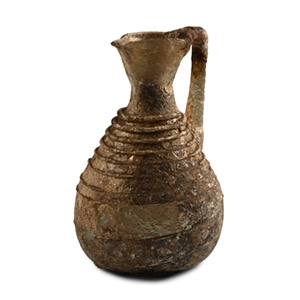
Roman Glass Jug with Trails
4th-5th century A.D.Estimate: £800 - 1,000 (‡+bp*)
Opening Bid: £360
A small pale yellow collared globular jug with short neck, angular ribbon handle with two narrow prominent ribs, folded upper attachment to the cylindrical neck, several horizontal lines on the globular body, trefoil mouth. 32 grams, 74 mm
with H.A.C., Basel, prior 1999. This lot is accompanied by an illustrated lot declaration signed by the Head of the Antiquities Department, Dr Raffaele D’Amato.
These globular jugs were typical of the Eastern Mediterranean in the Late Roman period. Ornamental threads were decorating the body, and the employment of these jugs was often similar to those of pilgrim flasks, destined to collect oil and water from early Christian sanctuaries. -
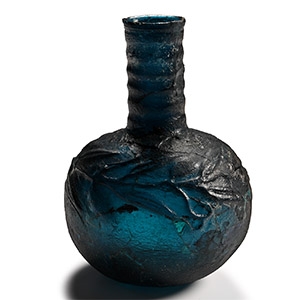
Roman Deep Blue Bottle with Relief Decoration
1st-3rd century A.D.Estimate: £600 - 800 (‡+bp*)
Opening Bid: £270
Mould-blown with spherical, squat body and dimple base; low-relief encircling laurel branch with fruit below the shoulder; tubular neck with offset rings flared towards the mouth; restored. 48.8 grams, 89 mm
with Rosebery's London, 3 May 2019, no.165. This lot is accompanied by an illustrated lot declaration signed by the Head of the Antiquities Department, Dr Raffaele D’Amato. -
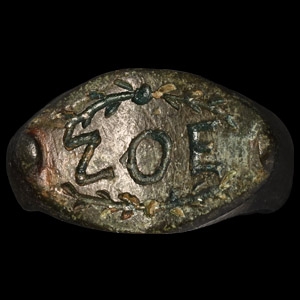
Roman Bronze Ring with ZOE
1st-4th century A.D.Sold for (Inc. bp): £975
Ellipsoid bezel with spur at each narrow end, incuse wreath and 'ZOE' (life) legend. 8.12 grams, 23.77 mm overall, 17.32 mm internal diameter (approximate size British N 1/2, USA 6 3/4, Europe 14.35, Japan 13)
Ex German art market, 2000s. Acquired from an EU collector living in London. From the collection of Surrey, UK, gentleman. This lot is accompanied by an illustrated lot declaration signed by the Head of the Antiquities Department, Dr Raffaele D’Amato.
