
Loading, please wait...
LOT 0765
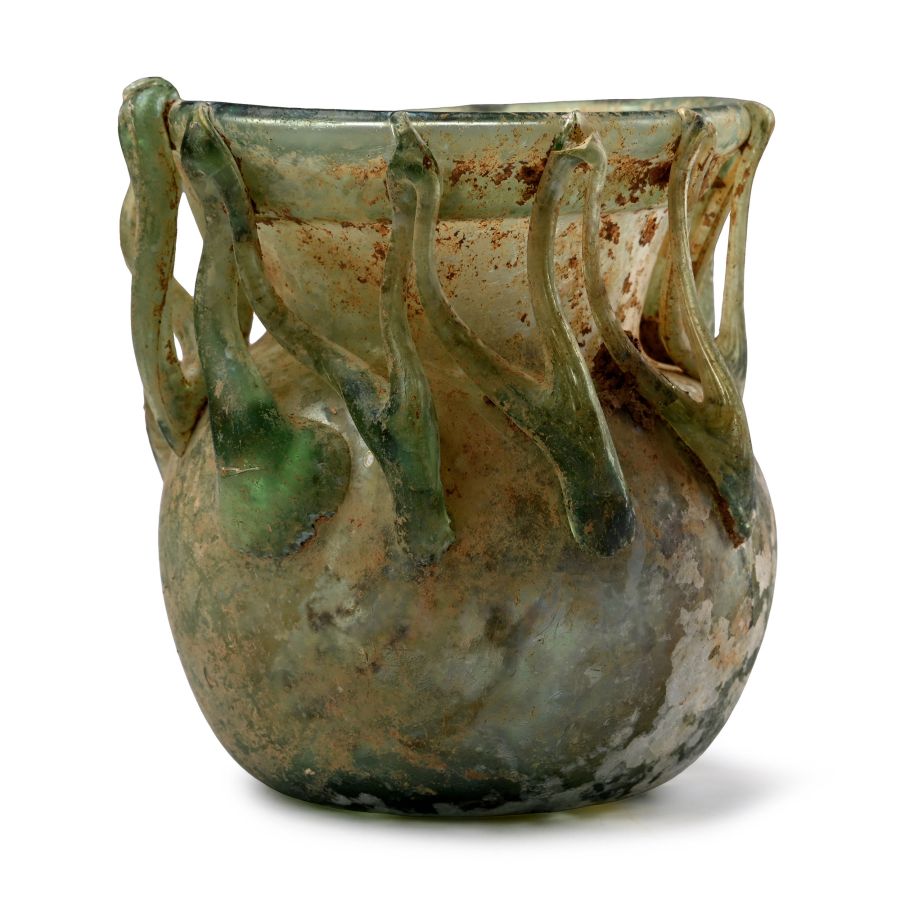
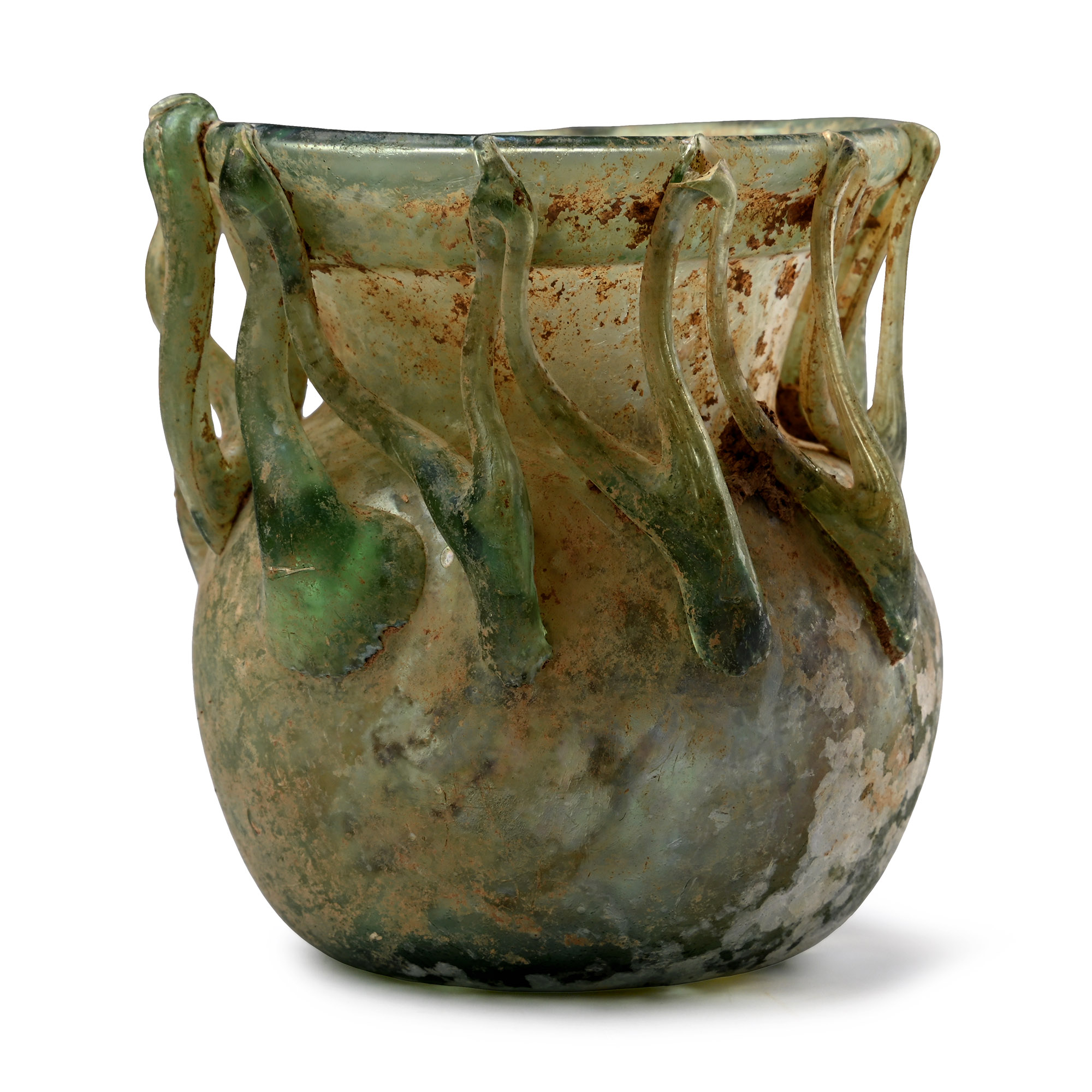
Roman Glass Jar with Looped Trail
3RD-4TH CENTURY A.D.
2 7/8 in. (89 grams, 74 mm).
Globular in profile with a wide double-stepped rolled rim, applied undulating trails forming a gallery from rim to body; pontil base.
ProvenanceFrom a London, UK, collection of glass, 1970-2000s.
LiteratureCf. The Metropolitan Museum, accession number 74.51.197, for similar.
CONDITIONTimeLine Auctions follows a vetting process to ensure the authenticity and legality of all items, reinforcing our commitment to integrity and responsible trading. Each antiquity, antique, and coin lot undergoes thorough examination by a vetting committee of at least ten external specialists, professional trade association members, scientists, and archaeologists: Our Vetting Process
AUCTIONS:
TimeLine is a leading auction house specialising in antiquities, ancient art, collectables, natural history, coins, medals, and books. Our auctions offer museums, collectors, historians, and enthusiasts the opportunity to acquire unique and historically significant pieces.
-
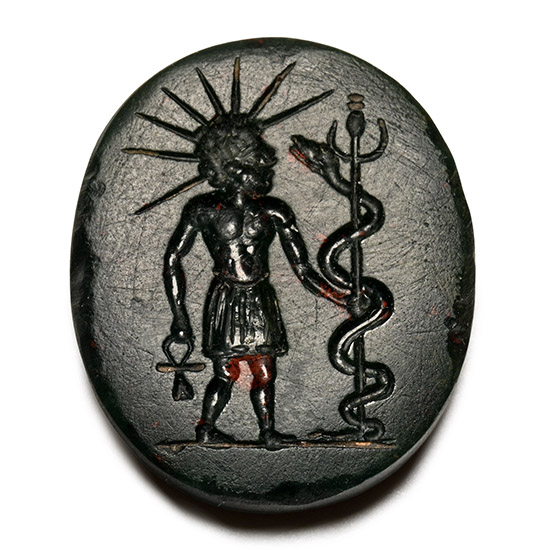
Roman Gnostic Green Jasper Gemstone
2nd-3rd century A.D.Sold for (Inc. bp): £650
Flat in section with intaglio standing male figure on a baseline with radiate head and bare torso, knee-length kilt; ankh in his right hand and a sceptre entwined with a serpent in his left; supplied with a museum-quality impression. 2.26 grams, 20 mm
Monte-Carlo, collection of Monsieur and Madame V.A., 1960s. with Hôtel des Ventes de Monte-Carlo, 2019. Private collection, England. -
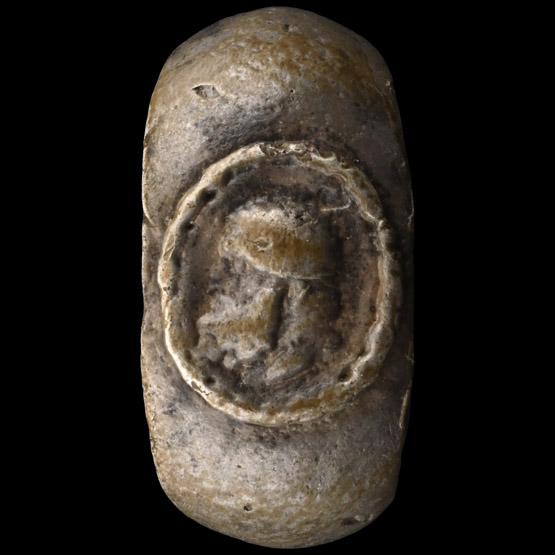
Roman Silver Ring with Hercules
2nd-3rd century A.D.Sold for (Inc. bp): £130
With broad shoulders, raised ellipsoid bezel with low-relief profile bust. 8.61 grams, 25.95 mm overall, 20.73 mm internal diameter (approximate size British J 1/2, USA 5, Europe 9.32, Japan 9)
Ex German art market, 2000s. Acquired from an EU collector living in London. From the collection of a Surrey, UK, gentleman. -
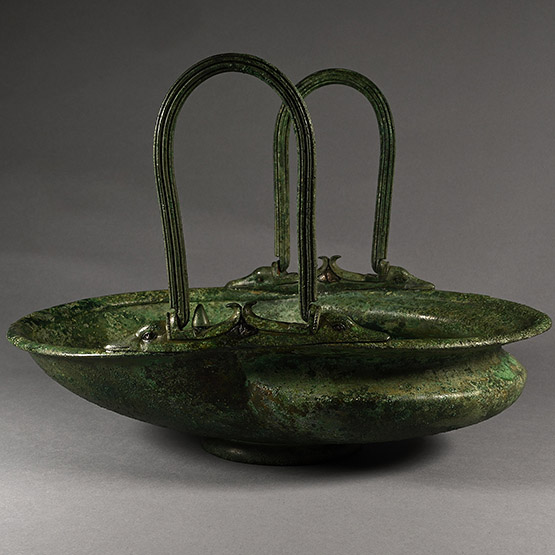
Roman Bronze Basket-Vase
1st-2nd century A.D.Estimate: £15,000 - 20,000 (‡+bp*)
Opening Bid: £7,500
Ellipsoid in plan with low basal ring and thick convex rim, carination to the forward end; hinges to each lateral rim, the knuckles formed as addorsed duck-heads each with scrolled panel to the rear retaining the pivot of the ribbed D-shaped handles. 1.68 kg, 28 cm
Acquired in Switzerland, 1996. Private collection, Europe. Accompanied by an academic report by Dr Raffaele D'Amato. Accompanied by a copy of an Art Loss Register certificate dated 30th April 2004. This lot has been checked against the Interpol Database of stolen works of art and is accompanied by search certificate number no.12363-226688.
This vessel (lanx) was part of Roman and provincial bronze instrumentum domesticum, i.e. culinary or domestic utility ware. The form of the bowl resembles a type of helmet with carination to the front, the handles placed as hinged cheek-protectors.
