
Loading, please wait...
LOT 0694
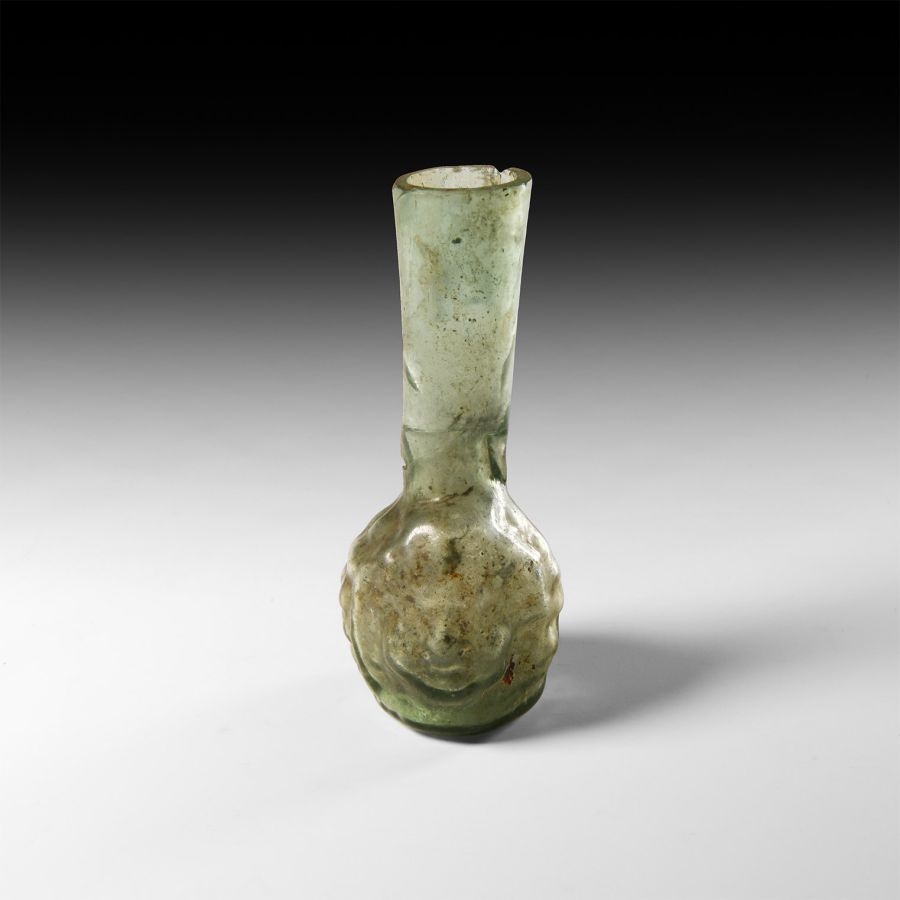
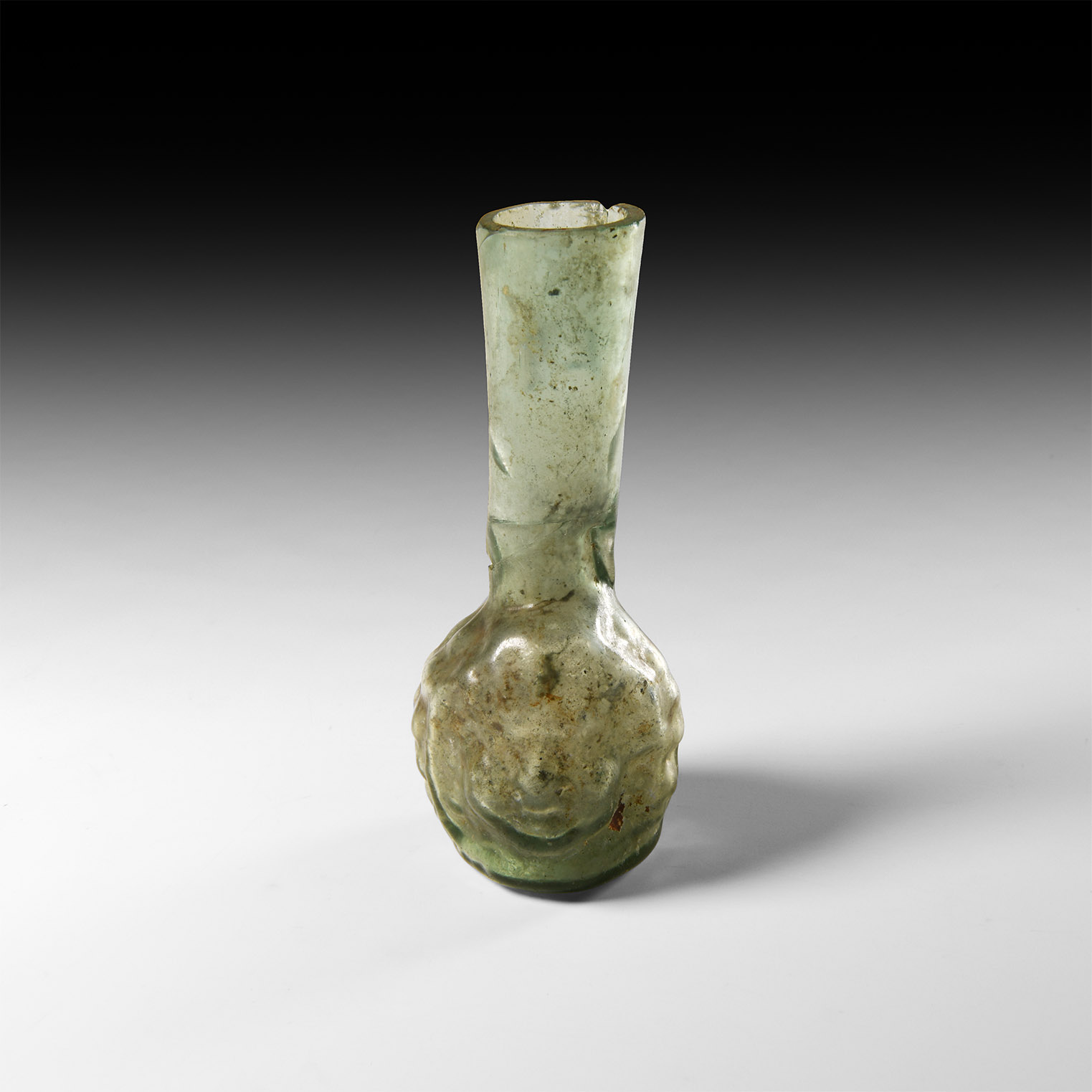
Roman Glass Janus Head Flask
CIRCA 3RD CENTURY A.D.
3 7/8 in. (41 grams, 99 mm high).
A mould-blown glass flask formed as two addorsed heads with a flaring cylindrical neck and mouth; both heads with very similar detailing to the hair and face; restored.
ProvenanceAcquired 1969-1999.
London collection of the late Mr S.M., thence by descent.
TimeLine Auctions follows a vetting process to ensure the authenticity and legality of all items, reinforcing our commitment to integrity and responsible trading. Each antiquity, antique, and coin lot undergoes thorough examination by a vetting committee of at least ten external specialists, professional trade association members, scientists, and archaeologists: Our Vetting Process
AUCTIONS:
TimeLine is a leading auction house specialising in antiquities, ancient art, collectables, natural history, coins, medals, and books. Our auctions offer museums, collectors, historians, and enthusiasts the opportunity to acquire unique and historically significant pieces.
LOT 0694
Roman Glass Janus Head Flask
Estimate £150 - 200€170 - 230 (for guidance only)$200 - 270 (for guidance only)
-
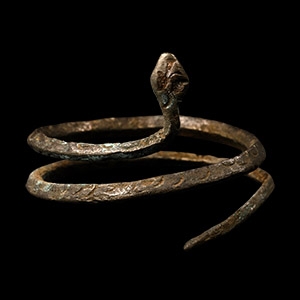
Romano-Egyptian Coiled Snake Ring
1st century B.C.-1st century A.D.Sold for (Inc. bp): £312
A zoomorphic copper-alloy ring composed of a slender, square-section coiled body with one tapering terminal and one terminal formed as a stylised snake's head with simple punched detailing. 2.40 grams, 24.19 mm overall, 19.91 mm internal diameter (approximate size British R, USA 8 1/2, Europe 18 3/4, Japan 18)
Acquired before 2000. From the collection of a European gentleman living in the UK. -
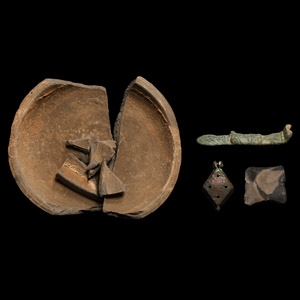
Roman and Other Artefact Group
Circa 1st century A.D. and laterSold for (Inc. bp): £5
A mixed group of artefacts comprising: fragments of a ceramic bowl; a Roman seal-box base; a zoomorphic footplate from an Anglian cruciform brooch; a gun flint. 126 grams total, 24-87 mm
Essex gallery, early 2000s. -
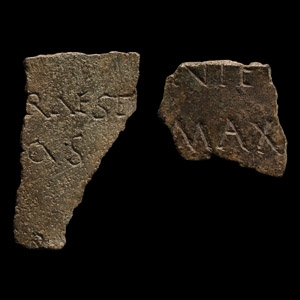
Roman Military Diploma Fragments
2nd century A.D.Sold for (Inc. bp): £208
A pair of bifacial bronze military diploma fragments bearing Latin text: fragment A, side 1: 'CAEL[IBES] / DVM [TAXAT]'; side 2: 'NI[- - -] MAX'; fragment B, side 1: 'RNESE / CVS'; side 2: 'AL[- - - / - - -] LL'. 7.13 grams total, 21-32 mm
Acquired before 2000. From the collection of a European gentleman living in the UK.
Stylistically, the diploma seems connected with the empire of Hadrian, based in style used in letters M and A. The text of the extrinsecus can be partially reconstructed in the sentences ANTO{NI}NUS AVGVSTVS PONTIFEX {MAX}IMUS... AVT SIQUI {CAEL}IBES ESSENT CUM IIS QUAS POSTEA DUXISSENT {DUM}TAXAT SINGULI SINGULAS (...if they were in celibate then, to the maximum limit of only one (wife) for each...). The diploma gives 'HONESTA MISSIO' (honourable discharge) and Roman citizenship to the veterans of an unknown unit, also granting them permission to marry. The text of the internal side (intus) should report the dating, and the names of the soldiers and witnesses.
