
Loading, please wait...



LOT 0140
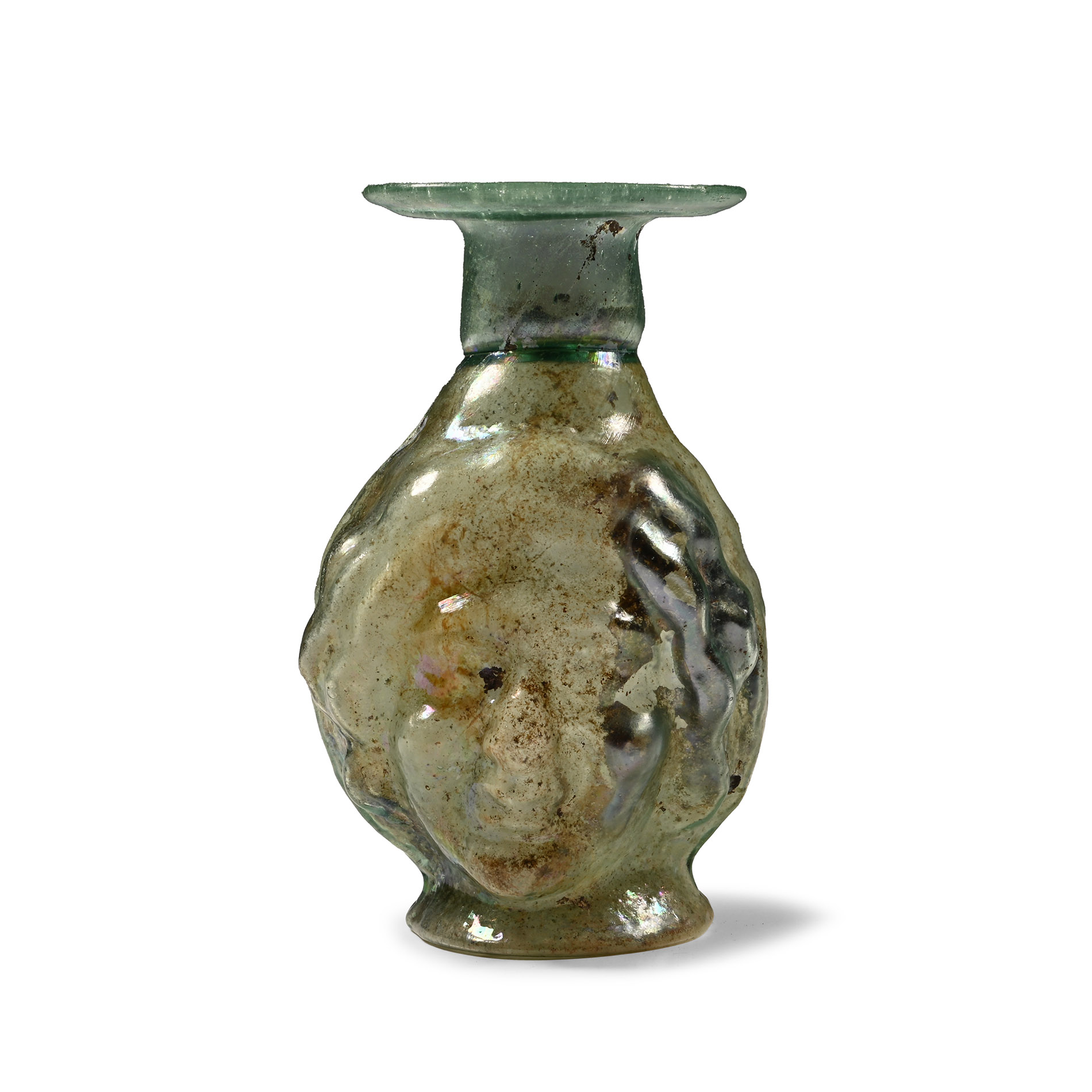
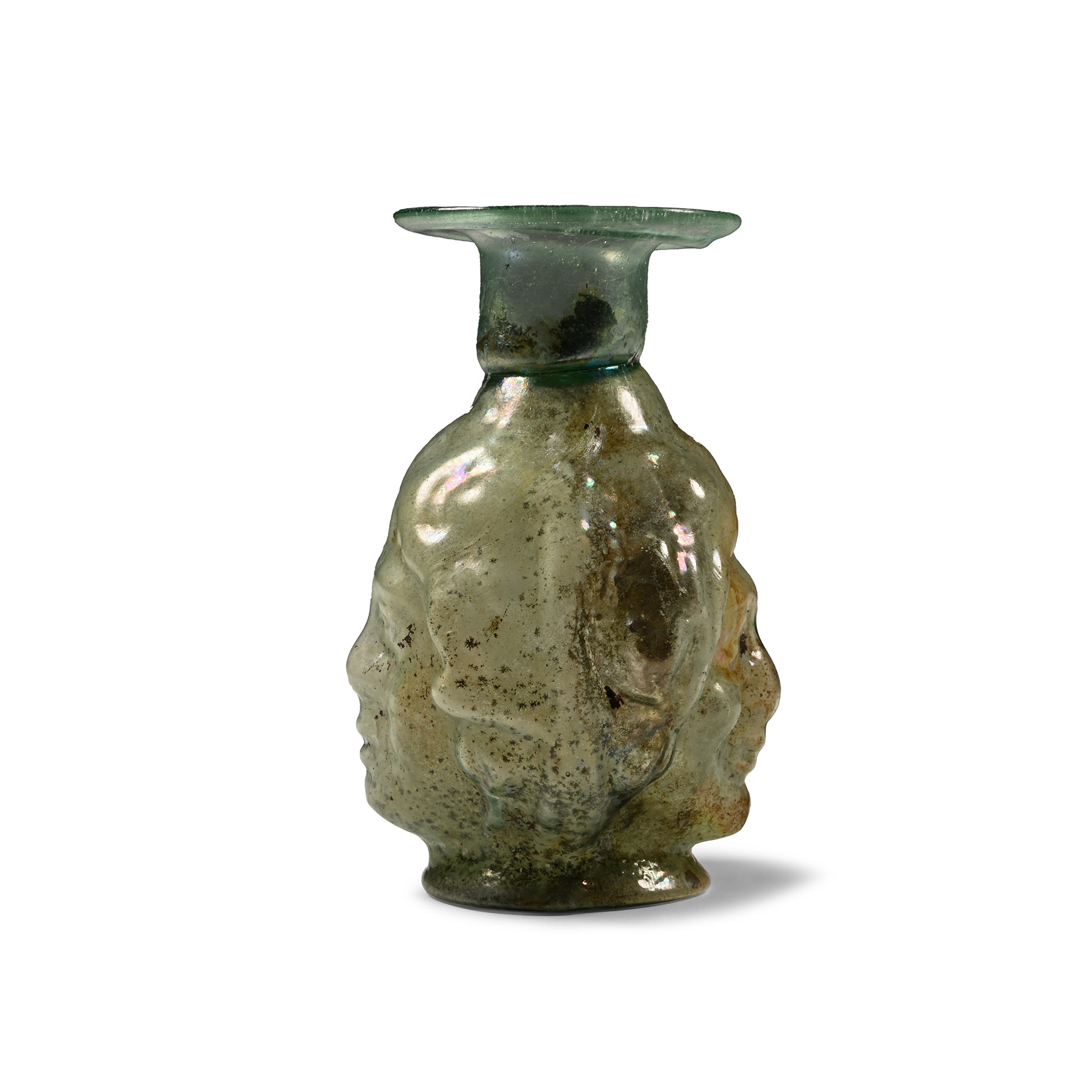
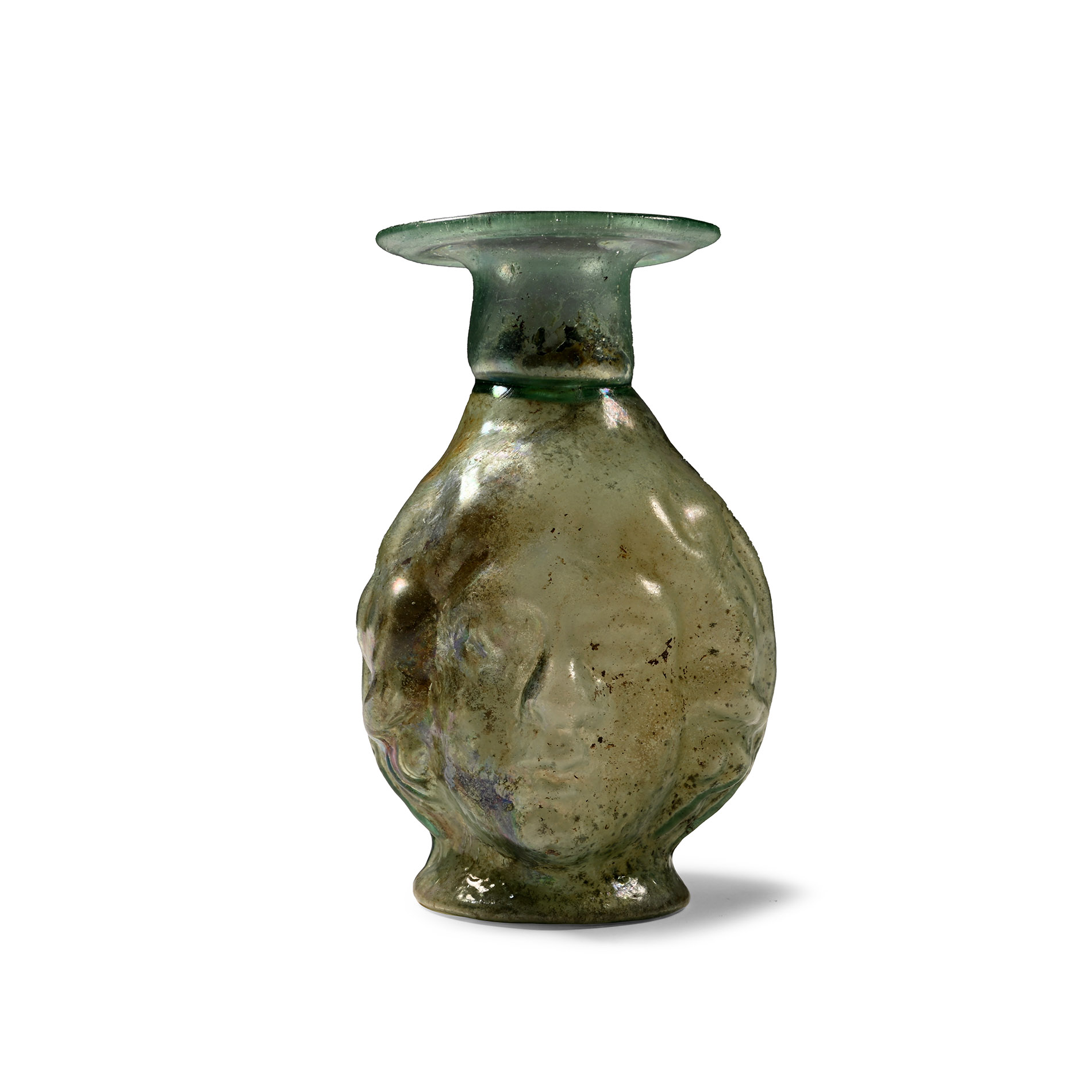
Roman Glass Janus Flask
CIRCA 1ST-2ND CENTURY A.D.
3 7/8 in. (57 grams, 99 mm high).
Formed as two addorsed heads with a short cylindrical neck and flaring mouth; both heads with abundant hair framing the face.
ProvenanceFormerly in North American collection, 1990s.
Ex Lyon and Turnbull, Edinburgh, Scotland.
Cf. Whitehouse, D., Roman Glass in the Corning Museum of Glass, vol.2, New York, 2001, item 543, for type.
CONDITIONTimeLine Auctions follows a vetting process to ensure the authenticity and legality of all items, reinforcing our commitment to integrity and responsible trading. Each antiquity, antique, and coin lot undergoes thorough examination by a vetting committee of at least ten external specialists, professional trade association members, scientists, and archaeologists: Our Vetting Process
AUCTIONS:
TimeLine is a leading auction house specialising in antiquities, ancient art, collectables, natural history, coins, medals, and books. Our auctions offer museums, collectors, historians, and enthusiasts the opportunity to acquire unique and historically significant pieces.
LOT 0140
Roman Glass Janus Flask
Estimate £1,000 - 1,400€1,160 - 1,620 (for guidance only)$1,350 - 1,890 (for guidance only)
-
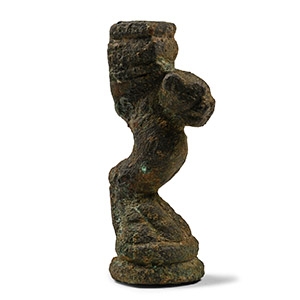
Roman Bronze Lion's Paw Table Foot
2nd-3rd century A.D.Estimate: £100 - 140 (‡+bp*)
Opening Bid: £50
Formed as the paw of a lion on a circular base and a rectangular socket to the top, projecting lioness head below the socket. 190 grams, 83 mm
Acquired in the mid 1980s-1990s. Private collection, Switzerland, thence by descent. Private collection, since the late 1990s. -
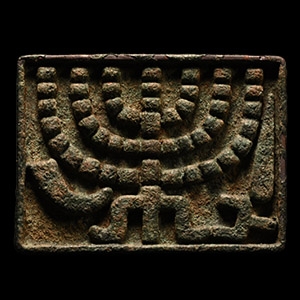
Late Roman Jewish Menorah Wine Stamp Seal
4th-6th century A.D.Sold for (Inc. bp): £4,940
With a rectangular body and loop handle, the underside with a Menorah on a tripod base, a shofar on the left, a lulav and a shovel to the right. 46.3 grams, 59 mm
From a private family collection formed since the early 19th century, thence by descent. Property of a New Zealand legal professional. Accompanied by an academic report by Dr Raffaele D’Amato. This lot has been checked against the Interpol Database of stolen works of art and is accompanied by search certificate number no.12324-223712.
According to Friedenberg and A. Reifenberg, unlike the Roman Christian counterparts, stamps such as the present example were likely used on the stoppers of wine amphorae rather than to stamp bread. They were used to seal the wine amphora to guarantee the purity of the wine as sanctioned by the Talmud. -

Late Roman Iridescent Twin-Coloured Bracelet
4th-6th century A.D.Sold for (Inc. bp): £143
Round in section with applied twisted trail and ellipsoid panel; rare with setting. 8.3 grams, 51 mm
Acquired 1980-2015. Ex Abelita family collection.
