
Loading, please wait...



LOT 0105
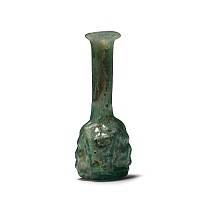
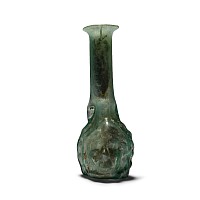
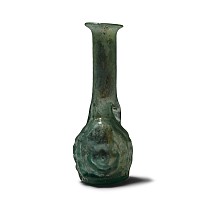
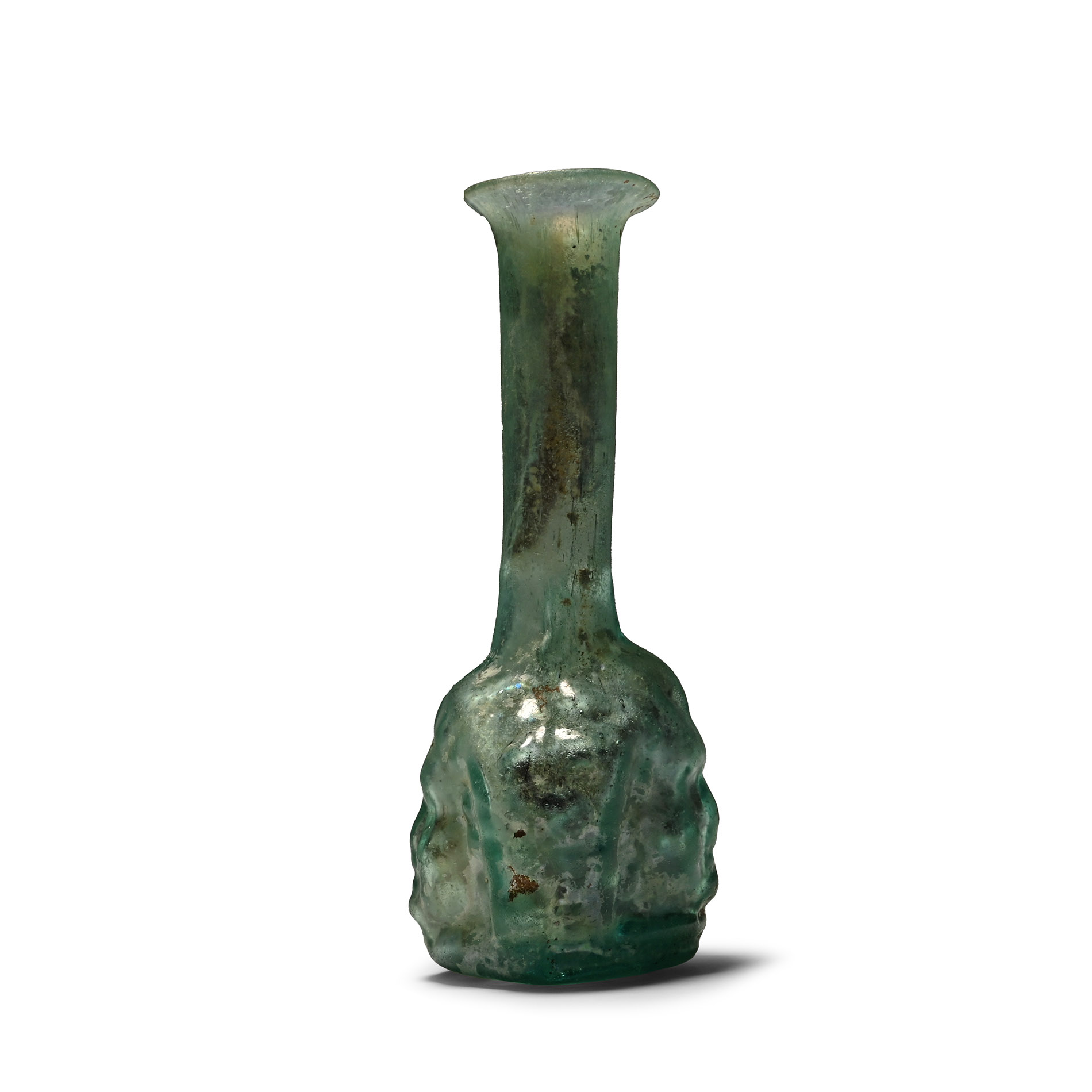
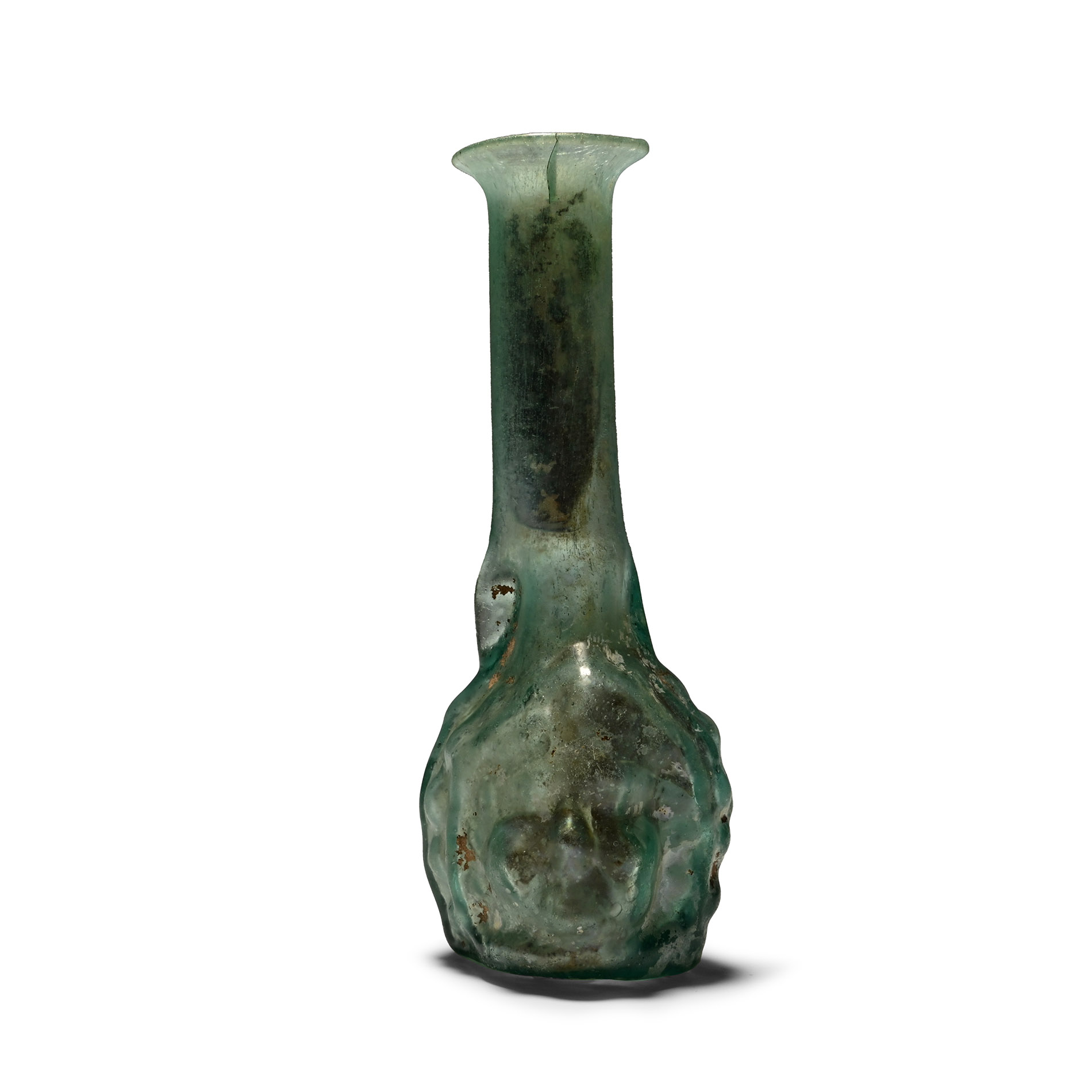
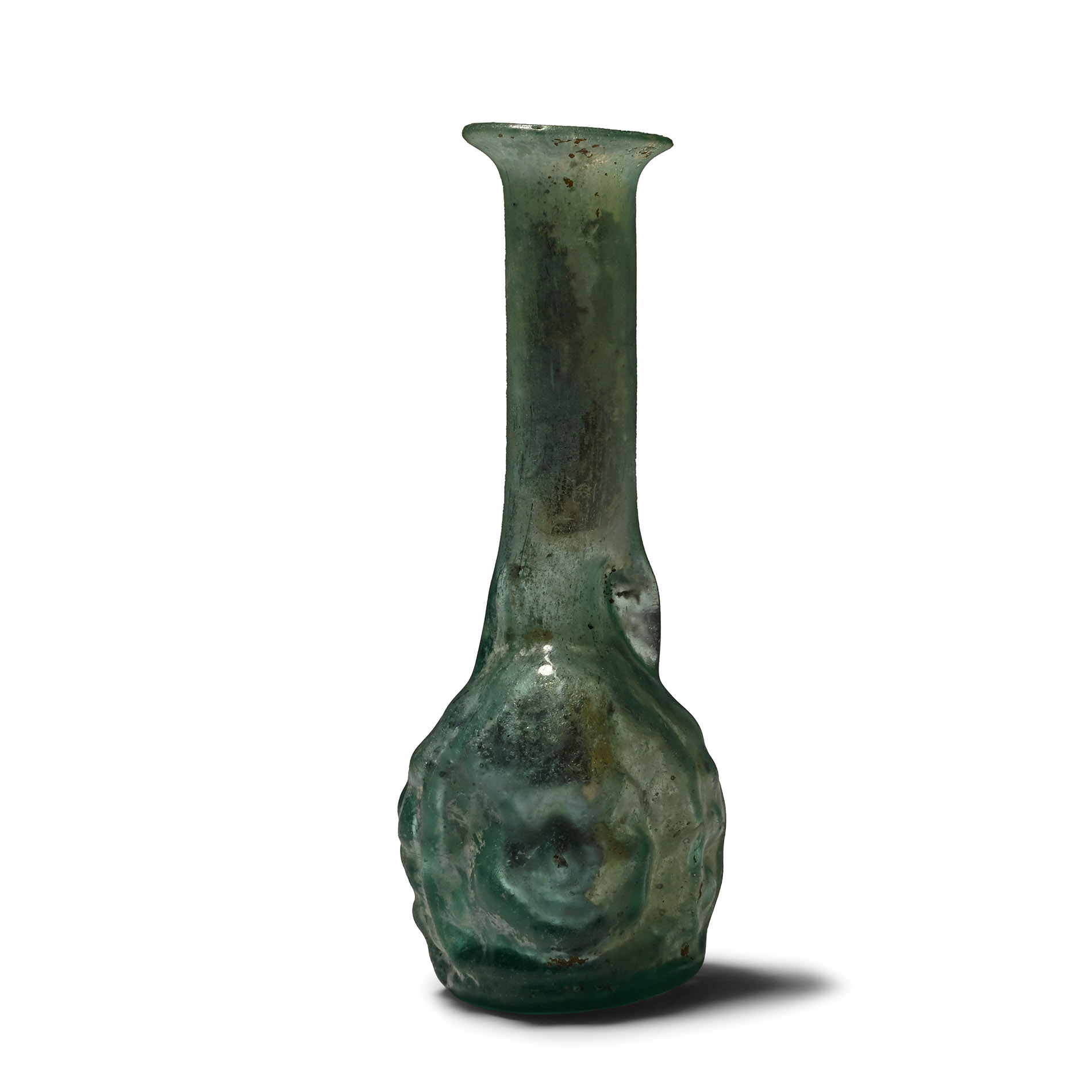
Roman Glass Janiform Ampulla
3RD CENTURY A.D.
4 3/8 in. (48.9 grams, 11 cm).
Body formed as two addorsed putto-heads with long, narrow neck separated from the body by a constriction; funicular mouth.
ProvenanceEx Anita Zürrer-Bass (1928-2018), Switzerland, formed 1960s-1990s.
Thence by descent.
This lot is accompanied by an illustrated lot declaration signed by the Head of the Antiquities Department, Dr Raffaele D’Amato.
This lot is accompanied by an illustrated lot declaration signed by the Head of the Antiquities Department, Dr Raffaele D'Amato.
For discussion with parallels from other museum collections cf. Whitehouse, David B., Roman Glass in The Corning Museum of Glass, vol.3, Corning, 2003, pp.161-2, no.1174; for similar examples cf. Filarska, B., Szkla Starozytne (Ancient Glass), vol.II, Warszawa, 1972, II, cat.90, pl.XIX,1.
FootnotesThe body of this type of vessel is formed from two heads joined together at the back. The faces have protruding chins, full cheeks and turned-up noses. The hair, filling the space between the faces, is arranged into spherical curls. This kind of products were often realised in Syrian workshops and widespread across the empire. They are usually dated to the 3rd century A.D.
CONDITIONTimeLine Auctions follows a vetting process to ensure the authenticity and legality of all items, reinforcing our commitment to integrity and responsible trading. Each antiquity, antique, and coin lot undergoes thorough examination by a vetting committee of at least ten external specialists, professional trade association members, scientists, and archaeologists: Our Vetting Process
AUCTIONS:
TimeLine is a leading auction house specialising in antiquities, ancient art, collectables, natural history, coins, medals, and books. Our auctions offer museums, collectors, historians, and enthusiasts the opportunity to acquire unique and historically significant pieces.
-
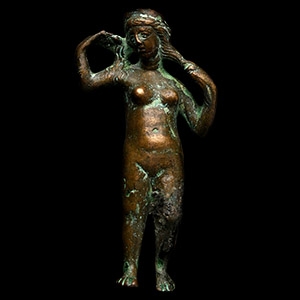
Roman Bronze Statuette of Venus
1st-4th century A.D.Sold for (Inc. bp): £572
Modelled in the round standing and holding her hair in hanks at her shoulders. 312 grams, 12.3 cm
From the collection of a gentleman, acquired on the London art market in the 1990s. This lot is accompanied by an illustrated lot declaration signed by the Head of the Antiquities Department, Dr Raffaele D'Amato. -
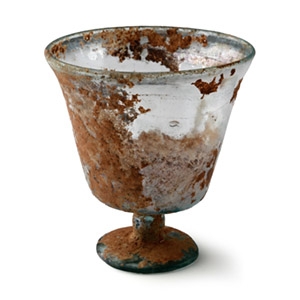
Roman Glass Wine Cup
1st century A.D.Sold for (Inc. bp): £1,105
Aqua glass cup with squat bell-shaped sidewall, rounded neck, footed base. 15 grams, 90 mm
Ex Mayfair, London, UK, gallery, 1990s-2000s. From an important collection of glass, the property of a London gentleman. This lot is accompanied by an illustrated lot declaration signed by the Head of the Antiquities Department, Dr Raffaele D'Amato. -
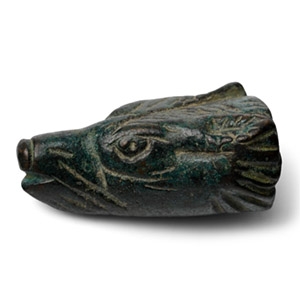
Roman Bronze Wolf's Head Terminal
1st-2nd century A.D.Sold for (Inc. bp): £98
A terminal depicting a wolf's head with fierce expression, fur detailing to the neck and snout, possibly a knife pommel. 17.4 grams, 27 mm
Fine condition.
Property of a North West London gallery; formerly in a 1980s collection. From the private collection of John Meredith, acquired since the 1990s; thence by descent. This lot is accompanied by an illustrated lot declaration signed by the Head of the Antiquities Department, Dr Raffaele D'Amato.
