
Loading, please wait...
LOT 0764
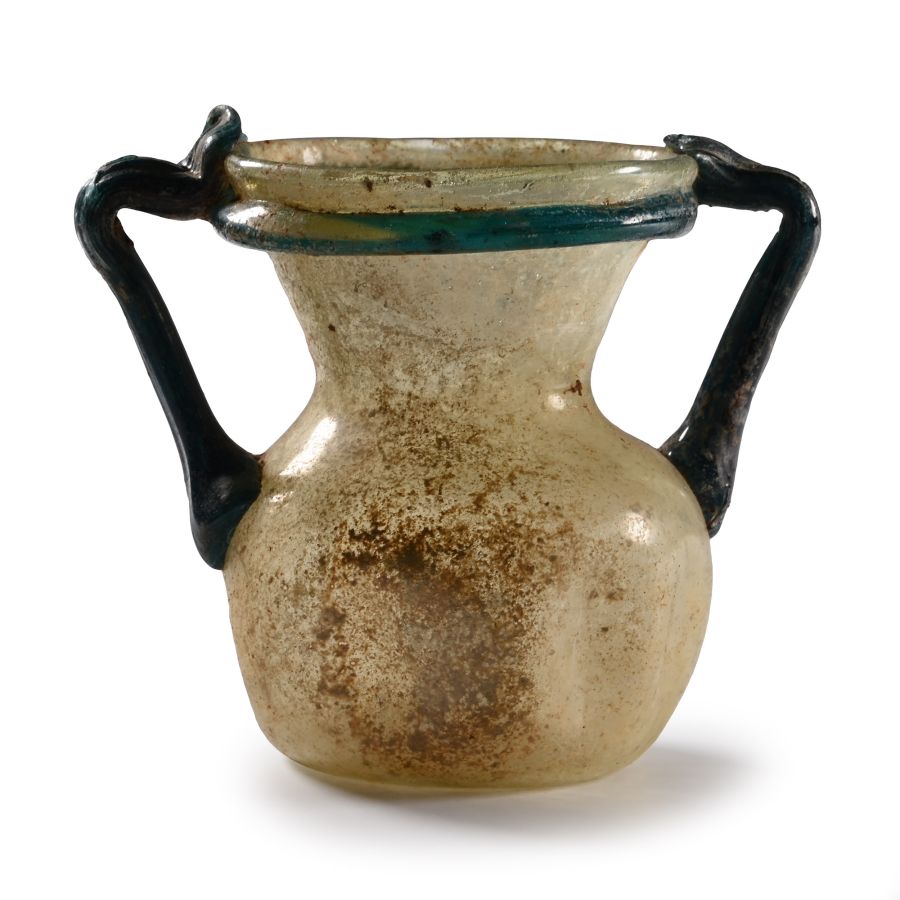
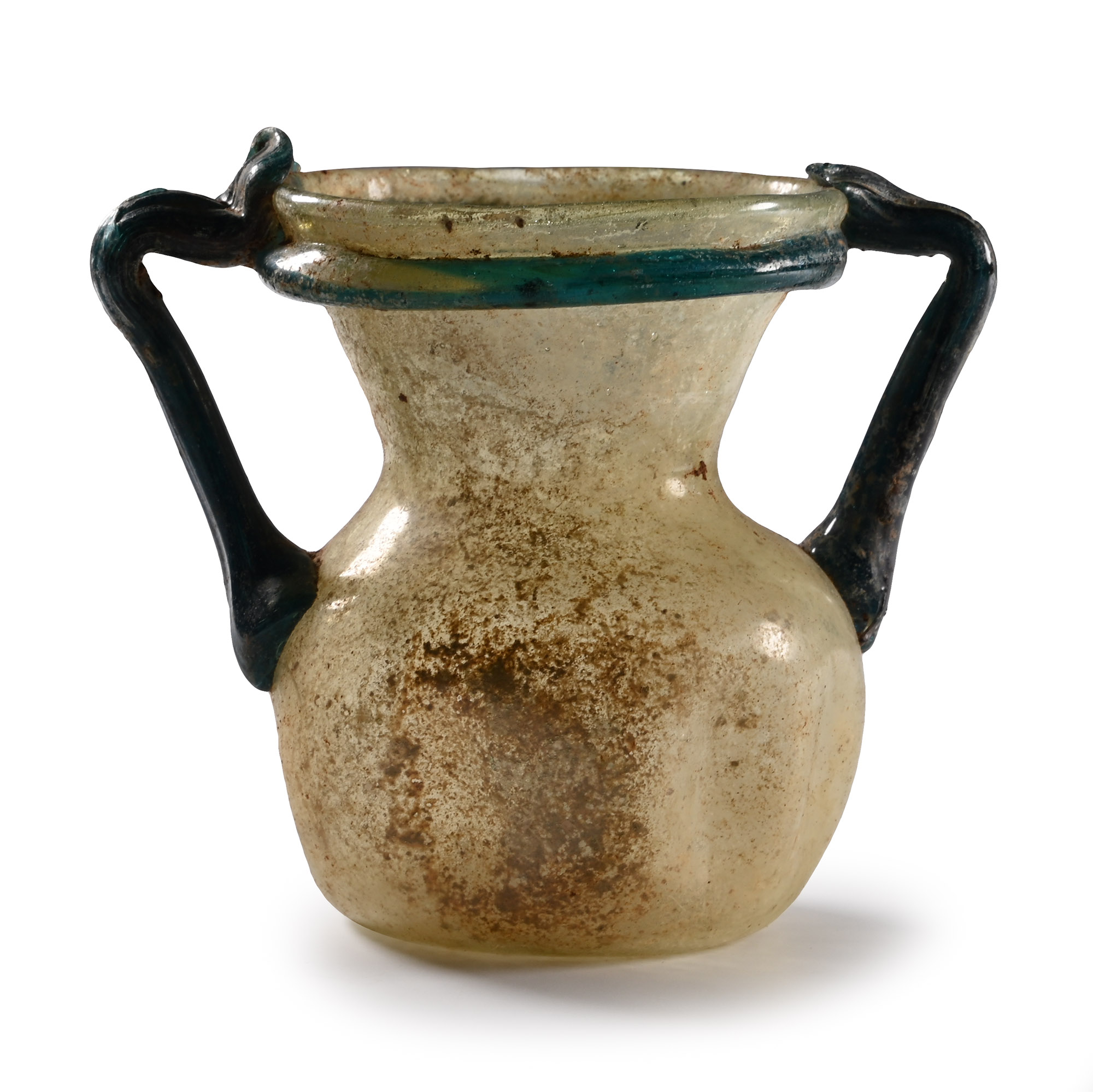
Roman Glass Handled Jar
4TH CENTURY A.D.
3 in. (39.4 grams, 78 mm wide).
With dimpled base, bulbous body with opposed dimples to the sidewall, applied flange to the neck, applied trails forming lateral handles.
ProvenanceFrom an important London collection of glass, 1990s.
LiteratureSee Whitehouse, D., Roman Glass: The Corning Museum of Glass, volume I, New York, 1997, items 297-298, for similar.
FootnotesThese biconical jars with opposed handles, rounded lips and overhanging tubular flanges are typical of the late Roman period. There are Syro-Palestinian types, with similar examples having been found in Beit Fajjar, West Bank, Palestine.
CONDITIONTimeLine Auctions follows a vetting process to ensure the authenticity and legality of all items, reinforcing our commitment to integrity and responsible trading. Each antiquity, antique, and coin lot undergoes thorough examination by a vetting committee of at least ten external specialists, professional trade association members, scientists, and archaeologists: Our Vetting Process
AUCTIONS:
TimeLine is a leading auction house specialising in antiquities, ancient art, collectables, natural history, coins, medals, and books. Our auctions offer museums, collectors, historians, and enthusiasts the opportunity to acquire unique and historically significant pieces.
-
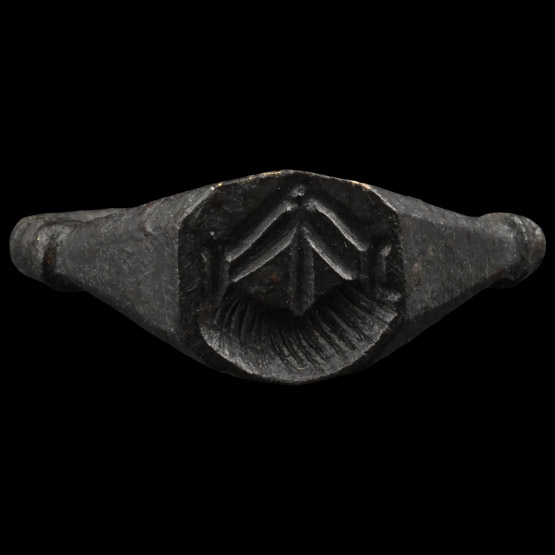
Late Roman Bronze Ring with Galley
5th-6th century A.D.Sold for (Inc. bp): £111
With notched shoulders and conical bezel, incuse image of a galley with oars mounted. 4.50 grams, 24.95 mm overall, 18.53 mm internal diameter (approximate size British Q, USA 8, Europe 17.49, Japan 16)
Ex German art market, 2000s. Acquired from an EU collector living in London. From the collection of a Surrey, UK, gentleman. -
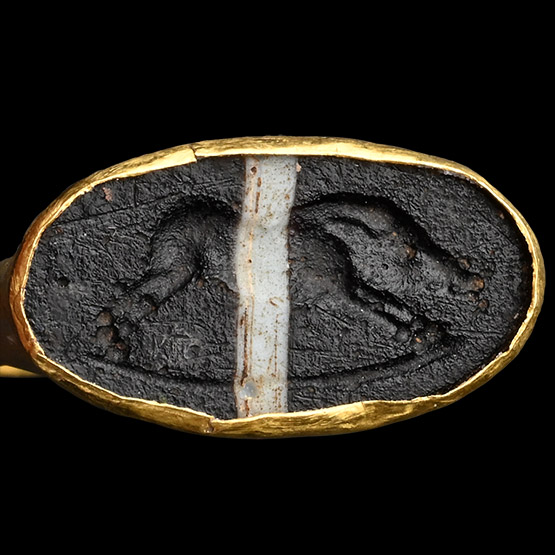
Roman Gold Ring with Glass Boar Intaglio
1st century B.C.Estimate: £800 - 1,000 (‡+bp*)
Opening Bid: £400
Hollow-formed and widening at the shoulders to a high elliptical bezel set with a black and white banded glass intaglio depicting a running boar in profile on a baseline; supplied with a museum-quality impression. 1.93 grams, 22.40 mm overall, 15.77 mm internal diameter (approximate size British J, USA 4 3/4, Europe 8.69, Japan 8)
Ex private collection, Contessa L.G., since the 1980s. Private collection, acquired in 1997. -
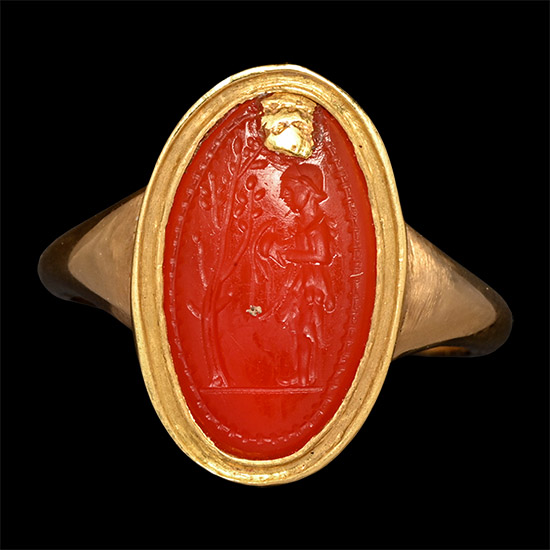
Italic Carnelian Gemstone Depicting the Goddess Athena Before a Tree in Gold Ring
Circa 2nd century B.C.-1st century A.D.Sold for (Inc. bp): £2,210
With a standing figure wearing chiton facing a tree, possibly Athena facing an olive tree; set into a later gold ring; supplied with a museum-quality impression. 8.18 grams, 23.95 mm overall, 17.27 mm internal diameter (approximate size British N 1/2, USA 6 3/4, Europe 14.35, Japan 13)
Private collection, Europe. Acquired on the English art market. This lot has been checked against the Interpol Database of stolen works of art and is accompanied by search certificate number no.13129-248338.
