
Loading, please wait...

LOT 0833
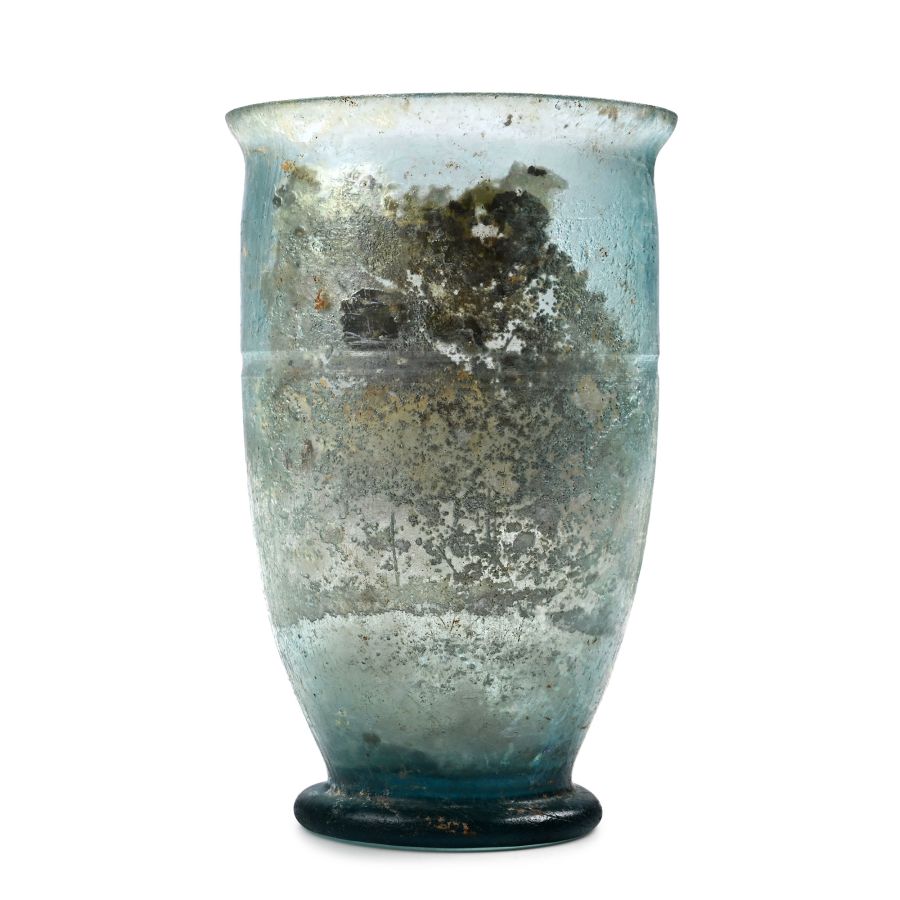
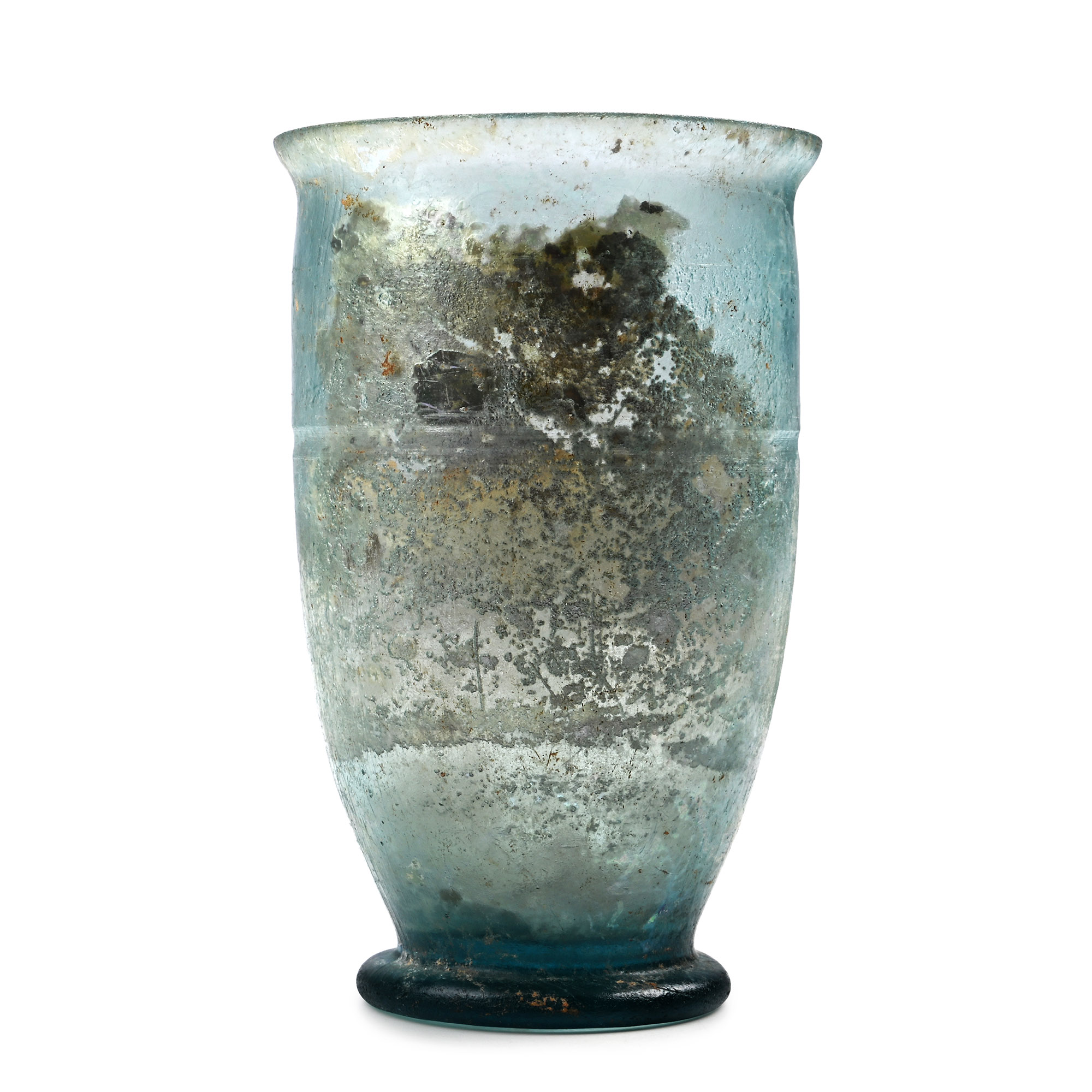
Roman Glass Goblet with Cut Design
CIRCA 100-300 A.D.
4 1/8 in. (105 grams, 10.5 cm).
Translucent with straight sides narrowing to the dimpled base, flared and rolled rim, the body decorated with two horizontal ribbed lines.
ProvenanceSwiss private collection, Bern.
Swiss private collection, Basel.
with Sayd & Fayez Barakat & Sons, Bethlehem and Jerusalem.
Accompanied by a certificate of authenticity from Shaher Barakat, Jerusalem.
Cf. Kelley, M., A study of Late Hellenistic and Early Roman Glass in Jerusalem from excavated sites: understanding local production and the economic status of the population from the time of the Hasmoneans to Hadrian, p.448, pl.8, nos.12-13, for similar incised beakers found in North Jerusalem.
FootnotesThe Hebrew word 'zekhukhith' (glass) appeared in the Old Testament, but it was frequently used in the Mishnaic Hebrew and in correlation with the Aramaic 'zegugita'. In the Talmudic times white and coloured, transparent glasses were very valuable. This magnificent goblet was found on Mons Scopus, in Jerusalem and it shows the skill and the capacity of the Roman glass blowers of the time. After the establishment and unification of the Roman Empire under Augustus (27 B.C.), glass manufacturing quickly travelled throughout the Empire, and with the ease of production, glass entered the same sphere of use and popularity as metal and clay vessels.
CONDITIONTimeLine Auctions follows a vetting process to ensure the authenticity and legality of all items, reinforcing our commitment to integrity and responsible trading. Each antiquity, antique, and coin lot undergoes thorough examination by a vetting committee of at least ten external specialists, professional trade association members, scientists, and archaeologists: Our Vetting Process
AUCTIONS:
TimeLine is a leading auction house specialising in antiquities, ancient art, collectables, natural history, coins, medals, and books. Our auctions offer museums, collectors, historians, and enthusiasts the opportunity to acquire unique and historically significant pieces.
LOT 0833
Roman Glass Goblet with Cut Design
Estimate £800 - 1,000€930 - 1,160 (for guidance only)$1,080 - 1,350 (for guidance only)
-
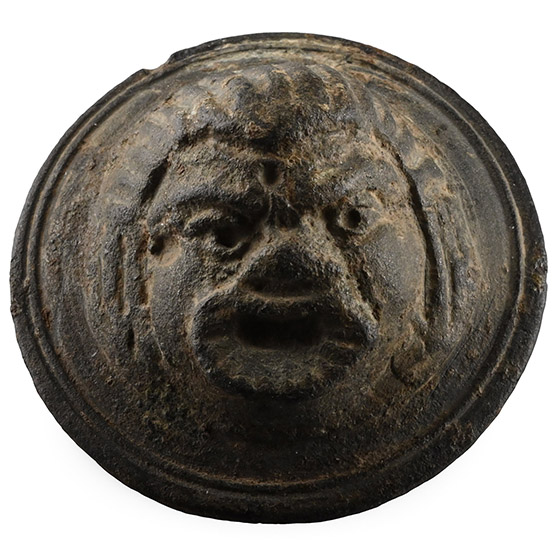
Roman Bronze Applique of Actor's Mask
2nd century A.D.Sold for (Inc. bp): £211
Discoid with flange rim, central high-relief actor's mask with D-shaped mouth. 38.8 grams, 38 mm
Acquired in the 1992. Private collection, Switzerland, thence by descent. Private collection, since the late 1990s. -
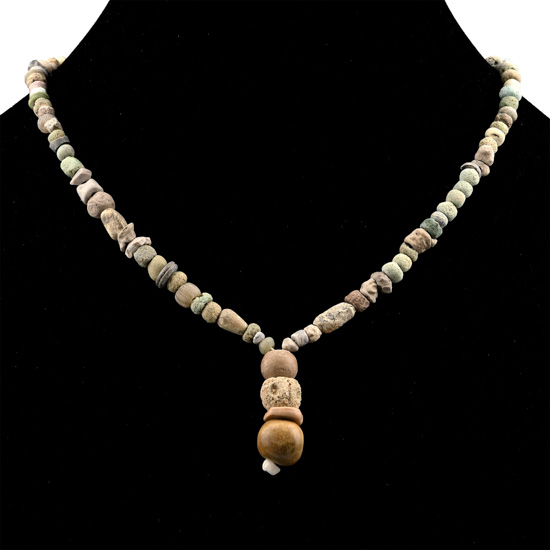
Roman and Other Glass Bead Necklace String
1st-4th century A.D. and laterSold for (Inc. bp): £182
Composed mainly of oblate glass and teracotta beads, the central feature composed of larger beads; restrung. 19.8 grams, 39.2 cm
From London, UK, gallery collection, 1990s. -
.jpg)
Roman Nicolo Gemstone with Seated Jupiter with Eagle in Gold Ring
2nd century A.D.Estimate: £2,000 - 3,000 (+bp*)
Opening Bid: £1,000
Ellipsoid nicolo cloison with profile figure of Jupiter enthroned and an eagle at his feet; set into a later gold ring; supplied with a museum-quality impression. 8.55 grams, 24.77 mm overall, 19.08 x 19.94 mm internal diameter (approximate size British S, USA 9, Europe 20, Japan 19)
with Gallery Desmet, Belgium. Private collection, England.
