
Loading, please wait...
LOT 0859
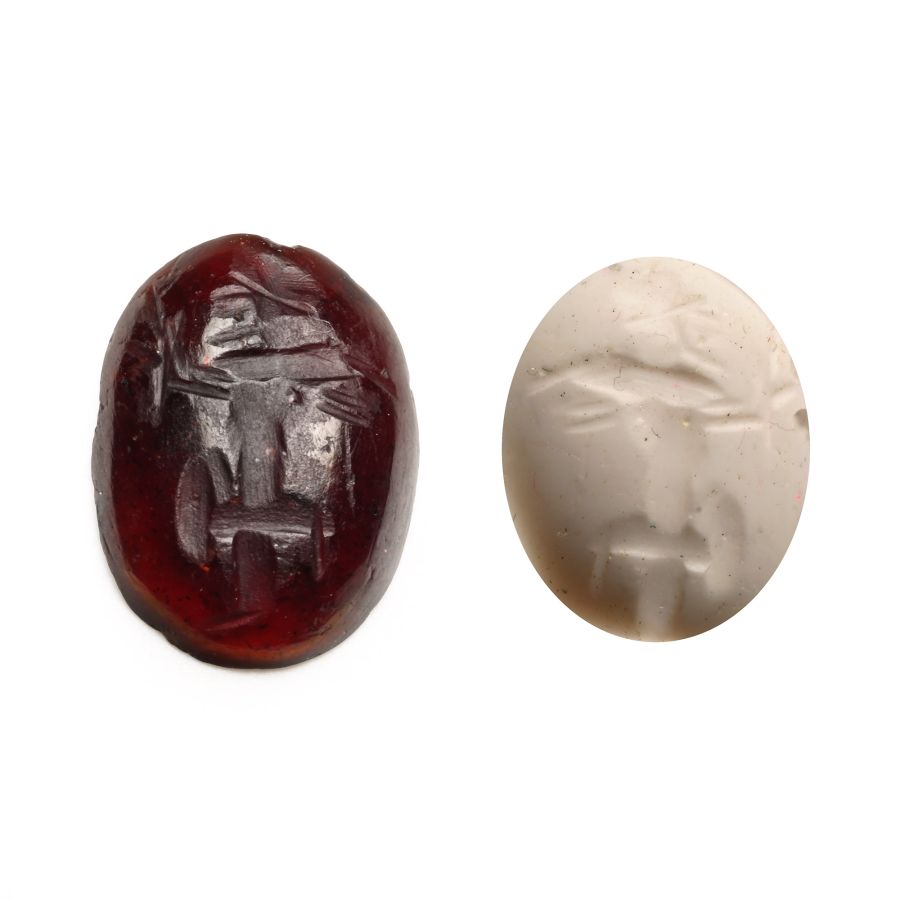
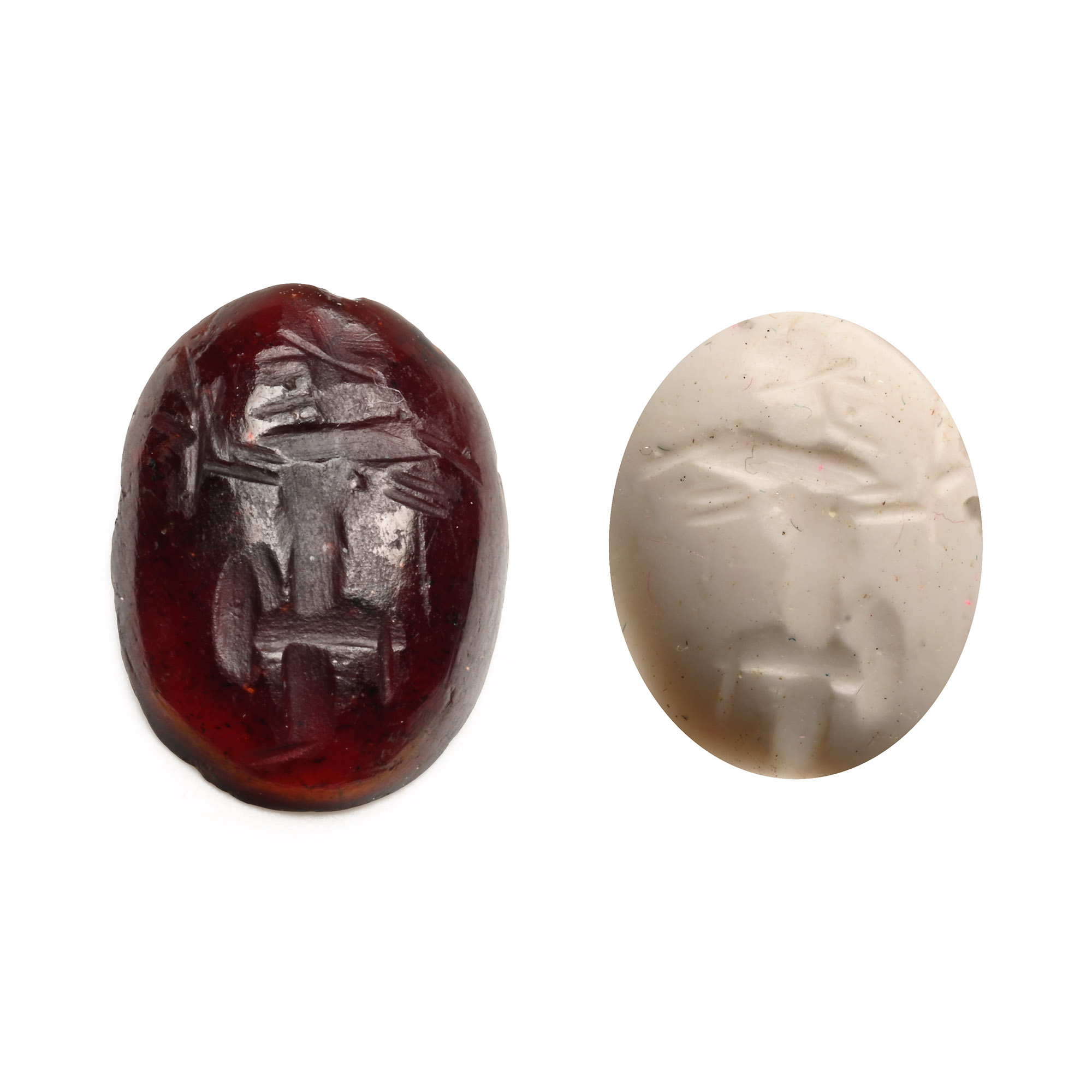
Roman Glass Gem with Hercules
2ND-3RD CENTURY A.D.
1/2 in. (0.62 grams 12.02 mm).
With intaglio Hercules with club in his extended hand; supplied with a museum-quality impression. [No Reserve]
ProvenanceFrom the private collection of a European gentleman (1942-2024), formed since the 1970s.
CONDITIONTimeLine Auctions follows a vetting process to ensure the authenticity and legality of all items, reinforcing our commitment to integrity and responsible trading. Each antiquity, antique, and coin lot undergoes thorough examination by a vetting committee of at least ten external specialists, professional trade association members, scientists, and archaeologists: Our Vetting Process
AUCTIONS:
TimeLine is a leading auction house specialising in antiquities, ancient art, collectables, natural history, coins, medals, and books. Our auctions offer museums, collectors, historians, and enthusiasts the opportunity to acquire unique and historically significant pieces.
-
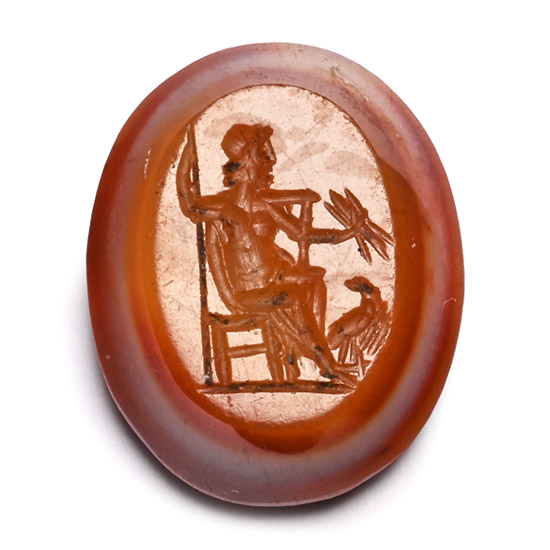
Roman Banded Agate Gemstone with Jupiter Seated
2nd-3rd century A.D.Sold for (Inc. bp): £169
With intaglio Jupiter sitting on his throne with a spear in one hand and an eagle at his feet; supplied with a museum-quality impression. 1.41 grams, 15.2 mm
From the private collection of a European gentleman (1942-2024), formed since the 1970s. -
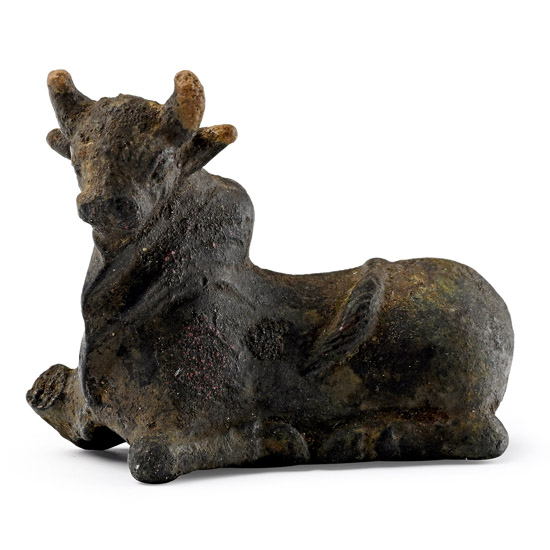
Roman Bronze Zebu Statuette
3rd-4th century A.D.Estimate: £800 - 1,000 (‡+bp*)
Opening Bid: £444
Hollow-formed in reclining pose with the legs folded beneath the body, tail curled over the rump, hump to rear of neck. 61 grams, 47 mm
Acquired in 1992. Private collection, thence by descent. Private collection, since the late 1990s. -
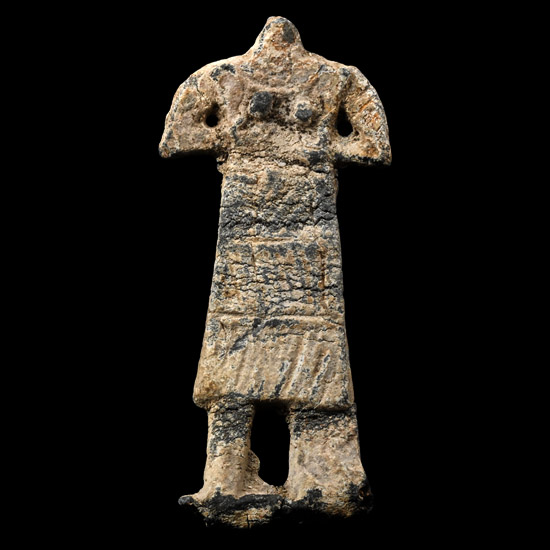
Roman Lead Child's Toy
1st-4th century A.D.Sold for (Inc. bp): £7
Formed as a standing figure dressed in a knee-length garment, hands crossed at the chest. 10.8 grams, 47.8 mm
From the private collection of a European gentleman (1942-2024), formed since the 1970s.
